Australia is moving to protect its domestic phosphate fertiliser supply chain as escalating raw material costs place increasing pressure on local production. The federal and Queensland governments have jointly extended a A$160 million (approximately US$105 million) loan to Mayfair, providing financial support for the continued operation and modernisation of the Phosphate Hill fertiliser complex—the country's only producer of diammonium phosphate (DAP) and monoammonium phosphate (MAP).
The funding comes at a time when global phosphate producers are grappling with sharply higher sulfur prices, one of the most critical inputs in phosphate fertiliser manufacturing. By supporting Phosphate Hill, Australia is seeking to preserve a strategically important domestic production asset while reducing the risk of further supply disruptions in an increasingly volatile global fertiliser market.
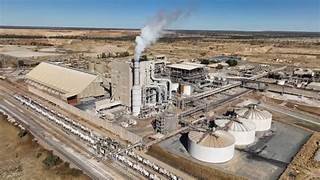
Located about 140 kilometres southeast of Mount Isa in Queensland, the Phosphate Hill facility has an annual production capacity of approximately 400,000 tonnes of DAP and 200,000 tonnes of MAP, supplying a significant share of Australia's phosphate fertiliser requirements. The operation also supports around 540 jobs, making it an important industrial employer in regional Queensland.
The financial package follows the recent transfer of ownership from Dyno Nobel to Brisbane-based investment firm Mayfair, which acquired the fertiliser business for a nominal A$1 under a transaction that included up to A$100 million in deferred payments. Mayfair assumed the economic risks associated with the operation from April 1, completing Dyno Nobel's exit from the fertiliser sector after decades of involvement.
While the ownership transition marked a significant restructuring of Australia's fertiliser industry, the business immediately faced mounting cost pressures linked to sulfur, an essential feedstock in phosphate production.
Australia remains heavily dependent on imported sulfur, sourcing approximately 99 per cent of its requirements from Canada. That reliance has become increasingly costly following severe disruptions in global sulfur markets. According to Argus Media, sulfur prices reached US$1,150 per tonne FOB Vancouver on June 25, representing a dramatic 136 per cent increase since late February after conflict involving the United States and Iran disrupted sulfur supplies from the Gulf region.
The sharp escalation in sulfur costs has significantly increased production expenses for phosphate manufacturers worldwide, eroding margins and placing additional financial strain on facilities operating outside low-cost production regions.
Production challenges have already become evident at Phosphate Hill. Output declined 9 per cent year-on-year to 272,800 tonnes during the six months ending March 31, highlighting the operational pressures confronting the business even before the latest surge in sulfur prices.
The government-backed financing is expected to help stabilise operations while supporting plant upgrades aimed at improving long-term competitiveness. Maintaining domestic phosphate production has become increasingly important as global fertiliser supply chains remain vulnerable to geopolitical disruptions, shipping constraints and volatile raw material markets.
The ownership change is also expected to reshape commercial arrangements surrounding the facility. Australian agribusiness Ridley, which previously held the marketing agreement for fertiliser produced at Phosphate Hill, has indicated that it intends to renegotiate its offtake agreement with Mayfair following the transfer of ownership.
The funding carries significance beyond Australia's domestic market. Phosphate Hill represents one of the few major phosphate fertiliser production facilities located outside the Gulf region, making it an important source of supply diversification at a time when global fertiliser markets are becoming increasingly concentrated and exposed to geopolitical risks.
As sulfur prices remain elevated and production costs continue to rise across the phosphate industry, preserving strategic manufacturing assets such as Phosphate Hill is likely to become increasingly important for countries seeking greater resilience in agricultural input supply. Australia's latest intervention underscores the growing recognition that fertiliser production has become not only an industrial priority but also a key component of long-term food security and agricultural competitiveness.