UK food technology company MicroLub has raised $10 million to accelerate the commercialisation of its protein-based fat reduction technology, expand manufacturing capacity and support market entry in the US and Asia.
The University of Leeds spinout has developed patented ingredients designed to replicate the lubrication properties of fat using water, addressing one of the central challenges in reduced-fat food formulation: cutting calories without sacrificing creaminess, smoothness and overall eating experience. MicroLub says its technology has demonstrated fat and calorie reductions of up to 75 per cent in some formulations, although the level of reduction varies according to the application. The platform is being evaluated across dairy and plant-based dairy products, bakery, sauces, dips and other food categories.
The latest financing was led by Northern Gritstone, with existing investors also participating, including NPIF II – PXN Equity Finance, managed by PXN Ventures. Founded by Professor Anwesha Sarkar, MicroLub continues to collaborate with the University of Leeds and operates a food innovation laboratory at Nexus in Leeds.
“We have already moved from laboratory-scale development to industrial-scale manufacturing and are working with some of the world’s largest food and ingredient companies,” said David Peters, CEO of MicroLub. “The $10 million investment allows us to accelerate the next step: converting those development programs and customer trials into products that can be manufactured commercially and ultimately reach the shelf,” he added.
Targeting fat without losing mouthfeel
Fat plays several roles in food beyond its calorie contribution. It influences lubrication, creaminess, texture, flavour release and the way food behaves during consumption. Replacing it therefore requires more than simply matching its nutritional function. MicroLub's technology focuses specifically on lubrication and friction, using protein-based ingredients to create a sensory experience closer to that of conventional fat.
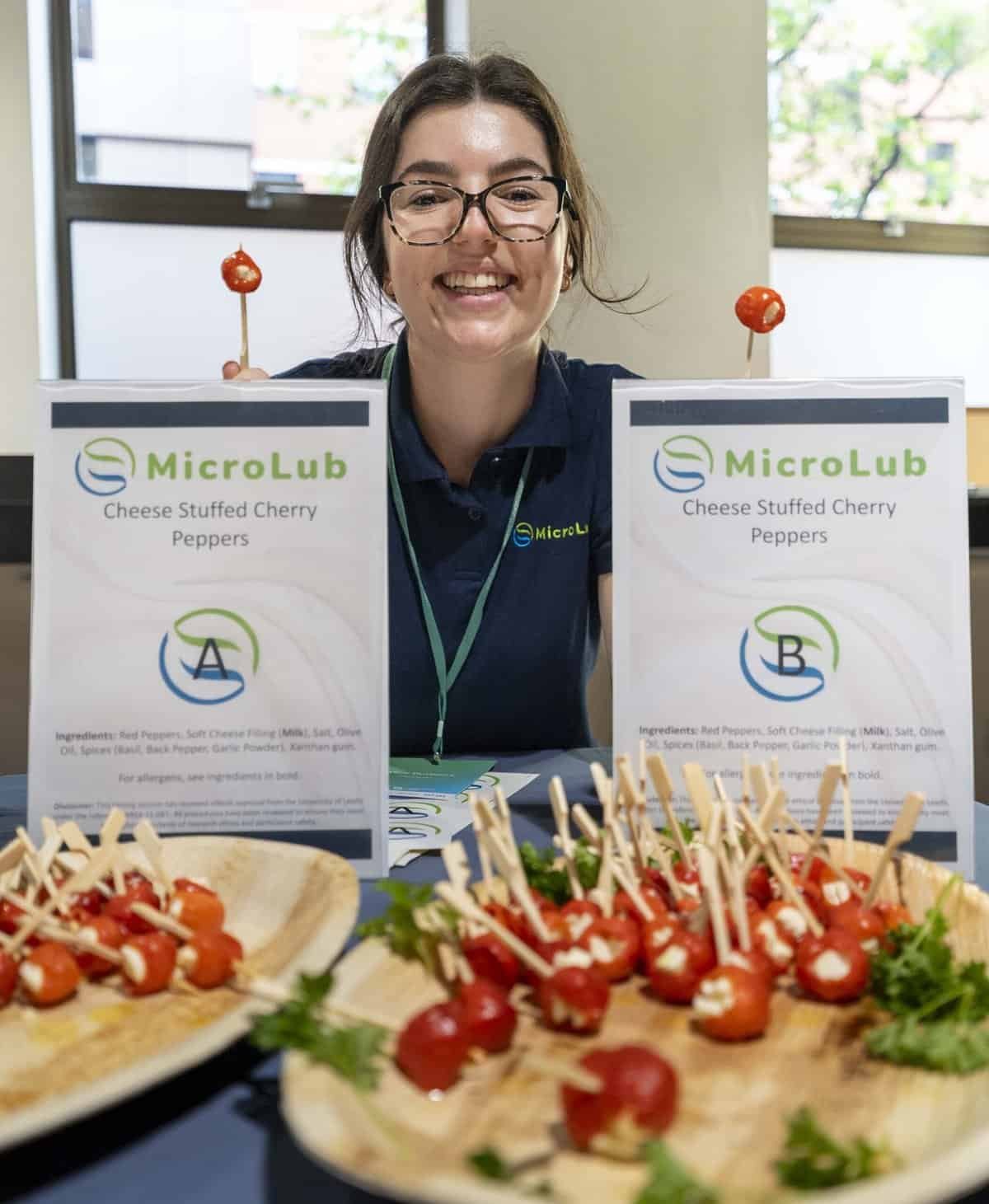
The company uses tribology to measure friction and lubrication, alongside rheology and other instrumental techniques that assess texture and flow. Reformulated products are then compared with full-fat equivalents through sensory testing. According to Peters, blind sensory trials across several food categories have found that tasters were unable to distinguish between products containing MicroLub technology and their full-fat counterparts.
“In some formulations, fat and calorie content can be reduced by up to 75 per cent,” Peters said, while emphasising that the maximum reduction is not necessarily the objective for every formulation. The technology can also potentially reduce the need for other formulation components, including certain emulsifiers and thickeners, depending on the application.
A platform rather than a single fat replacer
MicroLub is positioning its technology as an ingredient platform rather than a universal drop-in replacement for fats. The role of fat varies significantly between food products. In formulations where a solid fat network provides structure, replacing fat can be more complex. Fat-soluble flavour compounds can also require additional formulation work because removing or reducing fat can affect flavour delivery.
“This is why we approach MicroLub as an ingredient technology platform rather than a single drop-in fat replacer,” Peters said. “We develop application-specific solutions around the particular role fat is playing in that product.” The company draws on dairy and plant proteins as well as polysaccharides to develop formulations according to customers' technical, cost and supply-chain requirements.
It says the technology is being designed to work with existing food manufacturing infrastructure, with the precise addition point and processing conditions established through trials on individual manufacturers' production lines.
Protein trend creates another opening
The company's expansion comes as food manufacturers face growing demand for products that combine higher protein content with lower calorie density. Peters said MicroLub's opportunity extends beyond the growing market for foods associated with GLP-1 use. Instead, he sees the broader shift towards protein-enriched and nutrient-dense foods as a driver for the technology.
Higher protein formulations can introduce sensory challenges including grittiness, astringency and undesirable mouth-coating. By addressing lubrication and mouthfeel, MicroLub believes its technology could help manufacturers increase protein levels while maintaining consumer acceptance. Potential applications include high-protein drinks and yogurts, reduced-fat dairy products, sauces and dips, desserts and other nutrient-dense foods.
Commercial scale-up takes centre stage
MicroLub has already moved from laboratory development to industrial-scale manufacturing, but the latest funding is intended to accelerate the transition from customer development programmes to commercial products. The company has not disclosed its customers or provided a specific launch timetable. Its next steps include completing customer qualification and validation, transferring formulations to commercial production lines, strengthening supply chains and meeting regulatory and labelling requirements across individual markets.
With the new capital, MicroLub plans to work more closely with both large and smaller food manufacturers as it expands commercial validation. The company's proposition ultimately rests on a familiar food industry challenge: consumers increasingly want products with improved nutritional profiles, but remain unwilling to compromise on taste and texture. MicroLub is betting that controlling the friction and lubrication properties of food can help narrow that gap.