Syngenta Crop Protection and French biotechnology company Amoéba have converted their November 2025 memorandum of understanding into a binding long-term commercial and development cooperation agreement, securing an exclusive supply and distribution partnership for AXP20, a next-generation biofungicide.
Under the agreement, Syngenta will hold exclusive distribution rights for AXP20 across all cereal crops except maize in the 27 European Union member states, the UK, Ukraine and Switzerland. The product is expected to be commercialised under the Syngenta brand once trademark registration is completed.
The agreement marks a shift from the companies’ initial cooperation framework towards a longer-term commercial relationship, as biological crop protection technologies gain importance in European agriculture. AXP20, registered in the European Union under EU registration No. EU 2025/1177, is based on a lysate of the amoeba Willaertia magna C2c Maky. The technology is designed around a multi-target, multi-mode-of-action approach and has been classified in the BM02 group by the Fungicide Resistance Action Committee (FRAC).
According to the companies, no resistance to the product is currently known, pointing to a low resistance risk and potentially offering growers an additional mode of action alongside conventional fungicide programmes. AXP20 works through two complementary mechanisms. Its primary direct activity inhibits fungal spore germination, while it also activates the plant’s natural defence mechanisms, combining direct antifungal activity with induced resistance.
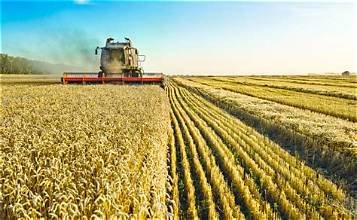
The initial disease targets are wheat leaf blotch caused by Zymoseptoria tritici and stripe rust caused by Puccinia striiformis, two important fungal diseases affecting cereal production. The commercial agreement follows extensive field evaluation. During 2026, Syngenta and Amoéba jointly conducted more than 70 field trials, generating data across cereal-growing environments ahead of broader commercial deployment.
The companies expect AXP20 to have the potential to reach more than 1 million hectares of cereal crops in Europe, underlining the scale of the opportunity for biological crop protection in the region. The regulatory pathway has also advanced. The active ingredient was assessed by the European Food Safety Authority (EFSA) in 2025 and subsequently approved for use in the European Union. In June 2026, Amoéba’s AXPERA biofungicide, which is based on the same underlying technology, received market authorisation in France.
The partnership also reflects a broader evolution in crop protection, where biological products are increasingly being developed not simply as alternatives to conventional chemistry but as complementary tools within integrated disease-management programmes.