
Thailand’s broiler industry is entering 2026 under pressure from higher feed and operating costs, weaker export demand and geopolitical disruptions, but the sector is positioning for a modest recovery in 2027 as tourism improves and exporters pursue new openings in Europe and halal markets.
The immediate challenge is a sharp deterioration in the cost equation. Broiler production is projected to fall by about 2 per cent in 2026 from the previous year, reversing the expansion seen in 2025 when Brazil’s highly pathogenic avian influenza outbreak redirected international demand towards Thai poultry. Lower feed costs during that period also encouraged producers to increase output. As restrictions on Brazilian poultry shipments were subsequently lifted by importing countries, Thailand faced renewed competition in its traditional export markets.
The production base remains concentrated in Central Thailand, which accounts for nearly three-quarters of national broiler output. Lopburi, Chonburi and Kanchanaburi are among the leading production centres, supported by access to feed ingredients, transport infrastructure and integrated poultry operations. Lopburi alone accounts for about 18 per cent of national production, according to the USDA-FAS assessment.
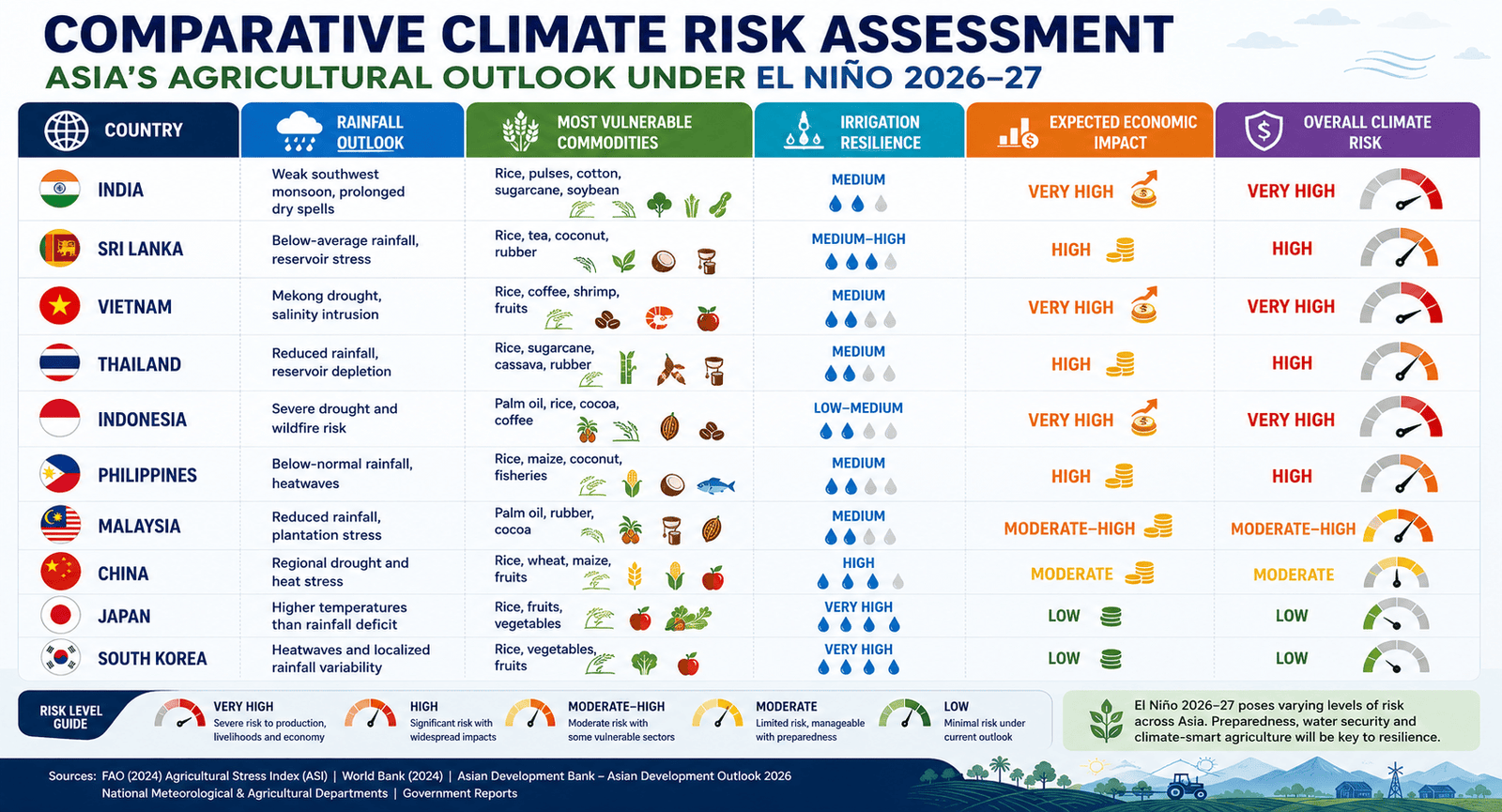
For producers, feed remains the central pressure point. Feed accounts for roughly 60–70 per cent of broiler production costs, while about 60 per cent of feed inputs are imported. That exposure leaves the sector vulnerable to international commodity prices, currency movements and supply disruptions. Feed corn prices climbed to around $ 0.36 per kg between March and June 2026, an increase of about 8 per cent from the previous year. El Niño conditions added another layer of pressure by affecting bird appetite and extending production cycles.
The squeeze has extended beyond feed. Industry contacts cited in the USDA-FAS report have reported a 30 per cent increase in packaging costs as fuel prices rose. At the farmgate, broiler prices declined 13 per cent in the first half of 2026 from the corresponding period a year earlier, reflecting stronger price competition following Brazil’s return to global markets.
The cost structure is also feeding into a wider debate over Thailand’s trade policy. Kasikorn Research estimates that allowing corn imports from suppliers outside the Association of Southeast Asian Nations could reduce feed costs by as much as 8 per cent. Such a shift could improve the competitiveness of Thai poultry producers while potentially easing pressure on domestic food prices, although it would represent a change in the country’s existing agricultural trade framework.
Domestic demand has provided some cushion, but it has not been immune to the broader economic slowdown. Poultry consumption fell 0.6 per cent year-on-year in the first half of 2026 amid weaker GDP growth, higher living costs and softer tourism. Volatile oil prices and higher airfares also affected travel activity, indirectly weighing on food consumption linked to tourism.
Government support has helped prevent a sharper demand contraction. The Thais Help Thais Plus: 60/40 programme, launched between June and September 2026, provides co-payment support for eligible purchases, with the government covering 60 per cent of qualifying spending. The programme has channelled additional purchasing power towards smaller vendors, although concerns have emerged over possible price increases and misuse. The early registration response was substantial, with 26 million people enrolled and around $ 433 million spent during the first week.
The programme could provide some support to poultry consumption through the second half of 2026. The USDA-FAS expects domestic chicken consumption to increase by about 2 per cent in 2027, assuming fuel prices stabilise and tourism recovers.
Exports remain the more complicated part of the recovery equation. Thai chicken shipments fell 3.4 per cent in the first half of 2026, while full-year exports are projected to decline about 2 per cent from 2025. Higher freight and insurance costs have added to the pressure, with tensions in the Middle East forcing vessels serving European and UK routes to take longer journeys around the Cape of Good Hope.
The disruption has been particularly visible in the Middle East, where Thai poultry exports fell by more than half to just over 6,000 tonnes during the first six months of 2026. China has presented another obstacle. Import restrictions resulted in shipments being suspended from 17 of Thailand’s 22 approved processing plants, contributing to a 41 per cent decline in exports to China and Hong Kong during the first half of the year.
With established markets becoming more difficult, Thai exporters are looking for diversification. The European market could offer an opening following the EU’s decision in May 2026 to remove Brazil from its list of approved chicken exporters over concerns related to antimicrobial-use compliance. If Brazil does not regain access after the review process, Thai suppliers could seek to capture additional European demand.
Halal poultry is another strategic avenue. Thailand has been seeking to expand its halal food exports, creating a potential route into Middle Eastern markets once shipping conditions become more favourable. The opportunity, however, will depend on logistics, certification, pricing and the broader geopolitical environment rather than market access alone.
Trade protection remains another structural feature of the sector. Thailand maintains high tariffs and restrictive import permit arrangements for poultry, with US chicken meat subject to tariffs of around 30–40 per cent and import permit fees of approximately $ 200 per tonne. These measures protect domestic producers but also limit the competitive pressure and sourcing flexibility available to the market.
The supply outlook points to a gradual rebalancing. Ending chicken stocks are expected to increase from around 133,000 tonnes in 2025 to 148,000 tonnes in 2026 as weaker export demand leaves more product in the domestic market. In 2027, stocks are projected to fall to about 138,000 tonnes as processors draw down inventories against improving consumption and export demand.
The USDA-FAS expects Thailand’s chicken production and exports to each increase by about 1 per cent in 2027. That outlook does not represent a return to the exceptional conditions that supported the sector’s expansion in 2025, but rather a more measured recovery built on improving tourism, potential gains in the European market and greater diversification into halal destinations.