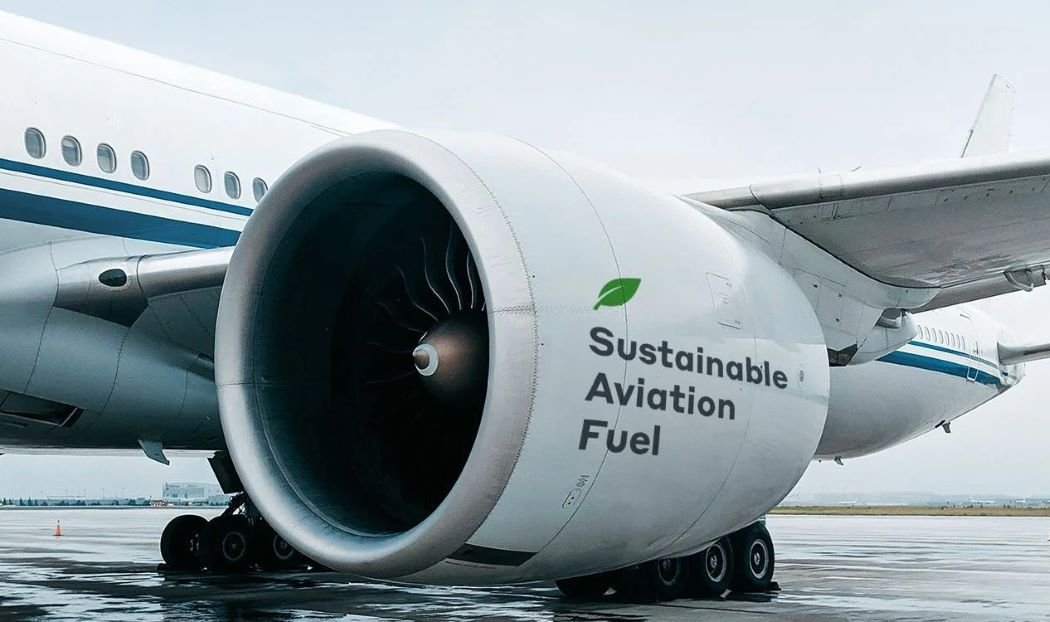
The UK Government has unveiled its proposed framework for allocating contracts under the Sustainable Aviation Fuel (SAF) Revenue Certainty Mechanism (RCM), signalling a decisive policy intervention to accelerate commercial deployment of sustainable aviation fuels while enhancing the investment attractiveness of the UK's emerging SAF ecosystem.
The Revenue Certainty Mechanism has been designed to mitigate market and revenue risks that have historically constrained investment in first-of-a-kind SAF production facilities. By providing long-term revenue visibility, the scheme is expected to improve project bankability, lower financing costs and crowd in institutional and private capital for large-scale domestic SAF manufacturing.
Introducing the strategy, Aviation Minister Keir Mather reaffirmed the Government's commitment to decarbonising aviation without compromising the sector's strategic contribution to economic competitiveness, international connectivity, trade and employment. He underscored sustainable aviation fuel as a cornerstone of the UK's aviation transition strategy and reiterated the country's ambition to establish itself as a global frontrunner in next-generation aviation fuels.
The proposal builds upon the UK's Sustainable Aviation Fuel Mandate, introduced in 2025 to stimulate market demand for low-carbon aviation fuels, and the Sustainable Aviation Fuel Act, which secured Royal Assent in March 2026, providing the statutory foundation for implementing the revenue support framework.
Government officials said the proposed allocation methodology has been formulated following extensive industry consultation and is intended to address the financing bottlenecks that continue to impede commercial-scale SAF deployment. Beyond facilitating decarbonisation, policymakers expect the framework to strengthen domestic manufacturing capabilities, reinforce national energy resilience, retain greater economic value within the UK and stimulate the creation of highly skilled green industrial employment.
The Revenue Certainty Mechanism constitutes a critical pillar of the Government's broader aviation decarbonisation agenda, complementing initiatives spanning airspace modernisation, low- and zero-emission aircraft development, carbon pricing mechanisms, research into non-CO₂ aviation effects, the Low Carbon Fuels Fund and the Department for Transport-backed SAF Clearing House.
Collectively, these policy instruments are intended to establish a commercially resilient SAF value chain while accelerating the UK's progress towards net-zero aviation. By reducing investment uncertainty and strengthening long-term market confidence, the Government aims to position the UK as one of the world's most competitive destinations for sustainable aviation fuel production, while ensuring that the transition delivers durable economic value without imposing disproportionate costs on consumers.