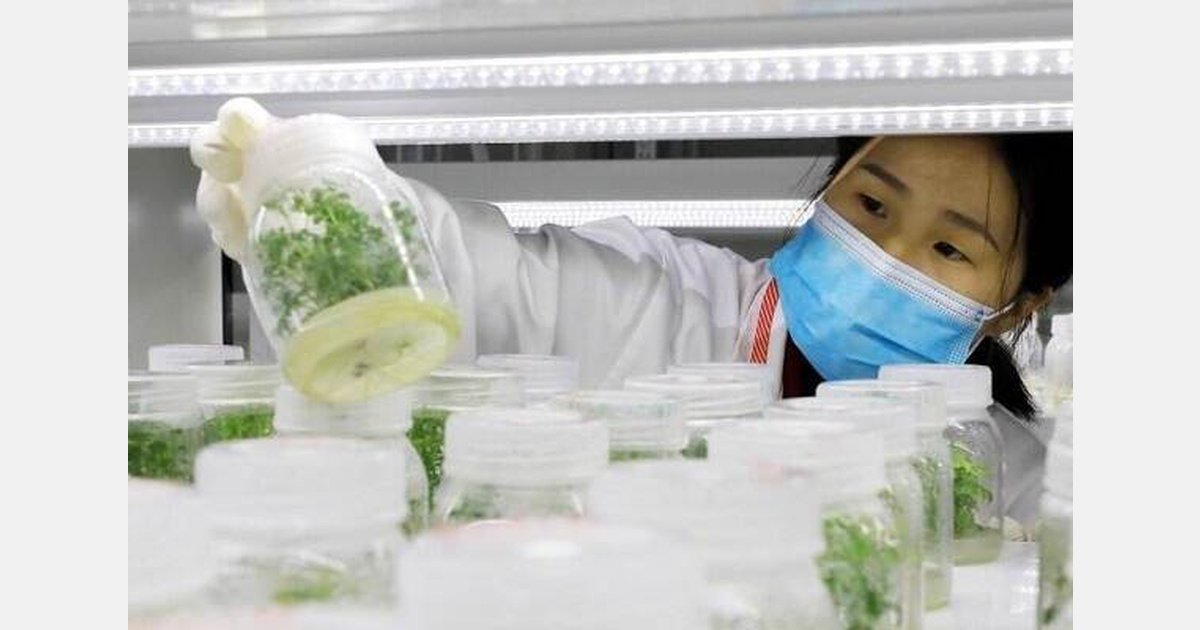
Sichuan province is committing $44.53 million (RMB 300 million) to agricultural breeding research during China’s 15th Five-Year Plan period, with a new programme designed to accelerate crop improvement, strengthen livestock and poultry genetics and address constraints in core breeding resources.
The programme was formally launched on October 23 at a meeting in Chengdu. It will comprise 23 projects, bringing together 134 universities, research institutes and seed enterprises in a coordinated industry–academia–research effort.
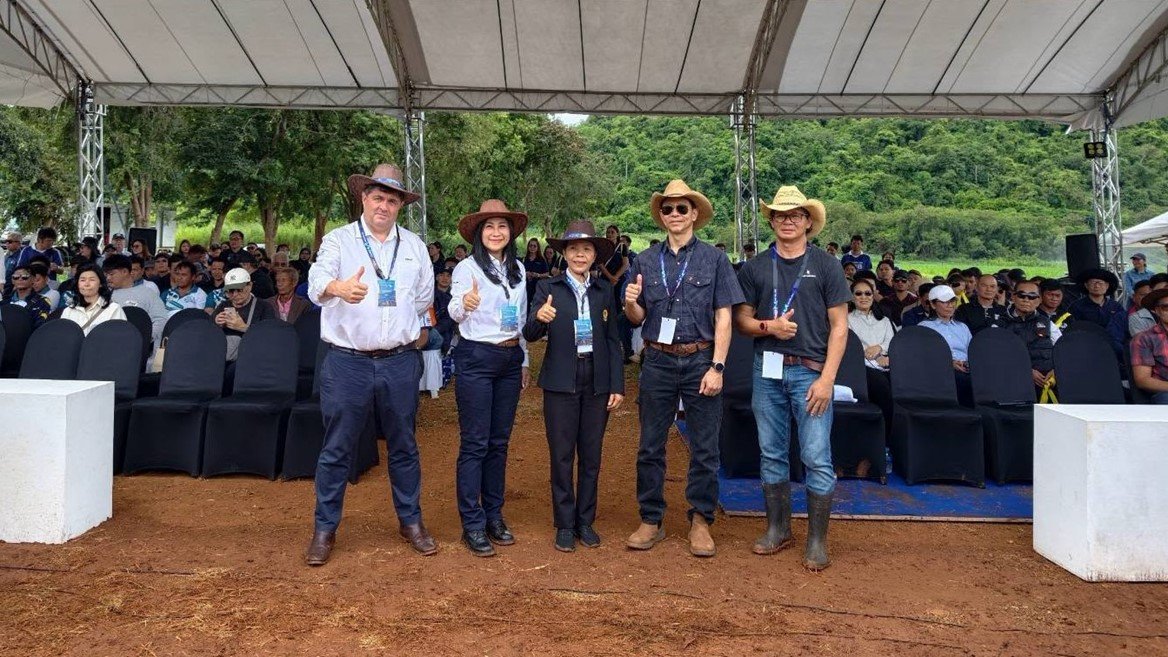
The launch meeting reviewed the province’s breeding research achievements during the 14th Five-Year Plan period and outlined the implementation framework for the next five years. Chief scientists, project-tracking experts and research representatives were also appointed. Liu Yonghong, Party Committee Secretary and President of the Sichuan Academy of Agricultural Sciences, addressed the meeting on behalf of the participating experts.
Representatives from Sichuan Agricultural University, the Sichuan Academy of Agricultural Sciences, Sichuan Tea Drinks Group and Sichuan Daheng Poultry Breeding, among other organisations, outlined their perspectives. A separate training session focused on research project management.
Previous programme delivered 297 new varieties
The new investment builds on the province’s previous five-year breeding programme, which also received $44.53 million in provincial funding. Under that initiative, Sichuan implemented 33 projects across four areas: grain and oil crops, cash crops, livestock and poultry and aquatic products, and breeding platforms.
The programme resulted in the development of 297 new major crop and livestock varieties, including 144 grain and oil crop varieties, 139 cash crop varieties and 14 livestock, poultry and aquatic product varieties.
Several developments were highlighted as significant outcomes. High-quality three-line indica hybrid rice accounted for more than 80 per cent of the relevant cultivation segment, an increase of 22 percentage points from the 13th Five-Year Plan period, according to the programme report. Wheat varietal self-sufficiency also improved, with yields entering what the report described as the 400-kilogram era.
Other breeding milestones included Miannongyou 68, identified as the world's first high-erucic-acid, low-glucosinolate oilseed rape variety; Chengdan 399, Sichuan's first dual-purpose grain and forage maize variety; and Chuanlü 11, described as China's first non-bitter South China-type cucumber variety.
The programme also sought to bridge the gap between experimental breeding and commercial adoption. More than 200 agricultural science and technology demonstration bases were established, while 117 research outcomes were promoted in industrial parks and counties.
Two varieties illustrate the scale of that effort. Maize variety Chengdan 716 recorded a yield of 13,642.5 kg per hectare in low-elevation areas of the mountainous belt surrounding the Sichuan Basin and was subsequently promoted across 3.57 million hectares. Wheat variety Shumai 1963 helped address conflicts in crop rotation schedules and became an important breeding parent for institutions across China.
Sichuan's agricultural research sector also recorded a breakthrough at this year's National Science and Technology Awards Conference, receiving one Second-Class State Natural Science Award, one First-Class State Science and Technology Progress Award and two Second-Class State Science and Technology Progress Awards.
New funding prioritises yields and genetic resources
For the 15th Five-Year Plan period, the provincial government has divided the $44.53 million allocation among three major research areas. Grain and oil crop research will receive $13.36 million (RMB 90 million), with a focus on improving yield per unit area. Cash crops will receive $14.10 million (RMB 95 million) to support the development of breakthrough varieties. Another $13.36 million (RMB 90 million) will go towards livestock, poultry and aquatic product breeding, with an emphasis on overcoming bottlenecks in access to core genetic resources.
The programme has set targets to identify and evaluate more than 1,000 germplasm resources and secure approval for more than 200 new varieties or breeding lines spanning crops, livestock, poultry and aquatic products. The focus on germplasm evaluation and core breeding resources is particularly significant for the livestock and aquaculture segments, where access to valuable genetic material is central to developing productive and commercially viable breeding lines.
New oversight framework links funding to performance
Alongside the research investment, the Sichuan Provincial Department of Science and Technology has introduced a new management structure to strengthen project execution and accountability. The framework combines four roles: field chief scientists, tracking experts, project chief scientists and management specialists. Project performance will be assessed through an annual review, a three-year evaluation and a five-year final acceptance process.
The department said the mechanism is intended to ensure that public funds are used for designated purposes, with rewards and penalties linked to performance and project adjustments made dynamically. The next five years will test whether Sichuan can convert its expanded research network and funding commitments into commercially adopted varieties, stronger breeding capabilities and measurable productivity gains. Its stated targets place particular emphasis on closing the distance between laboratory research, field performance and the needs of agricultural producers.