Vietnam’s emerging low-altitude economy could become a $10 billion market by 2035, creating opportunities for domestic businesses across drone manufacturing, artificial intelligence, software development and specialised services. However, experts say companies do not need to master the entire unmanned aerial vehicle (UAV) value chain to participate in its expansion.
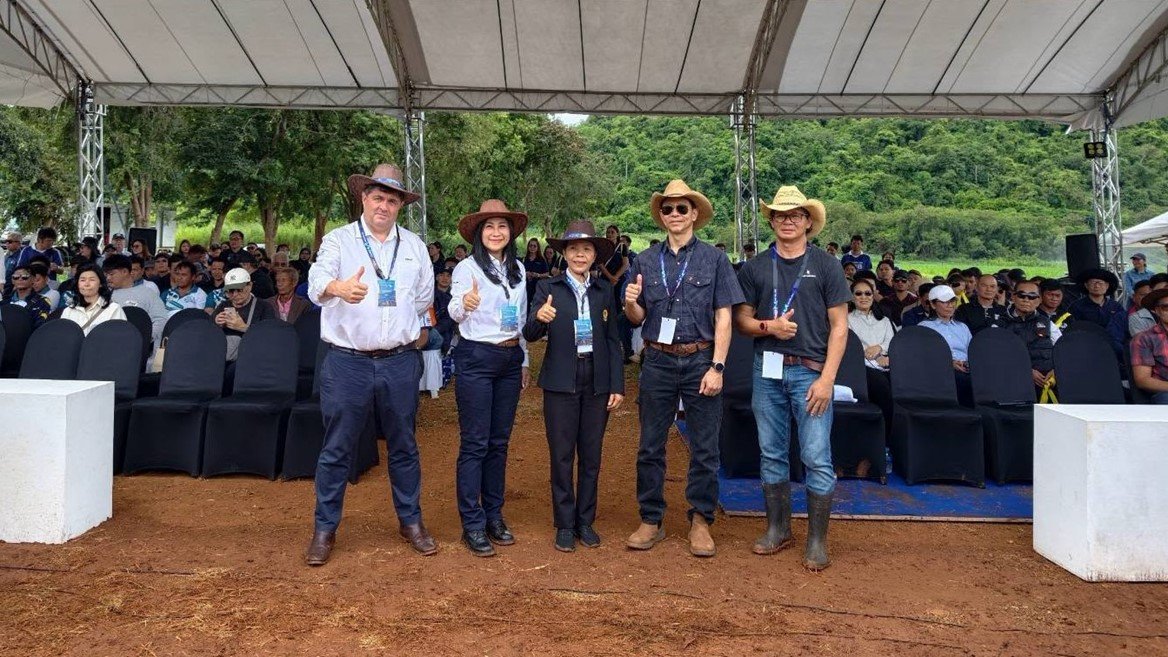
Instead, businesses should identify segments that align with their existing capabilities, build practical applications and develop commercially sustainable services, according to industry representatives speaking at a discussion on October 27 in Ho Chi Minh City during the Autumn Economic Forum 2026.
Dr Nguyen Thi Hai Hang, Vice Chairwoman of the Vietnam Low Earth Economic Alliance (LAEP), said a diverse network of businesses was already emerging around the country's low-altitude economy. Some companies are manufacturing components and parts for UAVs, seeking to integrate into broader supply chains. Technology start-ups, meanwhile, are developing software, incorporating AI and building applications that operate on existing drone platforms.
This approach could lower the barriers to entry. With a range of aircraft and components already available, companies can concentrate on specialised applications rather than investing in the research and manufacturing of complete UAV systems. Hang cautioned that Vietnam's ambition to master core technologies would be difficult to achieve across every segment, particularly when competing with countries that have established technological advantages. She argued that investment should reflect domestic capabilities and market conditions, with immediate priority given to deploying applications safely and efficiently. Greater technological self-reliance could follow as local capabilities develop.
Agriculture and infrastructure offer immediate use cases
For Vietnam, the commercial opportunity may lie less in creating entirely new markets than in extending UAV use across sectors where demand is already visible. Bui Minh Phuong, Deputy Director of the Institute for Low-Altitude Space Development (ILASD), identified precision agriculture, infrastructure monitoring, logistics, healthcare and digital mapping as areas with near-term deployment potential.
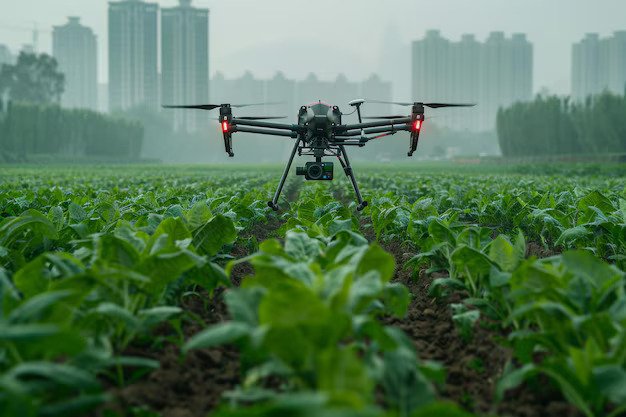
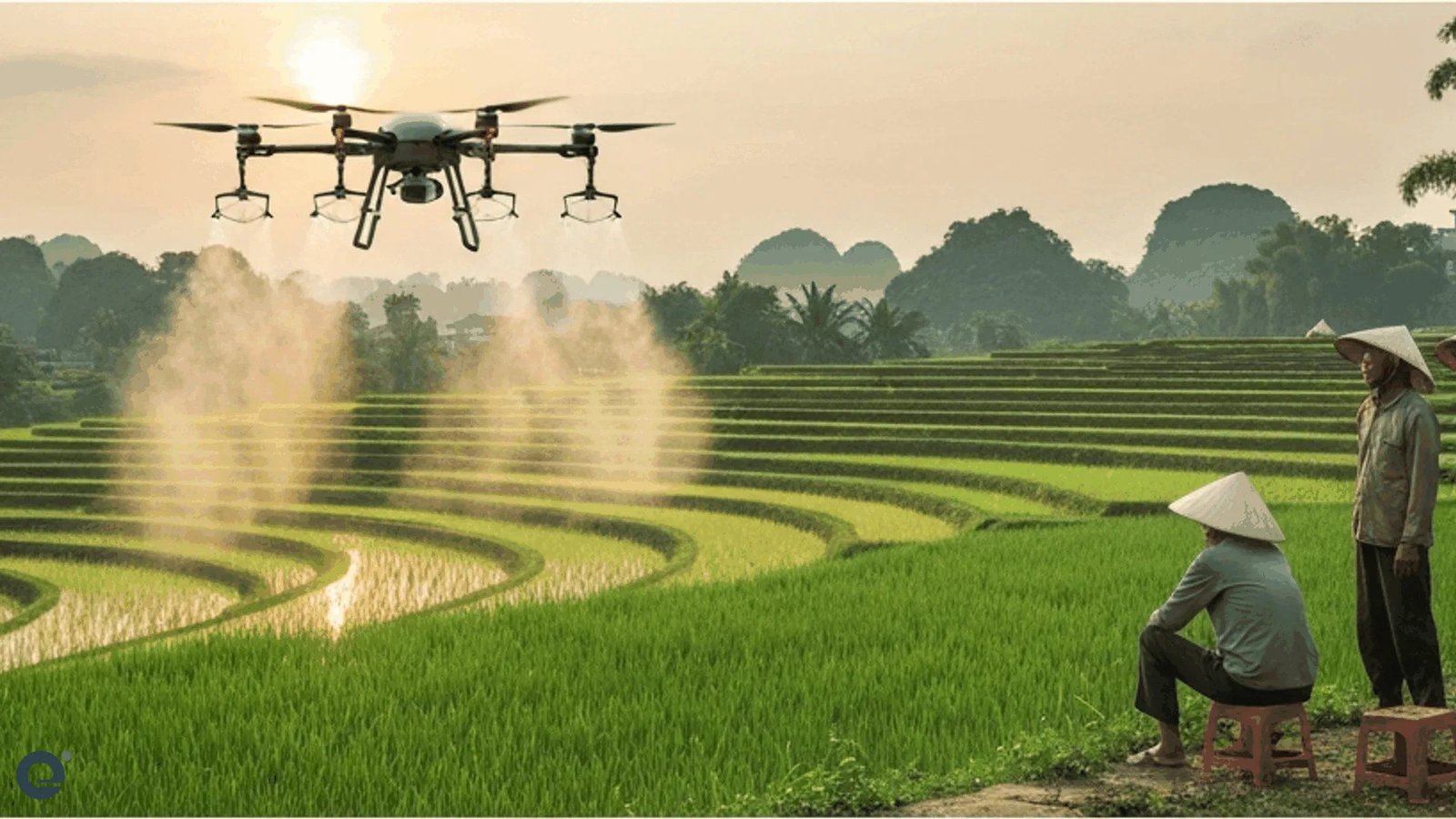
Agriculture offers one of the clearest examples. In the Mekong Delta, drones have been used for more than a decade for seed sowing, pesticide spraying and pest management. By 2025, more than 3,000 agricultural drones were operating across approximately 1.5 million hectares in the region.
The application base is also expanding beyond farms. UAVs are being deployed to inspect electricity and energy infrastructure, particularly installations in locations that are difficult or risky for personnel to access. These use cases point to opportunities extending well beyond equipment sales. Companies can develop sector-specific solutions that combine hardware with flight operations, data collection, analytics and technical support.
Phuong said value creation in the low-altitude economy would increasingly depend on software, data processing, system integration, maintenance and operational services, alongside aircraft manufacturing. The longer-term opportunity is to move from supplying individual products towards end-to-end service models covering flight planning, operations, data processing and reporting. Nguyen Van Thuat, Deputy Director of the Department of Digital Economy and Digital Society under Vietnam's Ministry of Science and Technology, warned that successful trials should not be mistaken for successful commercialisation.
A drone application may perform effectively during a controlled test but still fail to establish a sustainable business. Companies must demonstrate that a genuine market exists, that their solutions address identifiable problems and that customers are willing to pay for the services. Applications must also deliver measurable advantages over conventional approaches. Safety and scalability are equally important: solutions need to function reliably under real operating conditions and be replicable across locations without requiring a complete redesign of technology, infrastructure or regulatory arrangements.
The economics of deployment also require closer scrutiny. Experts urged businesses to evaluate costs across the entire equipment lifecycle, including hardware, personnel, batteries, maintenance, insurance and connectivity. Without a comprehensive assessment of operating costs and customer demand, investment in UAV applications risks becoming fragmented, with limited commercial returns.
Building an integrated low-altitude industry
Vietnam's ability to capture a larger share of the projected market will depend on how effectively it connects research, manufacturing, technology development and end-user demand. Experts called for stronger industry clusters involving research institutions, training organisations, technology companies, manufacturers, government agencies and industrial customers. Such collaboration could help align research priorities with practical requirements while accelerating the development and deployment of commercially relevant solutions.
The emerging market offers opportunities across the UAV value chain, but its growth will not be determined by aircraft production alone. Software, AI integration, data services, maintenance and specialised operations could become equally important sources of value.
For Vietnamese businesses, the immediate challenge is to identify applications that solve real problems, demonstrate economic returns and can be scaled safely. Turning the country's low-altitude ambitions into a $10 billion market will depend on commercial execution as much as technological innovation.