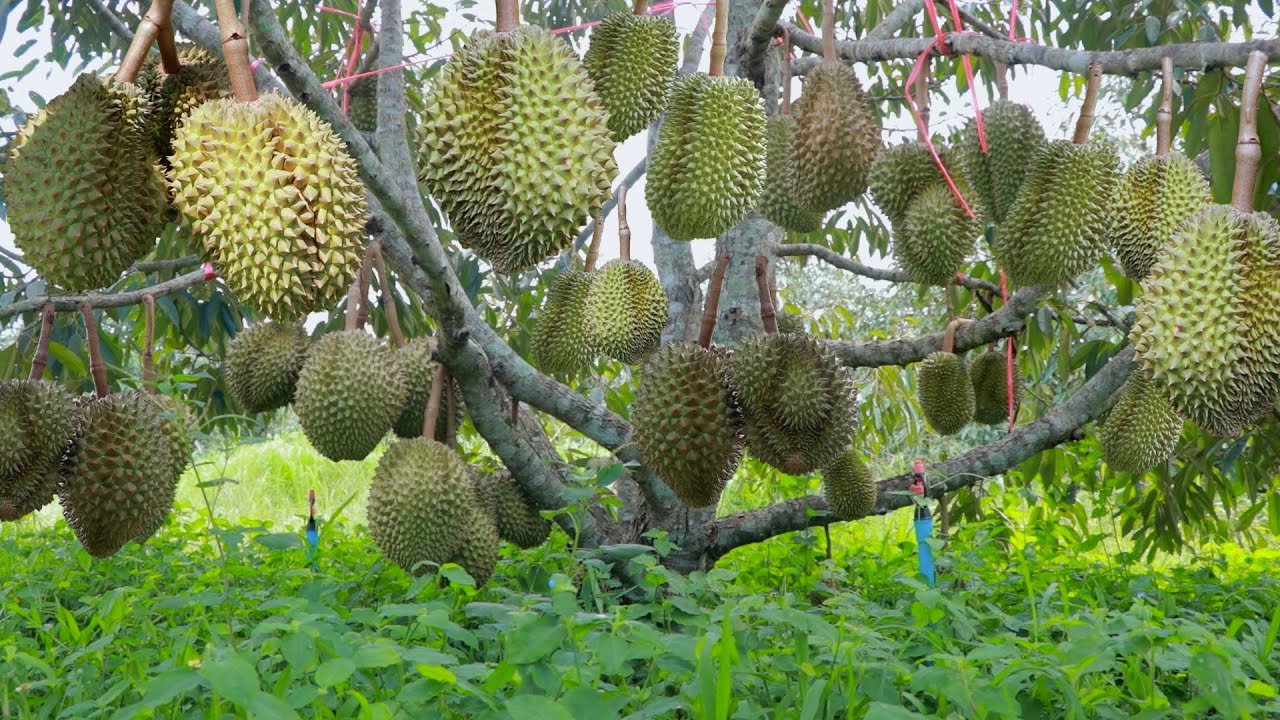
China has approved 401 additional durian growing areas and 166 packing facilities in Vietnam, significantly expanding the country’s capacity to export one of its fastest-growing agricultural commodities through official channels. The approvals followed an assessment by China’s General Administration of Customs (GACC) of 736 Vietnamese durian applications, comprising 487 growing areas and 249 packing facilities.
Of those assessed, 82.3 per cent of growing area applications and 66.7 per cent of packing facility applications received approval. The decision comes at a strategically important moment for Vietnam’s durian industry. As harvest volumes rise in the Central Highlands, additional approved codes could give farmers, exporters and packers greater access to China, Vietnam’s most important market for the fruit.
But the numbers also reveal the next challenge: market access is expanding, while compliance requirements are becoming more demanding.
China opens the gate wider—but not completely
A further 283 durian growing areas and 160 packing facilities remain under review, leaving a substantial pipeline of Vietnamese export capacity still waiting for access. Another 86 growing areas and 83 packing facilities assessed in the latest round must address outstanding issues before they can be reconsidered.
That makes the latest approvals more than a simple expansion of export capacity. They offer a snapshot of the changing economics of agricultural trade with China. For Vietnam, the ability to export increasingly depends on whether individual farms and facilities can demonstrate compliance with requirements covering production practices, traceability, documentation and food safety.
The competitive advantage is shifting from simply producing more durians to producing export-ready durians. Codes are becoming agricultural trade infrastructure Growing area and packing facility codes may appear administrative, but they are rapidly becoming critical pieces of trade infrastructure.
Each approved code connects a physical production or packing operation to an official export system. Without that connection, access to China's formal agricultural market can be restricted. Vietnam's Ministry of Agriculture and Environment is now moving towards a more data-driven system for managing these codes under Resolution No. 36/2026/NQ-CP, issued on July 31, 2026.
The new approach focuses on traceability, risk classification, clearer stakeholder responsibility and centralised digital data. The objective is to progressively link information from growing areas and packing facilities to individual consignments and destination markets.
That could fundamentally change how Vietnam manages agricultural exports. Instead of treating export codes as static approvals, the system is moving towards continuous monitoring and risk-based management.
The real competition is moving from volume to traceability
Vietnam's durian industry has expanded rapidly, but rapid growth also creates pressure on quality-control systems. The Ministry has stressed that technical standards cannot be treated as requirements to be addressed only when an application is submitted. Compliance must be maintained continuously. For exporters, that means traceability is becoming an operational requirement rather than a regulatory afterthought.
The stakes are particularly high because code approvals can also be suspended. Vietnam asked the GACC to consider providing exporters with a longer advance notice period before suspensions, giving businesses more time to adjust harvesting, purchasing, packing and transport plans.
The Chinese side, however, said its current practice of notifying exporters around 48 hours after a suspension decision would remain unchanged. That leaves Vietnamese exporters with little room for operational error. A code can open the door to a major export market, but weak compliance can quickly close it. Vietnam wants faster approvals. China wants time to verify. The two sides also discussed the speed of the approval process.
Vietnam proposed more frequent submission cycles to reduce waiting times and better align approvals with agricultural production and export seasons. China said the current three-month submission cycle would remain in place, citing the time and resources required to review applications. The difference highlights a fundamental tension in agricultural trade.
Producers operate according to harvest cycles. Regulators operate according to inspection and verification capacity. As Vietnam digitises its code management system and potentially submits larger numbers of applications, that tension could become even more pronounced. The challenge will be to increase the speed of trade without weakening the credibility of the approval system.
Beyond durian: Vietnam expands its agricultural export pipeline
The discussions also produced additional approvals beyond durian. China approved six more growing area codes for coconuts and chilies, along with 70 packing facility codes for other Vietnamese agricultural products. Vietnam has also proposed a roadmap for greater mutual recognition of laboratory capacity, testing methods and results for selected agricultural products.
Such cooperation could eventually reduce duplication, improve testing efficiency and make cross-border agricultural trade more predictable. The two countries agreed to maintain a technical exchange mechanism three times a year, while also communicating directly when urgent issues arise.
The bigger opportunity is not just more exports—it is more reliable exports
The approval of hundreds of new durian growing areas and packing facilities will undoubtedly expand Vietnam's potential supply base. But the longer-term success of the industry will depend on whether that expanded network can remain compliant.
Vietnam's agricultural authorities are now pushing local governments and businesses to improve application quality, strengthen on-site monitoring and invest in post-approval compliance. That is likely to become increasingly important as China applies more sophisticated traceability and risk-management systems to agricultural imports.
For Vietnam's durian exporters, the next phase of growth will not simply be about securing more codes. It will be about protecting the codes they already have. The latest approvals provide Vietnam with more room to grow its durian trade with China. Yet they also underline a larger transformation taking place across Asian agricultural supply chains. The future winners will not necessarily be those that produce the most. They will be those that can prove—consistently and transparently—where their products came from, how they were handled and whether they meet the standards of the market buying them.