The Reserve Bank of India (RBI) is widely expected to leave the benchmark repo rate unchanged at 5.25 per cent when the Monetary Policy Committee (MPC) concludes its August policy meeting this week, extending a pause that has now lasted three consecutive reviews. But beyond the anticipated status quo, the central bank's messaging is expected to reinforce a larger theme: India's inflation outlook is becoming increasingly dependent on developments in agriculture. The policy decision comes at a time when inflation has begun edging higher after remaining comfortably below the RBI's target for much of the year. Headline consumer price inflation under the revised CPI series rose steadily from 2.75 per cent in January to 3.21 per cent in February, 3.40 per cent in March, 3.48 per cent in April, 3.93 per cent in May, before crossing the RBI's medium-term target to reach 4.38 per cent in June 2026. While the increase remains moderate by historical standards, policymakers are increasingly concerned about what is driving it.
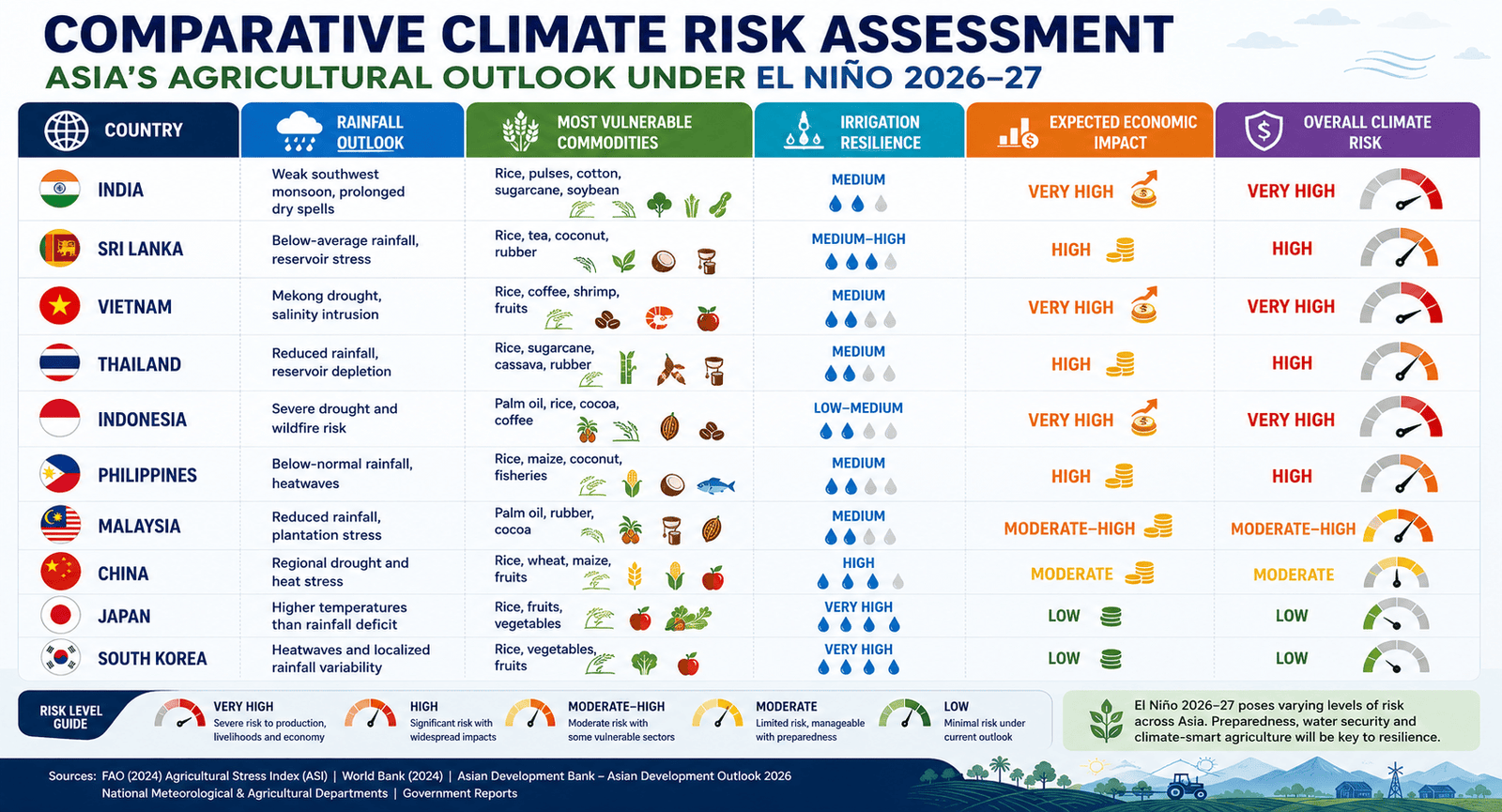
Unlike previous inflationary episodes that were fuelled largely by demand, the current risks are rooted in supply-side factors. Patchy southwest monsoon rainfall, El Niño conditions, volatile energy markets and geopolitical tensions have all emerged as variables capable of influencing food prices and, by extension, the broader inflation trajectory. That concern was evident in RBI Governor Sanjay Malhotra's latest assessment of the economy. "Looking ahead, prospects for agriculture are clouded by deficient and uneven Southwest monsoons amidst El Niño conditions. The reservoir levels, which remain close to normal, bode well. The government's initiatives for crop diversification, including short-duration as well as climate-resilient crops and water harvesting and conservation are expected to mitigate the impact of deficient rainfall," the Governor said.
The remarks underscore how agriculture has moved from being a sector-specific concern to a central pillar of India's macroeconomic outlook. For the RBI, farm output is no longer only about rural incomes or crop production—it has become a key determinant of inflation, consumer spending and overall economic stability. Markets therefore expect the MPC to adopt a cautious tone while maintaining both the 5.25 per cent repo rate and its neutral policy stance. Economists believe the committee will avoid signalling either fresh easing or tightening until there is greater clarity on the inflation outlook, particularly whether recent price pressures prove temporary or become more entrenched.
Governor Malhotra has also cautioned against reading too much into short-term economic resilience. "Growth, albeit resilient, is expected to be lower in this financial year. The outlook, however, is hazy because of the uncertainties regarding Southwest Monsoon, El Niño, geopolitics and global trade policy. There is a need for greater clarity to emerge, especially regarding inflation, its path and composition, before taking any policy action," he said. Those comments suggest the RBI is likely to continue prioritising inflation management even as domestic economic activity remains relatively strong. Investment spending, services growth and healthy credit demand continue to support the economy, giving policymakers room to pause after last year's aggressive monetary easing.
The current policy stance represents a clear shift from 2025, when the RBI delivered a cumulative 100 basis points of rate cuts. The easing cycle began in February 2025, when the repo rate was reduced to 6.25 per cent, followed by another cut to 6.00 per cent in April. The central bank then surprised markets with a larger 50-basis-point reduction in June 2025, bringing the repo rate to 5.50 per cent, before making a final 25-basis-point cut in December 2025 to the current 5.25 per cent. Since then, the MPC has maintained status quo through its February, April and June 2026 meetings, signalling that the easing phase has given way to a period of policy caution. The RBI's communication now suggests that inflation has become its overriding priority. Rather than responding immediately to weather-driven food price shocks, policymakers are expected to place greater emphasis on core inflation, which strips out volatile food and fuel prices and provides a clearer picture of underlying demand pressures. This approach reflects the central bank's belief that headline inflation has recently been influenced more by domestic and global supply disruptions than by excess demand.
Agriculture remains at the heart of that assessment. An uneven monsoon does not simply reduce crop yields; it affects the availability of cereals, pulses and oilseeds, raises feed costs for the livestock sector and eventually pushes up prices of poultry, milk, eggs and other protein-rich foods. The inflationary impact extends across the food chain, influencing both farm incomes and household budgets. Industry stakeholders believe these risks warrant close attention.
Divya Kumar Gulati, Chairman of the Compound Livestock Feed Manufacturers Association (CLFMA) of India, said the RBI's assessment accurately reflects the challenges facing the livestock sector. "The RBI's assessment rightly highlights the growing uncertainty around the agricultural outlook due to deficient and uneven monsoon conditions. For the livestock sector, this is a critical concern as any disruption in crop production directly impacts the availability and prices of essential feed ingredients such as maize and soybean. Higher feed costs eventually translate into increased production costs for poultry, eggs, milk and other livestock products, affecting both farmers and consumers," Gulati said. He added that while near-normal reservoir levels and the government's focus on climate-resilient agriculture offer reasons for optimism, policy execution will determine how effectively these risks are managed. "The government's emphasis on climate-resilient agriculture and crop diversification is encouraging, but timely policy support and effective implementation will be key to ensuring feed security. Strengthening the resilience of India's feed and livestock value chain is essential not only for protecting farmer livelihoods but also for ensuring stable food prices and sustaining the country's nutritional security," he said.
Beyond domestic developments, the RBI also faces an increasingly uncertain global backdrop. Markets will closely monitor geopolitical developments in West Asia and any shift in the US Federal Reserve's policy outlook during the second half of 2026. Changes in global interest rates could influence the rupee, capital flows and interest-rate differentials, all of which feed into India's inflation and monetary policy outlook. At the same time, expectations of a recovery in foreign portfolio inflows, coupled with continued liquidity support through swap windows, are expected to provide a relatively supportive environment for domestic financial markets. Financial markets will therefore focus as much on the RBI's policy statement as on the repo rate decision itself. Investors will look for clues on whether the central bank has become more concerned about food inflation, whether it has revised its growth or inflation projections and whether its assessment of agricultural risks has changed ahead of the remaining MPC meetings scheduled for October 5–7, December 2–4, 2026, and February 3–5, 2027.
-- suchetana.choudhuri@agrospectrumindia.com