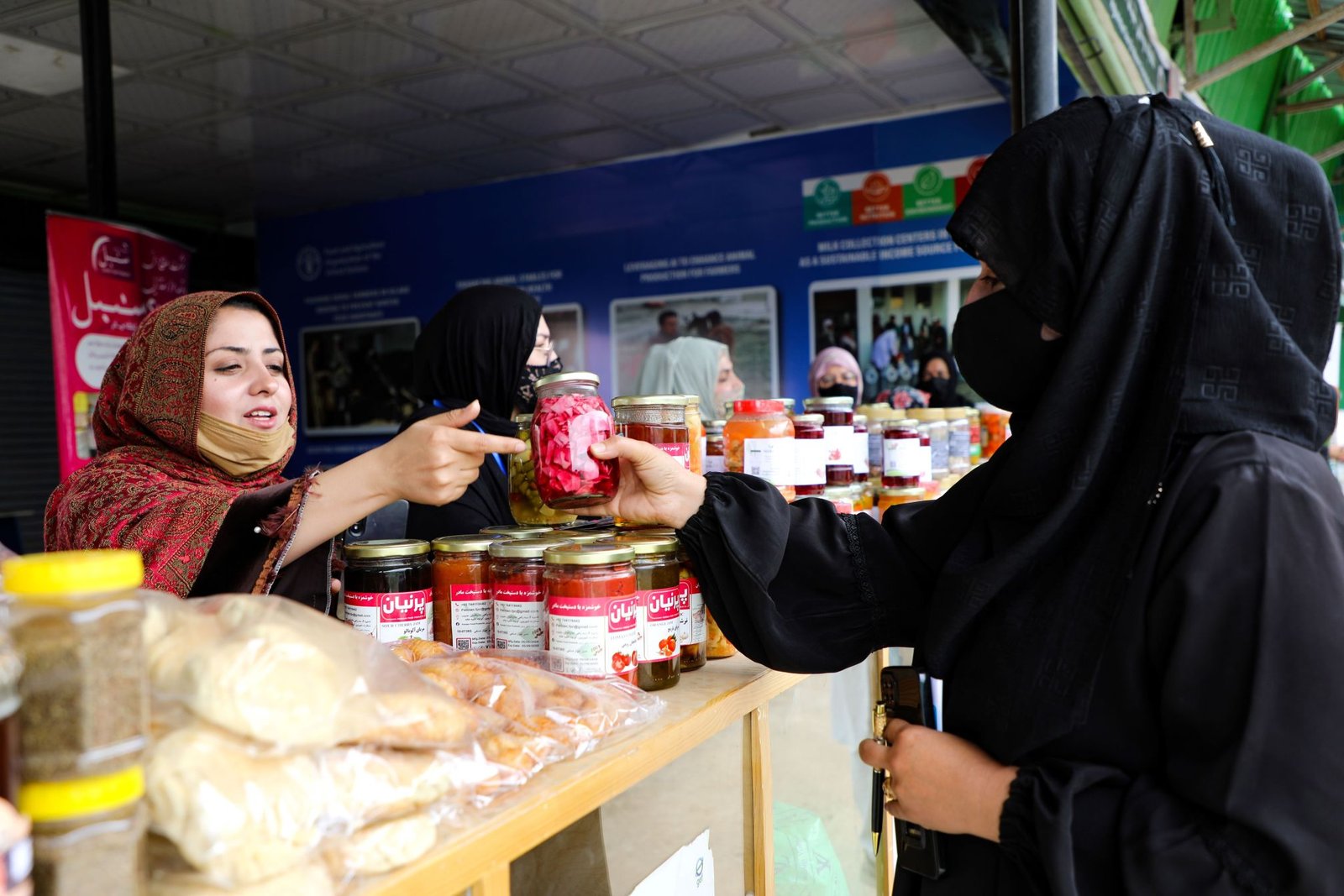
The European Union and the Food and Agriculture Organization of the United Nations (FAO) have launched a €5 million initiative aimed at moving Afghanistan’s agricultural economy beyond short-term relief by connecting farmers and agribusinesses with markets, investment, technical services and more resilient production systems.
The programme will target vulnerable households, including returnees, internally displaced people and host communities, particularly in districts facing food and nutrition insecurity, climate risks and limited economic opportunities. Women and young people will be a key focus as the initiative seeks to create more reliable rural incomes and strengthen the ability of agricultural communities to withstand climate and economic shocks.
At the centre of the programme will be four one-stop service hubs designed to bring farmers and rural entrepreneurs closer to agricultural advisory services, specialised support, agribusinesses and markets. The hubs will promote improved farming practices and technologies while providing access to FAO climate analysis and early-warning information, enabling producers to make more informed production and marketing decisions as weather and market conditions change.
The initiative will also combine agricultural development with natural-resource restoration. It aims to restore 2,000 hectares of degraded forests and rangelands and support 250 women- and community-led nurseries. The programme is designed to strengthen local livelihoods while improving the management and resilience of natural resources that underpin rural economies.
For established agrifood and environmentally sustainable enterprises, the programme will provide matching grants alongside tailored technical and business advice. Participating businesses will be required to contribute their own resources, creating a co-investment model intended to support commercially viable expansion rather than relying solely on grant financing.
The participating enterprises will be encouraged to expand processing and other agricultural services, source more produce from local farmers and create rural employment. The approach is designed to strengthen links across the agricultural value chain, allowing investment in businesses to translate into greater market opportunities for producers.
“The European Union’s contribution to FAO demonstrates our continued commitment to food security and economic empowerment of the Afghan people,” said Nicola Bellomo, the new EU Chargé d’Affaires for Afghanistan. “Afghanistan’s agricultural potential remains undervalued and constrained by the country’s extreme climate vulnerability. With our partner FAO, we will boost agricultural extension services, enhance growth potential for agribusinesses, foster innovative nature-based solutions, and improve evidence-based knowledge and analysis.”
The programme reflects a shift towards development models that seek to build productive capacity alongside humanitarian support. For Afghanistan’s agriculture sector, the challenge is not simply increasing production but creating the infrastructure, services and commercial relationships needed to move farm output into functioning markets.
“As we pivot away from largely humanitarian programmes towards more sustainable approaches, Afghanistan’s agrifood businesses have demonstrated real potential to grow, create jobs and connect farmers to markets, even in a highly challenging environment,” said Richard Trenchard, FAO Representative in Afghanistan. “Together with the European Union, we will connect farmers with the knowledge, services and markets they need, while helping agribusinesses invest and expand. When farmers can produce with confidence, businesses can grow and products can reach markets, agriculture becomes a powerful engine for recovery and resilience.”
The initiative puts agribusiness development, market connectivity and climate resilience at the centre of Afghanistan’s rural recovery strategy. By combining grants with private contributions, technical assistance, market services and natural-resource restoration, the EU and FAO are seeking to build a more connected agricultural economy in which farmers have better access to information and buyers while businesses have stronger incentives to invest and expand.