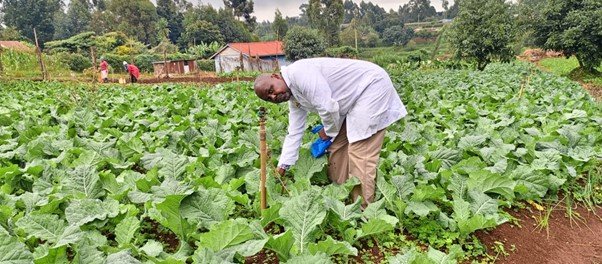
Kenya has launched a national framework to monitor pesticide residues in food, seeking to strengthen food safety oversight, protect public health and improve the competitiveness of its agricultural produce in domestic and export markets.
The National Pesticide Residue Monitoring Framework (NPRMF) was officially launched in Nairobi on October 15, 2026, following more than two years of consultations, technical assessments and collaboration among government agencies, laboratories, agricultural organisations, exporters, retailers and development partners.
The framework provides a coordinated national system for generating, analysing and sharing pesticide residue data. The information is intended to support regulatory decisions, improve food safety assurance and help Kenyan agricultural products meet applicable market requirements.
The initiative received technical support from CABI through its PlantwisePlus programme and its Pesticide Risk Reduction pathway. CABI worked with a multisectoral group of stakeholders, including the Pest Control Products Board (PCPB), the Kenya Plant Health Inspectorate Service (KEPHIS), the Agriculture and Food Authority's Horticultural Crops Directorate, and the Ministry of Health's Kenya National Public Health Institute, through its Division of Food Safety.
Other participants included industry associations, testing laboratories, academic institutions, development organisations and county governments, reflecting the role of coordination across the agricultural supply chain in managing pesticide-related risks.
A coordinated approach to food safety
Speaking at the launch, Agriculture Secretary James Wanjohi of the Ministry of Agriculture and Livestock Development emphasised the need for collaboration across the food system. “Food control is multisectoral. This forum reminds us of the importance of working together to ensure food safety from farm to fork,” he said. Wanjohi noted that pesticides remain important tools for managing agricultural pests and diseases but stressed that their use must be regulated and guided by Good Agricultural Practices.
The framework is intended to strengthen the links between pesticide regulation, agricultural production, public health and food trade. A coordinated monitoring system can help authorities identify residue-related risks, improve the evidence available for regulatory action and strengthen communication among institutions responsible for food safety.
For exporters, reliable residue data can also help identify compliance gaps and inform corrective action before products reach destination markets. However, the framework's effectiveness will depend on its implementation, the quality and coverage of sampling, laboratory capacity and the consistent sharing of monitoring results.
Two years of consultations and technical development
The framework emerged from discussions initiated in 2024, when PlantwisePlus supported stakeholders in examining the need for a national mechanism to coordinate pesticide residue monitoring. A national technical workshop later that year brought together representatives from government agencies, laboratories, academia, development organisations and industry to draft the framework and establish a common implementation approach.
Technical assessments drew on international experience, including pesticide residue monitoring systems in the United States, China and India. Stakeholders continued working through 2025 to define institutional responsibilities, establish consensus and develop the procedures needed to operationalise the system.
TradeMark Africa also supported the development of standard operating procedures intended to guide implementation. The framework was subsequently piloted between May and June 2025 in five agricultural counties: Kirinyaga, Kiambu, Kajiado, Narok and Taita Taveta. Findings from the pilot informed the final framework and its accompanying implementation procedures.
Dr Naphis Bitange, CABI scientist and systems agronomist, said the collaborative development process helped establish stronger connections between institutions responsible for food safety, public health, pesticide regulation, agricultural production and trade. “Developing the framework through a collaborative process ensured that institutions were not working in isolation,” he said, adding that the resulting system supports improved coordination, evidence generation and decision-making.
Market access and consumer confidence in focus
For an export-oriented agricultural sector, pesticide residue compliance can influence access to international markets, where buyers and regulators apply specific food safety requirements. A national monitoring framework could help Kenya generate more consistent evidence about residue levels and strengthen confidence among consumers, traders and overseas buyers. CABI Senior Scientist for Sanitary and Phytosanitary matters, Dr MaryLucy Oronje, said the framework would contribute to greater confidence in Kenyan agricultural produce by strengthening food safety assurances for domestic consumers, traders and export markets.
Dr Melanie Bateman, CABI's global lead on synthetic pesticides, described the launch as an important milestone in addressing pesticide-related risks, while emphasising that ensuring safe food and regulatory compliance remains an ongoing process. CABI Regional Director for Africa Dr Daniel Karanja said the framework should be viewed as the beginning of a new phase of work rather than the conclusion of the development process. He called for continued collaboration to translate the agreed system into practical implementation.
The next phase will require sustained support from national government agencies and development partners, particularly for pesticide residue monitoring, data sharing and inter-agency coordination. While the launch establishes a common framework for action, measurable gains in food safety and export competitiveness will depend on how consistently the system is implemented and whether monitoring data lead to timely, evidence-based interventions.