
Cogny, the only wholly Brazilian group present at ABIM 2026, the Annual Biocontrol Industry Meeting in Basel, Switzerland, has outlined its international expansion strategy. The group aims to establish a commercial presence in 30 countries by 2030, expanding its reach through new distribution partnerships and continued investment in innovation.
Felipe Fiorese, Cogny’s Head of Marketing and Communications, said the event provided an opportunity to meet potential distributors and local resellers, particularly in the European Union and North Africa, as the company seeks to enter additional markets and broaden its customer base.
“We have a very clear target: by 2030, we aim to have a commercial presence in 30 countries,” Fiorese said. “We are already halfway there, exporting to 15 countries directly or indirectly, through our own branded products or as a B2B supplier under different business arrangements.”
Fiorese said regulatory barriers remain in some markets but are being addressed. He added that Cogny’s participation in ABIM was helping the group strengthen its international network and advance its expansion plans.
Inovation as Foundation
Tulio Silva, International Business Manager at Cogny, said the group’s position in Brazil and its investment in research and development provide a strong foundation for international growth. He noted that the global biologicals market offers a broad range of products across multiple niches, with competition intensifying, particularly from Asian manufacturers investing in new technologies and innovation.
However, Silva said Cogny’s research capabilities place it on an equal footing with leading international companies. The group’s R&D operation, Orygen Research, is central to this strategy.
“Throughout our conversations at ABIM 2026, we did not encounter a new product or innovation that was not already on our radar or under development within the Cogny ecosystem,” Silva said. “We are not behind any company in the global biologicals industry in terms of technology, industrial capacity or the training and qualifications of our people.” Silva said the event reinforced his confidence in the group’s international strategy and its commitment to further investment in expansion.
3 Pillars of Growing
Derik Chamberlain, Executive Commercial Director at Bioma, another company within the Cogny ecosystem, identified three pillars underpinning the group’s growth: people, innovation and close engagement with farmers. The group currently employs more than 300 field technicians specializing in biological agricultural inputs and expects to increase that workforce by approximately 30 per cent next year, bringing the total to around 400.
Chamberlain said the technical team plays a crucial role in translating research into practical applications, helping farmers understand how biological technologies can improve crop management and productivity.
The second pillar is long-term investment in innovation. According to Chamberlain, Cogny and its companies, including Simbiose and Bioma, have spent decades developing new products and technologies, with further launches planned for upcoming growing seasons.
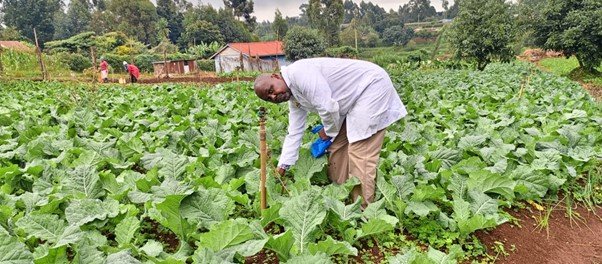
The third pillar is the ability to demonstrate the value of those technologies under real farming conditions. By combining product development with technical support in the field, the group aims to help growers integrate biological solutions into their production systems.
“Our farmers see that the companies in the Cogny ecosystem are genuinely present and committed to working alongside them,” Chamberlain said, adding that the group’s brands perform strongly in surveys measuring brand awareness and customer evaluations.
He described Cogny as an innovative, quality-focused supplier that provides services and technologies to help Brazilian farmers overcome yield limitations.
With exports already reaching 15 countries, the group is now seeking to translate its domestic expertise, R&D investment and field-level capabilities into a broader international footprint. Its target of operating commercially in 30 countries by 2030 will depend in part on building new partnerships and overcoming regulatory hurdles in target markets.