
Heritable Agriculture and Annogen Agri B.V. are joining forces to address one of the more difficult problems in crop genetics: determining which stretches of DNA outside genes actually influence plant traits.
Under the collaboration, Annogen will use its SuRE platform to functionally annotate non-coding variants in maize by measuring how individual DNA sequences affect gene expression directly in plant protoplasts. The resulting experimental data will help distinguish variants that increase or decrease gene activity from those that have little or no measurable effect.
That distinction could prove valuable for Heritable Agriculture, which uses artificial intelligence to identify DNA sequences involved in regulating gene expression and design genetic changes aimed at improving crop performance.
Non-coding regions of the genome do not directly produce proteins, but they can play an important role in controlling when, where and how strongly genes are expressed. For crop developers, identifying which of these sequences have a functional effect can be a significant bottleneck because large numbers of predicted variants may ultimately require testing in plants and, later, under field conditions.
The companies aim to reduce that bottleneck by bringing high-throughput experimental evidence into Heritable’s AI-driven discovery process.
The functional data generated through Annogen’s platform will be used to strengthen the sequence-to-expression relationships underpinning Heritable’s models. Rather than advancing a large pool of computationally predicted variants into resource-intensive in-planta and field experiments, Heritable expects to use the data to identify a smaller set of variants with higher confidence.
That could reduce the number of candidates requiring downstream validation while shortening the time needed to move from computational prediction to experimentally validated traits.
“We’re excited to work with Annogen because their high-throughput platform will allow us to iterate more efficiently than if we optimized the assay in-house,” said Davide Sosso, Chief Science Officer at Heritable Agriculture. “That means we can evaluate more variants more quickly, giving us a way to rapidly test our models.”
The partnership reflects a broader shift in agricultural biotechnology toward combining machine learning with large-scale experimental datasets. AI models can identify patterns across genetic sequences and generate hypotheses, but their usefulness ultimately depends on the quality of the biological evidence used to train and test them.
For Heritable, the collaboration provides a way to close that loop. Computational models can nominate regulatory sequences, Annogen’s SuRE platform can test their functional impact, and the resulting measurements can then be fed back into the modelling process.
“We are proud to collaborate with Heritable, a leader in AI-driven trait design,” said Joris van Arensbergen, CEO and founder of Annogen Agri B.V. “This partnership reinforces our belief that purpose-built, large-scale experimental datasets are essential for building high-performing AI models that will transform how gene regulatory elements are engineered.”
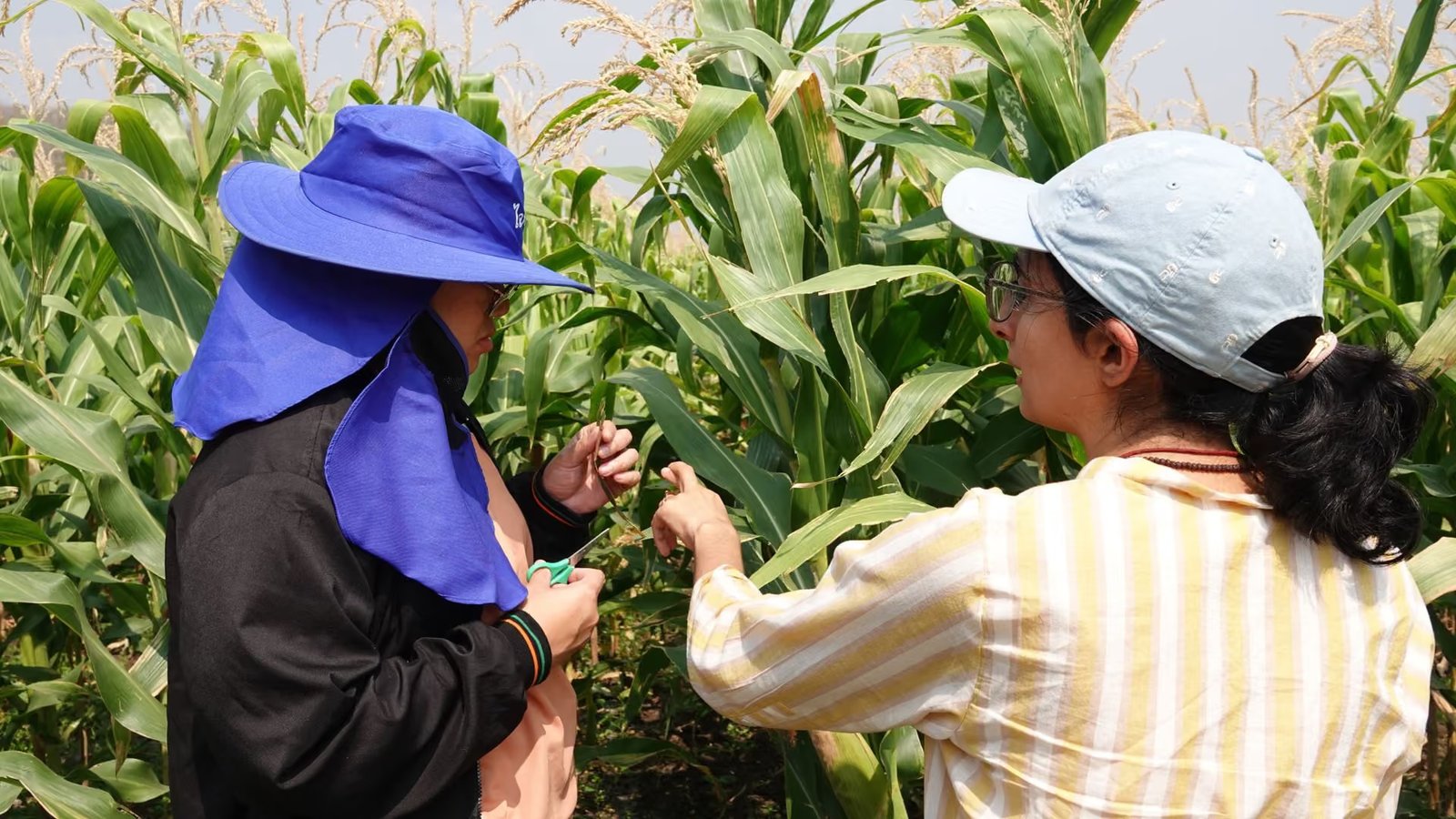
Maize provides a significant testing ground for this approach because of the complexity of its genome and the importance of the crop across food, feed and industrial markets. If the collaboration can reliably connect specific non-coding sequences with changes in gene expression, the resulting data could help make trait design more targeted and reduce the amount of trial-and-error involved in crop development.
The longer-term opportunity lies in creating a more efficient sequence-to-trait pipeline—one in which AI does not simply generate increasingly large lists of genetic possibilities, but becomes progressively better at identifying the variants most likely to produce a useful biological outcome.
For agricultural biotechnology companies, that distinction matters. The ability to eliminate low-value candidates earlier could lower research costs, reduce laboratory and field testing requirements and potentially accelerate the development of crops with improved performance.