The precision fermentation industry is entering a new phase. After years of proving that valuable food proteins can be produced without animals, the bigger challenge is now making those ingredients at the scale, cost and consistency required by global food and nutrition companies.
That is where Novonesis and TurtleTree are placing their latest bet.
Novonesis has agreed to exclusively scale, manufacture and commercialize TurtleTree’s precision-fermented lactoferrin, LF+, giving the Singapore-based biotechnology company access to industrial manufacturing capacity and Novonesis’ global commercial network. The partnership is accompanied by a strategic investment from Novonesis and participation from 321Catalyst Ventures, the corporate venture capital arm of Mitsui Chemicals.
For TurtleTree, the agreement represents a major step beyond regulatory validation. The company became the first producer to receive an FDA GRAS “No Objection Letter” for precision-fermented lactoferrin, removing one of the most important regulatory hurdles to commercial adoption in the US. The next challenge is considerably more operational: producing enough of the ingredient, at an economically competitive cost, to serve customers at scale.
Novonesis will take responsibility for scaling, manufacturing and commercializing LF+ for the early life nutrition market, while the companies also see applications in selected dietary supplements. The partnership brings together TurtleTree’s fermentation technology with Novonesis’ manufacturing infrastructure and commercial reach.
For Novonesis, the deal expands a Human Health Biosolutions portfolio that already includes human milk oligosaccharides, probiotics and synbiotics. For TurtleTree, it provides a route to address one of the biggest constraints facing emerging precision-fermentation businesses: moving from a technically successful product to dependable industrial supply.
TurtleTree was originally founded with ambitions around cell-cultured milk before narrowing its strategy toward high-value functional dairy proteins that could be produced through precision fermentation. Lactoferrin became its lead product as the company focused on an ingredient where demand has consistently outstripped the ability of conventional dairy production to supply it.
Naturally present in both human and bovine milk, lactoferrin is associated with immune function, iron regulation and gut health. Those properties have made it an important ingredient in infant formula, dietary supplements, women's health products and medical nutrition.
The problem is supply. Lactoferrin occurs naturally in milk only in relatively small quantities, requiring manufacturers to process large volumes of raw dairy to recover the protein. The economics of that process, combined with growing demand, have made lactoferrin one of the highest-value dairy ingredients, with prices reaching around US$1,000 per kilogram.
Precision fermentation offers a fundamentally different production model. Instead of extracting lactoferrin from milk, companies can use microorganisms as production systems to manufacture the target protein. The attraction is not simply that the resulting ingredient does not require cows. The larger commercial opportunity lies in creating a more predictable and potentially scalable supply of a protein whose availability is constrained by conventional production.
“Our aim is to make lactoferrin more accessible and cost-competitive and showcase what is achievable with precision fermentation in early life nutrition and dietary supplements,” Thomas Stenfeldt Batchelor, Senior Vice President for Early Life and Specialized Nutrition at Novonesis, said. “If successfully scaled, this will enable customers to deliver proven health benefits to consumers more efficiently.”
He added that LF+ fits into Novonesis’ broader portfolio of precision fermentation projects and specialized nutrition ingredients.
The partnership follows a series of regulatory milestones that have steadily moved TurtleTree closer to commercial deployment.
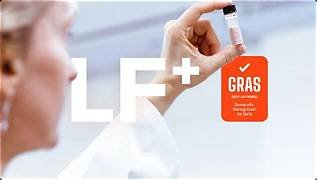
In May 2025, TurtleTree became the first company to receive an FDA GRAS “No Objection Letter” for precision-fermented lactoferrin after the US Food and Drug Administration reviewed its safety dossier and raised no questions about the company’s conclusion that LF+ is Generally Recognized as Safe.
The decision opened the US market to the ingredient across human food applications, with infant nutrition representing one of the most significant potential markets because of lactoferrin’s role in areas including iron absorption, immune development and gut health.
For TurtleTree founder and CEO Fengru Lin, however, regulatory approval was never the endpoint. Instead, regulatory readiness became part of the company’s broader commercial strategy.
“Regulatory competence is a meaningful advantage in precision fermentation because it is what allows science to translate into commercial adoption,” Lin said earlier this year. “Many companies can produce a protein in the lab, but far fewer can build the data package and operating systems that customers and regulators are comfortable with.”
That approach has meant incorporating regulatory expectations into experimental design and manufacturing processes rather than treating regulatory work as a final step after product development.
The strategy now appears to be paying off in a different form: industrial partnership.
Reflecting on the Novonesis announcement, Lin highlighted the change in TurtleTree’s position over the past five years. What began as a small team attempting to persuade the market that lactoferrin could be produced without cows has evolved into a partnership with one of the largest companies in the biosolutions industry.
“This partnership is about doing the hard work required to make the unique benefits of lactoferrin truly usable at scale,” Lin said. “Not just technically, but economically available for all.”
The distinction is important for an industry that has attracted substantial attention but continues to face a difficult commercial reality. Producing a complex protein in a laboratory or pilot facility is one challenge. Establishing a manufacturing process that delivers consistent quality and competitive economics at industrial volumes is another.
The Novonesis agreement effectively divides those capabilities between two companies. TurtleTree brings the precision fermentation technology and product development experience around LF+, while Novonesis contributes industrial-scale manufacturing capabilities and established routes to market.
That model reflects a broader shift taking place across precision fermentation. The industry's early years were dominated by questions about whether microorganisms could be engineered to produce proteins traditionally obtained from animals or plants. Increasingly, investors and customers are asking a different set of questions: Can those proteins be manufactured reliably? Can the economics compete with established ingredients? Can companies supply global customers without building every part of the infrastructure themselves?
For TurtleTree, the partnership directly addresses those questions.
The company has already begun building commercial applications around LF+, including its IronKind supplement, which combines lactoferrin with a prebiotic and is designed to support iron absorption while reducing some gastrointestinal side effects associated with conventional iron supplementation.
But the larger opportunity is the ingredient itself. The global lactoferrin market is estimated at around US$300 million, supported by demand from infant nutrition, immune health, medical nutrition and functional food applications.
Despite that demand, most commercial lactoferrin continues to come from dairy. That leaves the market exposed to the limits of milk supply and the relatively inefficient economics of recovering a high-value protein from a complex biological source.
TurtleTree is not alone in attempting to change that equation. Companies including Australia’s All G and South Africa’s De Novo Foodlabs are developing precision-fermented lactoferrin, creating a new competitive field around an ingredient that has historically been tied closely to the dairy supply chain.
TurtleTree’s regulatory lead, however, gives it a significant commercial milestone to build on. Its FDA clearance means the company has already crossed a barrier that can delay commercialization for emerging food biotechnology companies.
The Novonesis partnership addresses the next one.
For Novonesis, the deal also fits a broader strategy of expanding biosolutions into human health and nutrition while leveraging its expertise in fermentation and biological production. The company was formed through the merger of Novozymes and Chr. Hansen, bringing together businesses with long histories in enzymes, microorganisms and specialized biological solutions.
The commercial logic is therefore broader than a single lactoferrin product. If LF+ can be scaled successfully, the partnership could demonstrate how established industrial biotechnology companies and specialized precision-fermentation startups can divide the risks and capabilities required to bring novel ingredients into mainstream markets.
Lin has previously described execution as the next competitive frontier for precision fermentation, with TurtleTree focusing on manufacturing scale, customer launches, clinical work and broader applications.
The Novonesis deal puts that strategy into practice.
For TurtleTree, the immediate objective is straightforward: turn a regulatory breakthrough and proprietary fermentation technology into a reliable commercial supply of lactoferrin. For Novonesis, the opportunity is to use its manufacturing and market infrastructure to help unlock a specialty nutrition ingredient whose potential has been limited more by supply and economics than by consumer demand.
That makes the agreement significant beyond LF+ itself. It is a test of whether precision fermentation can move from an alternative production technology into a commercially competitive manufacturing platform for high-value nutrition ingredients.