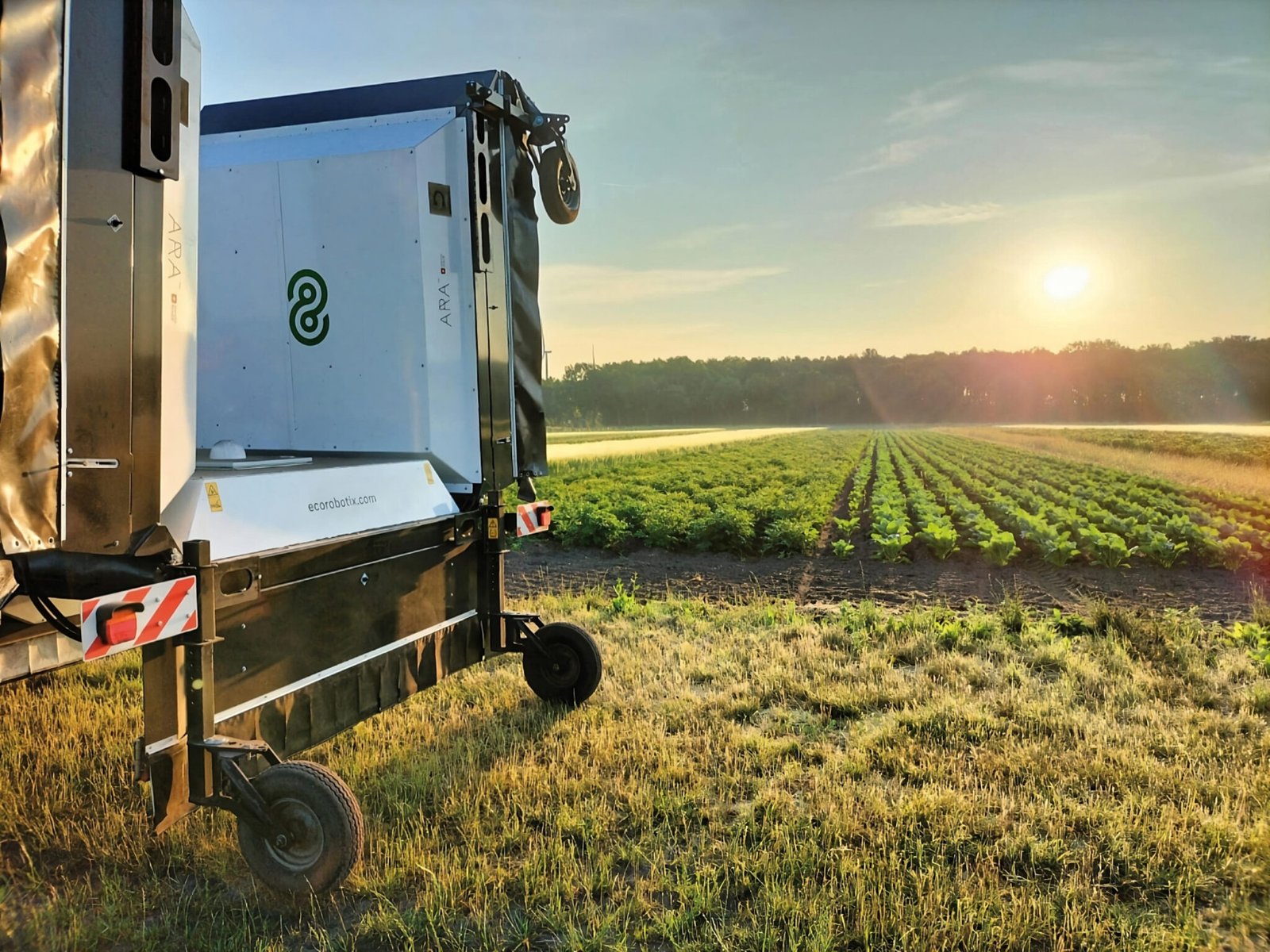
Swiss agricultural technology company Ecorobotix is expanding its artificial intelligence-powered precision spraying platform with 10 new commercial crop models scheduled for release in March 2027. The additions, which include garlic, leek and potato, will take the company's ARA platform portfolio to more than 120 recognition and treatment models.
Alongside the commercial releases, growers will be able to test 55 upcoming models free of charge. These include algorithms for crops and weeds such as pepper, zucchini and yellow nutsedge, extending the platform's ability to identify specific plants and target treatments more precisely.
The expansion reflects the growing role of computer vision and AI in agricultural input management. Rather than applying herbicides uniformly across entire fields, precision spraying systems identify individual plants and direct treatment only where required. The approach can reduce chemical use, limit unnecessary exposure of crops and soil, and improve the efficiency of weed management.
Ecorobotix said that during 2026, it and its customers tested the crop models now moving into commercial availability across more than 11,000 hectares in over 20 countries. The company reported an average reduction of 86 per cent in input use compared with conventional broadcast spraying.
The results, it said, demonstrate the ability of its algorithms to perform across different agricultural conditions and support ultra-high-precision crop care in applications that previously relied largely on blanket spraying.
AI targets one of Europe's difficult-to-control weeds
One of the more notable additions to the upcoming model pipeline is an algorithm designed to detect yellow nutsedge, an invasive weed that is difficult to eradicate using conventional control methods. The weed can spread rapidly and compete with crops for resources. Research by Switzerland's Agroscope institute has indicated that yellow nutsedge infestations can cause yield losses of 40–71 per cent in sugar beet and potato fields, underlining the potential economic consequences of inadequate control.
Its management is particularly challenging because commonly used selective herbicides may be ineffective or unavailable for certain crop situations. Ecorobotix's proposed solution uses plant-recognition technology to identify yellow nutsedge and apply a non-selective herbicide directly to the weed while avoiding the surrounding crop. Simon Gasser, agronomist and Crop Algorithm Product Manager at Ecorobotix, said the weed was becoming an increasingly widespread problem in parts of Europe, including Germany, the Netherlands and Switzerland, while remaining well established in countries such as France, Italy and Spain.
The yellow nutsedge model is expected to be available to ARA users free of charge from March 2027 as part of the company's upcoming-model programme.
Potato model demonstrates targeted weed control
The potato recognition model, also scheduled for commercial availability in March, illustrates how the company is applying precision spraying to crop-specific weed management. During development, Ecorobotix compared the weed-control performance of ARA using the potato model with conventional broadcast spraying. A field trial in Switzerland, conducted when potato plants were approximately 10 cm high, assessed weed-control efficacy 20 days after treatment. The company said the results demonstrated the algorithm's ability to control common weeds in potato fields.
Grower experience has also contributed to the model's development. Luc Détroz, a potato farmer in Belgium, used the ARA potato model across 300 hectares on his farm. He reported effective control of goosefoot and knotweed in a single application, with the fields remaining free of these weeds through to the end of the season.
The farmer said the targeted treatment helped prevent goosefoot from becoming overgrown and woody, which would have made subsequent management more difficult. The results point to the potential of crop-specific recognition systems to make weed control more selective, particularly where blanket applications can expose crops unnecessarily to herbicides.
Precision spraying gains traction among growers
Ecorobotix's expanding model portfolio comes as growers face pressure to improve input efficiency, manage herbicide resistance and adapt to changing regulatory and product-availability conditions. The company said more than 1,000 ARA machines are currently in operation worldwide, with the platform having treated over 600,000 hectares to date. These figures indicate growing deployment of its precision spraying technology across agricultural markets.
The company's carrot model has also recorded increased adoption, with the area treated rising by more than 80 per cent. Ecorobotix said the model has provided growers with an alternative weed-management approach amid the loss of metribuzin-based options in certain production contexts. The commercial case for AI-powered spraying will ultimately depend on how consistently the technology performs across crops, weed species, field conditions and farm sizes. Its ability to reduce input consumption while maintaining effective weed control will be central to broader adoption.
With 10 new commercial models and 55 additional algorithms entering its development and testing pipeline, Ecorobotix is positioning ARA as a broader crop-care platform rather than a tool limited to a handful of precision-spraying applications.