
As global geopolitical tensions increasingly influence agricultural supply chains, resilience has become as important as productivity in livestock production. In this exclusive AgroSpectrum interview, Asst. Prof. Dr. Natthawut Rattanavanichroj, Assistant Professor, Faculty of Veterinary Medicine, Kasetsart University, Thailand, examines how Thailand's swine industry is adapting to rising feed costs, supply chain disruptions and evolving animal health risks. He explains why biosecurity must extend beyond disease prevention to encompass logistics, preventive healthcare and supply chain resilience. The discussion also explores the long-term implications of imported feed dependence, veterinary product sourcing and global freight volatility on the sector's competitiveness.
Dr. Rattanavanichroj highlights the growing importance of robust vaccination programmes, renewable energy adoption and domestic feed production in strengthening industry resilience. As recurring global shocks redefine livestock economics, he argues that sustainable profitability will increasingly depend on comprehensive risk management rather than cost optimisation alone. This interview offers valuable insights into the structural changes shaping the future of Thailand's swine industry and the broader animal protein sector.
The Strait of Hormuz is traditionally framed as an energy chokepoint. At what point does it become a direct determinant of animal protein systems like Thailand's swine sector through second-order feed and veterinary input inflation?
The Strait of Hormuz has become much more than an energy chokepoint—it now directly influences the economics of animal protein production through multiple indirect channels. Regarding Thailand's swine industry, conflicts in the region affect three major cost components.
First, although energy itself represents a relatively small share of total production costs, higher fuel prices significantly increase transportation and electricity expenses throughout the supply chain, from feed mills to farms and processing facilities.
Second, the biggest impact is on feed ingredients. Feed accounts for approximately 65–70 percent of total swine production costs, making it the single largest cost component. Thailand imports more than 99 percent of its soybean meal requirements, leaving the industry highly exposed to global shipping disruptions and commodity price fluctuations. In addition, around 40 percent of Thailand's fertilizer imports pass through the Strait of Hormuz. Any disruption raises fertilizer prices, increasing the cost of producing domestic feed crops such as corn, thereby creating another layer of inflation in feed production.
Finally, inflationary pressures eventually influence labour costs. Sustained increases in the cost of living are likely to push minimum wages higher over time, adding further pressure to production costs. Taken together, disruptions in the Strait of Hormuz have evolved from being an energy concern into a direct driver of production economics across Thailand's livestock sector.
Thailand's swine industry has historically relied on import-efficient feed sourcing. Is that model still viable, or has global grain price volatility permanently broken the assumption of predictable input economics?
Thailand currently has little alternative but to continue relying on imported feed ingredients because domestic production remains insufficient to meet industry demand. Soybean is the clearest example. Domestic soybean production is very limited, and most locally produced soybeans are non-GMO varieties, which are generally unsuitable for large-scale industrial feed manufacturing. As a result, imported soybean meal will continue to remain an essential component of feed formulation. While recent geopolitical tensions and commodity market volatility have made feed costs less predictable, the industry's dependence on imports cannot be eliminated in the near term.
Instead of expecting stable input prices, producers now need to accept volatility as a structural feature of the business. This means building greater flexibility into procurement strategies, inventory management and financial planning rather than relying on historically predictable feed economics.
Beyond cost, what is the most underappreciated operational risk today in swine production—feed availability, veterinary supply continuity, or logistics reliability—and why?
In my view, logistics reliability and animal welfare represent the most underappreciated operational risks facing Thailand's swine industry today. From an operational perspective, the livestock transportation system still lacks sufficient energy efficiency, increasing costs while reducing overall supply chain performance. More importantly, transportation poses a significant biosecurity risk because vehicles moving between farms can easily facilitate disease transmission if sanitation protocols are inadequate.
Animal welfare during transport is another critical concern. Poor transport conditions—including prolonged heat exposure, overcrowding and excessive handling stress—not only reduce animal welfare but also negatively affect productivity and meat quality.
From a veterinary perspective, transport-induced heat stress can suppress the pigs' immune systems, while overcrowding creates ideal conditions for rapid disease transmission. If animals have not received complete and effective vaccination, this weakened immune status makes them particularly susceptible to diseases such as Porcine Reproductive and Respiratory Syndrome (PRRS) and Porcine Circovirus Disease (PCVD). These diseases become even more problematic when they occur simultaneously, reducing daily weight gain, increasing respiratory illness and causing substantial production losses.
Hence, preventive health programmes and robust vaccination strategies should be viewed not only as disease control measures but also as essential biological buffers that protect herd productivity throughout the production cycle.
How is rising global freight and insurance volatility reshaping the structure of Thailand's livestock supply chain—not in price terms, but in terms of who controls supply access?
Thailand has maintained a relatively neutral position in global trade and has not experienced major restrictions in accessing imported feed ingredients or veterinary products. Therefore, supply access itself has remained relatively stable. The primary challenge continues to be price volatility rather than physical shortages. Freight rates, insurance costs and global market conditions influence import prices, but Thailand has generally been able to maintain access to international suppliers.
At present, the country's livestock supply chain is shaped more by fluctuations in global commodity and logistics costs than by changes in ownership or control over supply access.
Is Thailand's swine health system becoming structurally dependent on a small number of global pharmaceutical and biologics suppliers, and does that concentration now represent a systemic vulnerability?
The situation has improved compared with previous years because Thailand now has access to veterinary pharmaceuticals and biologics from a wider range of countries, including China, South Korea and Japan. However, the more fundamental vulnerability lies elsewhere. Thailand currently lacks sufficient domestic production capacity for veterinary pharmaceuticals and biological products. Regulatory complexity, limited economies of scale and the substantial investment required for manufacturing mean that local production remains limited compared with multinational companies.
Consequently, Thailand continues to depend heavily on imported veterinary products. Strengthening strategic collaborations with leading global animal health companies therefore plays an important role in expanding access to advanced diagnostics, vaccines and preventive healthcare solutions. Such partnerships help bridge domestic research and development gaps while simultaneously improving national disease surveillance and veterinary capabilities.
Has the definition of "biosecurity" in Thailand evolved enough to include economic and supply-chain shocks, or does policy still treat it narrowly as disease containment?
At present, biosecurity policy in Thailand remains focused primarily on disease prevention and containment. Even within this traditional framework, implementation still requires significant strengthening, as disease risks continue to pose major challenges for producers. Looking ahead, biosecurity should be viewed through two complementary dimensions. The first is preventing disease introduction onto farms through strict external biosecurity measures. The second is maintaining healthy, resilient animals capable of resisting disease through effective vaccination and preventive healthcare.
Diseases such as PCVD and PRRS continue to impose significant economic losses on producers. Advances in vaccine technology now allow both diseases to be addressed through single-injection routine vaccination programmes, reducing animal handling stress while improving herd immunity and overall welfare. Healthier animals also improve farm profitability, enabling producers to maintain stronger biosecurity systems against larger threats such as African Swine Fever (ASF), where biosecurity remains the industry's primary line of defence because no universally accepted commercial vaccine is yet available.
Are we seeing early signs that swine production is shifting from a margin-driven agribusiness model to a risk-managed utility-like system under recurring global shocks?
Yes. This transformation has become increasingly evident since the outbreaks of African Swine Fever (ASF) and the COVID-19 pandemic. Historically, producers focused primarily on maximising profitability. Today, the industry's priorities have shifted towards maintaining stable returns while managing multiple categories of risk simultaneously. Disease outbreaks, environmental uncertainty, supply chain disruptions and input price volatility have fundamentally changed business decision-making. Rather than pursuing maximum short-term margins, producers increasingly prioritise resilience, continuity and long-term sustainability.
How do sustained input shocks alter farmer behavior at the ground level—specifically in terms of herd size decisions, vaccination compliance, and preventive health spending?
Sustained cost pressures encourage farmers to reduce expenditure wherever possible, but some of these cost-cutting measures may ultimately prove counterproductive. One common response is reducing vaccination programmes or switching to lower-cost products through competitive procurement. From a veterinary standpoint, this represents a significant risk. Reducing immunoprophylaxis against highly contagious diseases may lower short-term veterinary costs, but it weakens herd immunity and allows subclinical infections to circulate within production systems.
Although mortality may remain relatively low, chronically infected pigs often experience respiratory disease, slower growth rates and poorer production performance, ultimately reducing profitability. Consequently, compromising preventive healthcare rarely generates sustainable economic benefits. Cost pressures also influence herd size decisions. Smaller farms with weaker financial positions often reduce herd numbers or leave the industry altogether, whereas larger, more efficient operations generally maintain production scale while investing in improved risk management.
To what extent is Thailand's competitiveness in regional pork markets now determined less by production efficiency and more by resilience to external input volatility?
Both production efficiency and resilience to external shocks have become increasingly important, but production efficiency remains the foundation of long-term competitiveness. Efficient production systems continue to determine productivity and profitability under normal market conditions. However, larger commercial farms are placing much greater emphasis on managing feed price fluctuations, energy costs and other input risks in order to maintain stable financial performance during periods of market disruption. Increasingly, competitiveness depends not only on producing efficiently but also on maintaining operational resilience when external conditions become volatile.
If global energy corridors remain unstable, what structural changes would be necessary for Thailand's swine sector to decouple itself from imported inflation without losing export relevance?
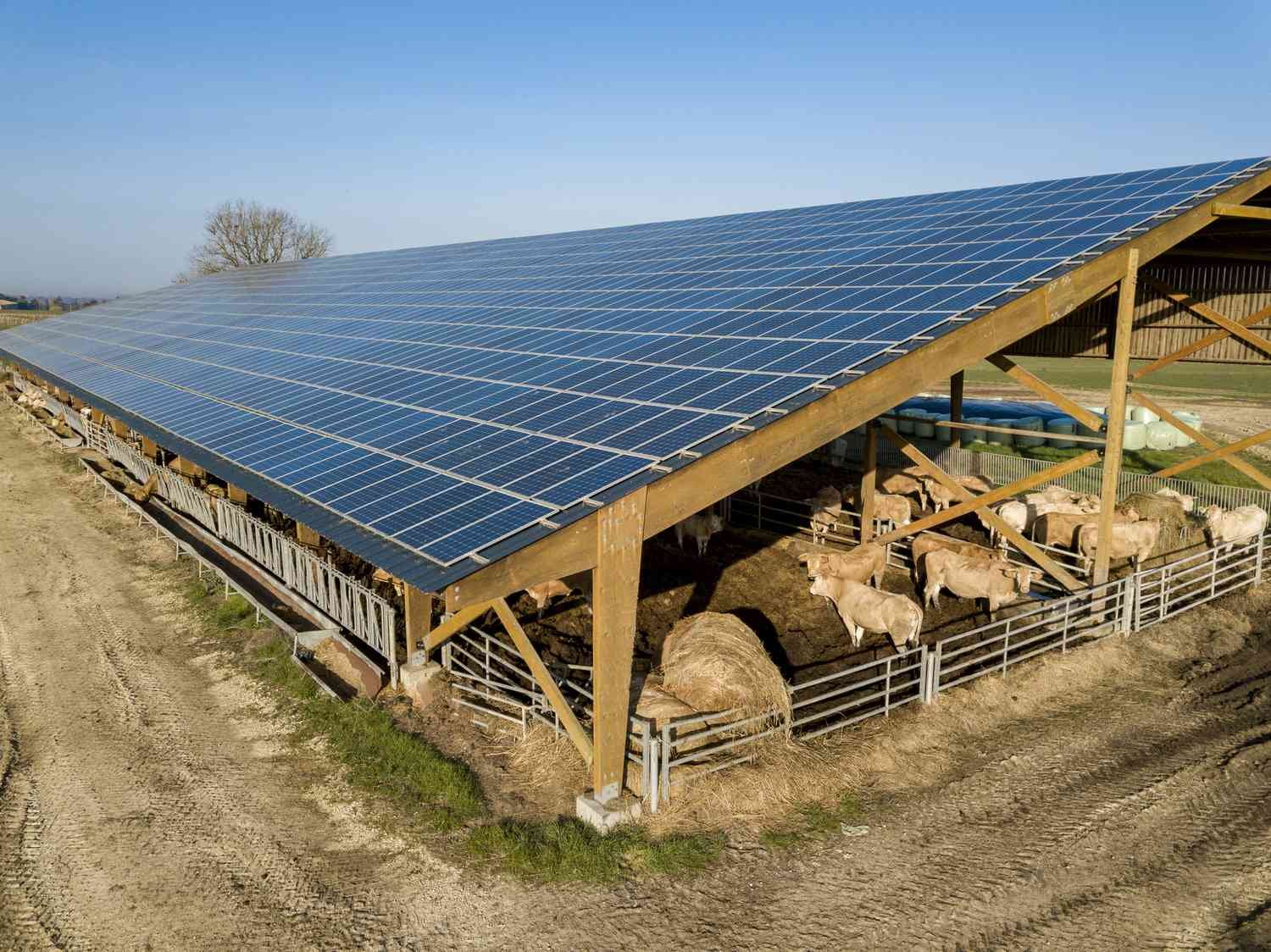
Reducing long-term exposure to imported inflation will require structural reforms across both the energy and agricultural sectors. On the energy side, greater adoption of renewable energy, particularly biogas generated from livestock waste and on-farm solar power, would improve energy self-sufficiency while reducing dependence on imported fossil fuels.
At the same time, agricultural policy should encourage greater domestic production of feed crops such as corn and soybeans through improved productivity and more diversified cropping systems. Reducing dependence on imported feed ingredients would strengthen supply chain resilience and lessen the industry's exposure to global commodity and freight market volatility. Together, greater energy independence and stronger domestic feed production would improve the long-term competitiveness and resilience of Thailand's swine industry while supporting its continued role in regional export markets.
-- Suchetana Choudhury (suchetana.choudhuri@agrospectrumindia.com)