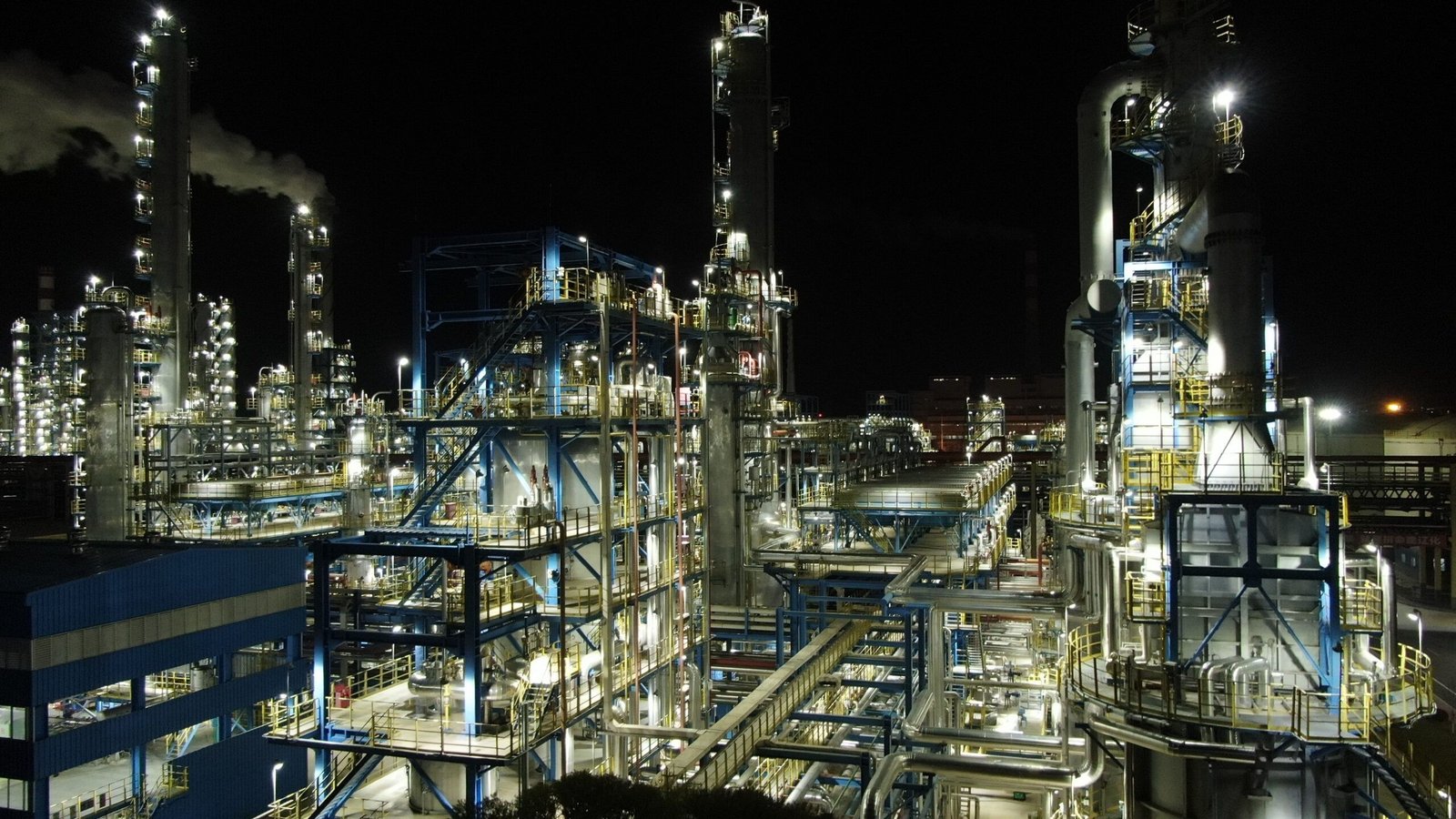

Marking a major milestone in China's industrial modernization, Guizhou-based Wengfu Jiangshan Chemical Co. Ltd. was officially named a 2026 Guizhou Province Advanced Intelligent Factory on June 25 for its flagship Weng'an County New Materials and Electronic Chemicals Digital and Intelligent Construction Project. The honor comes on the heels of the project being recognized in December 2025 as a typical case of digital transformation in the province's industrial sector, reinforcing its position as a benchmark for smart manufacturing.
Spanning over 3,000 acres, the 22 billion yuan facility represents the largest phosphorus chemical project currently under construction in Guizhou. Jointly developed by Wengfu (Group) Co., Ltd., a subsidiary of Guizhou Phosphate Chemical Group, and Nantong Jiangshan Agrochemical & Chemical Co., Ltd., the sprawling complex encompasses multiple production lines including yellow phosphorus, TCP, and chlor-alkali. Rather than applying digital overlays post-construction, the project prioritized building a unified data foundation from the outset, connecting more than 30 business systems, 15,339 devices, and 160,000 master data entries across an industrial internet platform.
Inside the central control facility, a massive circular dispatch screen provides operators with a real-time panoramic view of the entire park. Utilizing a three-dimensional digital twin model, plant managers can monitor real-time pressure, temperature, and energy metrics or fine-tune process parameters in the yellow phosphorus production area kilometers away with a simple click. The facility has also pioneered unmanned operations across key areas, deploying 5G inspection robots in substations and utilizing AI-driven vibration analysis for predictive maintenance on rotating machinery.
Safety management has been similarly transformed through computer vision and real-time spatial monitoring. An integrated AI system scans for nine major hazard sources—such as unhelmeted personnel or unauthorized entry into restricted zones—and automatically alerts site supervisors to close the management loop in strict accordance with national emergency management guidelines. Furthermore, industrial AI models integrated into the chlor-alkali production process predict main cell voltage trends and optimize chemical dosing, a single enhancement projected to save over one million yuan annually.
By unifying engineering lifecycle data from over 50 construction partners into a single 3D digital base, the facility has created a closed-loop system where laboratory test results instantly trigger automated process adjustments. According to company projections, the comprehensive digital architecture has delivered a 25 percent increase in overall production efficiency, a 22 percent reduction in operating costs, a 90 percent unmanned operation rate, and a 70 percent improvement in safety management effectiveness, establishing a new standard for intelligent chemical manufacturing.