The Philippines has taken a significant step toward modernizing one of its most valuable marine export industries by commissioning the country's first automated seaweed bioreactor facility, a move expected to improve planting material quality, increase farm productivity, and reinforce its position in the global carrageenan supply chain. Developed by the Department of Agriculture (DA) through the Bureau of Fisheries and Aquatic Resources (BFAR), the new facility at the National Seaweed Technology Development Center in Sorsogon replaces decades-old propagation methods with automated biotechnology capable of producing disease-free seaweed propagules throughout the year.
The initiative reflects a broader shift in Philippine agriculture toward science-driven production systems designed to improve resilience, export competitiveness, and farmer incomes.
A Technology Upgrade for a Strategic Export Crop
Seaweed remains one of the Philippines' most important aquaculture commodities and a critical source of carrageenan—a natural hydrocolloid widely used across the food, pharmaceutical, cosmetics, and personal care industries. However, the sector has faced persistent challenges in recent years, including declining yields, disease outbreaks, poor-quality planting materials, and inconsistent supply. These issues have limited productivity despite strong global demand for carrageenan-bearing seaweed varieties such as Kappaphycus.
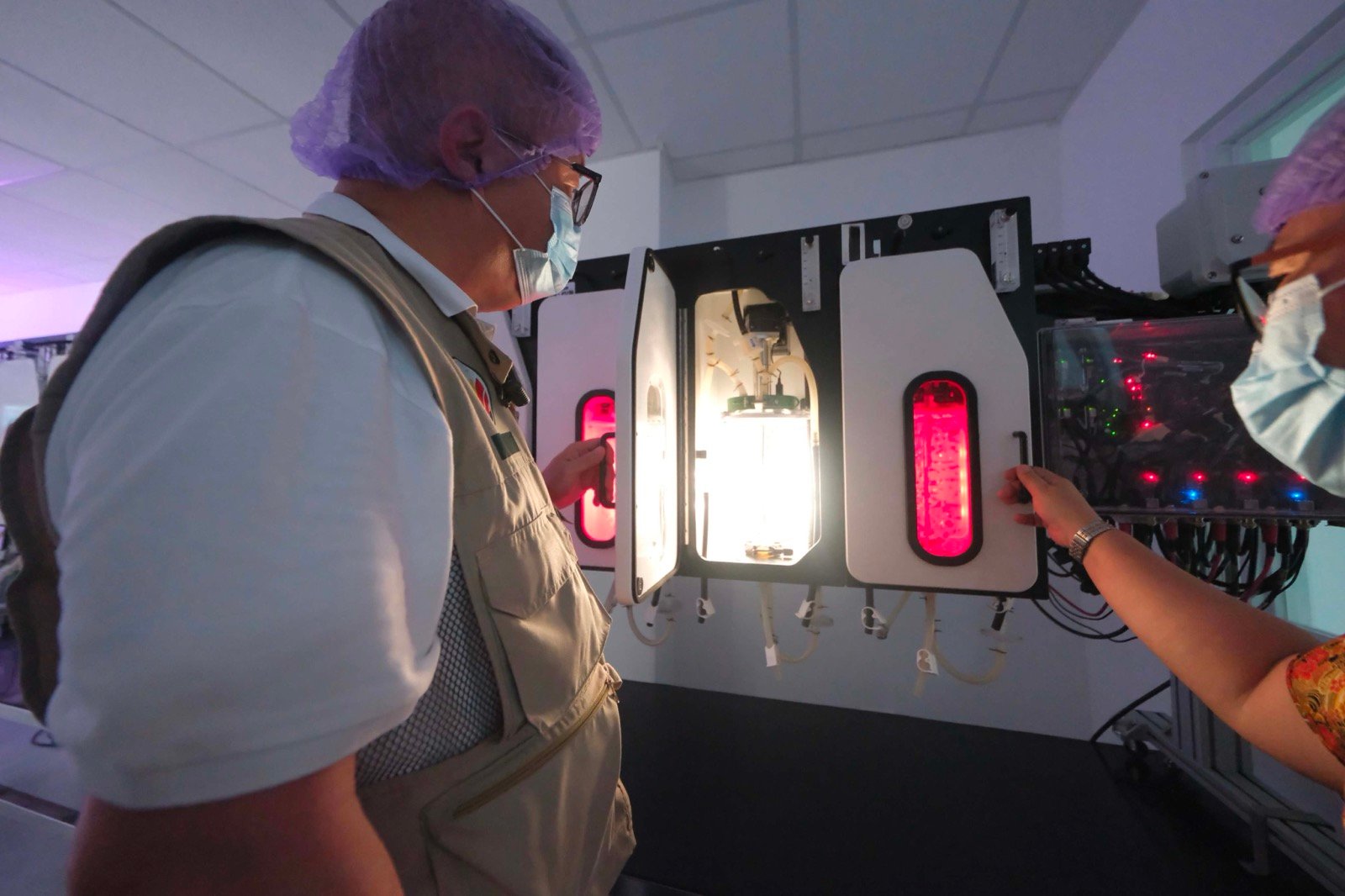
The newly installed 1,250-litre automated seaweed bioreactor, valued at PHP 10 million, together with modular bioreactor systems worth an additional PHP 12 million, is designed to address these structural constraints. Unlike conventional laboratory propagation that relied on improvised culture bottles and manual aeration, the automated system precisely regulates environmental conditions—including nutrient delivery, temperature, light intensity, and aeration—to accelerate tissue culture while maintaining consistent quality.
The controlled production environment enables researchers to multiply healthy propagules faster, reduce contamination risks, and ensure a stable supply of disease-free seedlings regardless of seasonal conditions.
From Seasonal Dependence to On-Demand Production
Agriculture Secretary Francisco P. Tiu Laurel Jr. described the facility as a milestone for Philippine aquaculture, emphasizing that biotechnology would fundamentally change how seaweed planting materials are produced. Instead of depending on natural seasonal growth cycles, BFAR will now be able to generate propagules on demand, creating a more reliable supply chain for farmers across the country. The department intends to distribute these planting materials free of charge, beginning with major producing regions including Zamboanga, Palawan, and the Bangsamoro Autonomous Region in Muslim Mindanao (BARMM) before expanding to Cebu, Iloilo, Camarines Sur, Camarines Norte, and Masbate.
Farmer training programs will accompany the rollout to improve survival rates, cultivation practices, and harvest performance.
Strengthening an Industry Supporting Thousands of Coastal Families
The investment comes at a critical time for an industry that supports thousands of coastal households and contributes substantially to Philippine agricultural exports. Although the Philippines remains the world's fourth-largest seaweed producer, industry leaders believe the country possesses the biological resources and production capacity to reclaim its historical leadership in Kappaphycus production. BFAR Chief Aquaculturist Ida Capacio, who has worked at the National Seaweed Technology Development Center for nearly two decades, said the project represents a long-awaited modernization effort after years of limited investment in seaweed research infrastructure.
Officials expect higher-quality propagules to reduce crop losses associated with disease, improve harvest consistency, and ultimately strengthen export competitiveness.
Biotechnology Becomes Central to Agricultural Modernization
Beyond immediate productivity gains, the bioreactor facility signals the Philippine government's growing commitment to integrating biotechnology into agricultural development. The Department of Agriculture is already evaluating additional seaweed bioreactor facilities in Palawan and Mindanao while expanding research into improved seaweed varieties with applications extending beyond carrageenan production.
Future research priorities include developing seaweed-based products for pharmaceuticals, food ingredients, industrial materials, and organic fertilizers—creating opportunities to diversify value-added processing and strengthen the country's blue economy.
The launch of the Philippines' first seaweed bioreactor represents more than a laboratory upgrade—it marks a strategic investment in biotechnology as a driver of export growth. By replacing outdated propagation techniques with automated tissue culture systems, the government is addressing one of the industry's most persistent bottlenecks: access to healthy, disease-free planting materials. If successfully scaled through additional regional facilities and farmer adoption, the initiative could improve production efficiency, enhance supply reliability for global carrageenan manufacturers, and reinforce the Philippines' competitiveness in an increasingly technology-driven aquaculture sector.