A new UK research and innovation project is seeking to change how commercial fruit growers manage one of the most important — and least precisely measured — variables in crop production: pollination. The two-year Precision Pollination to Accelerate Breeding and Boost Productivity in Fruit Production project, led by agri-technology company AgriSound in partnership with Hutton Scientific Services, will develop a data-driven approach to monitoring pollination in commercial fruit production. The initiative aims to help growers identify pollination gaps, improve fruit set and yield, and generate new insights that can feed directly into the breeding of future fruit varieties.
The James Hutton Institute will play a central research role through Hutton Scientific Services, drawing on its expertise in crop genetics, plant breeding and pollination science. Hutton Scientific Services provides analytical, research and development, consultancy, plant breeding and licensing services, with a focus on science-led solutions to agricultural and sustainability challenges. The commercial importance of the project is straightforward. Pollination determines whether flowers successfully progress to fruit, influencing fruit set, quality and ultimately the volume of marketable produce. Yet pollination management in many commercial systems still relies heavily on visual observations, conventional hive recommendations and growers’ experience.
That approach is becoming harder to rely on as weather patterns become more variable, pollinator populations shift and pollinator activity differs between crops, farms and production environments. Growers can therefore struggle to establish whether sufficient pollination is taking place, where gaps exist or when intervention is justified. The new project is designed to replace that uncertainty with measurable field-level data. “Pollination is mission-critical to fruit production, but it is still too often managed through assumption. Our goal is to make precision pollination scalable across crops and useful as a day-to-day production tool,” said Dr Casey Woodward, CEO of AgriSound.
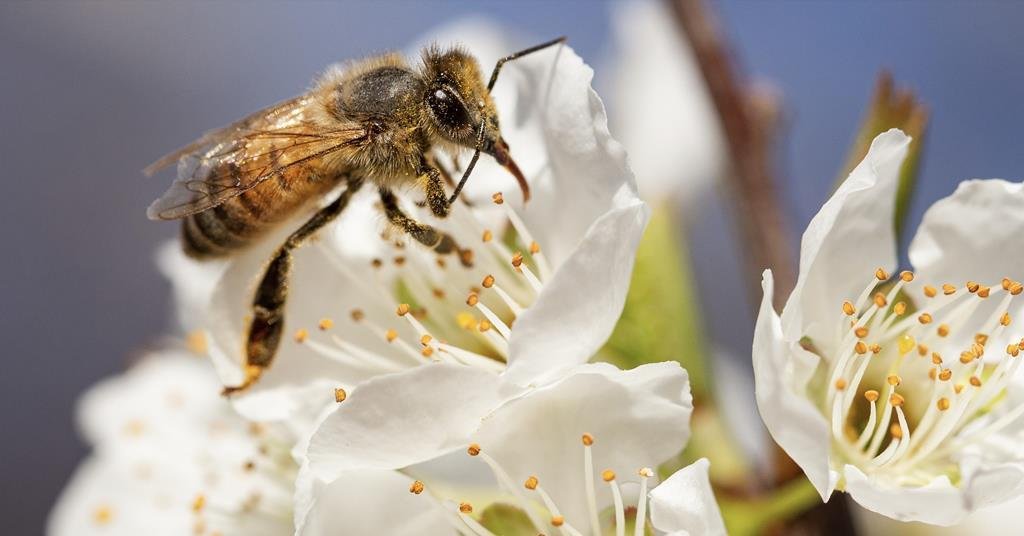
The project will build on AgriSound’s existing Precision Pollination platform, which combines in-field bioacoustic sensors with artificial intelligence-based analytics to monitor pollinator activity within crops. The partners will expand the technology into a multi-species, multi-crop system capable of monitoring honeybees, bumblebees, solitary bees and hoverflies. The initial focus will span five commercially important fruit crops — strawberries, blueberries, raspberries, blackberries and cherries. By tracking different pollinator species across different production systems, the project aims to build a more detailed picture of how pollination behaves in real-world commercial environments.
The research will go beyond simply counting pollinator activity. Validation studies will combine acoustic monitoring with smart-tag observations, time-lapse imaging, environmental monitoring and crop performance assessments. These datasets will allow researchers to refine pollinator detection algorithms and examine how pollinator behaviour changes according to crop, production system and environmental conditions.
A key objective will be to establish clearer relationships between pollinator activity and actual commercial outcomes. The research will investigate links between pollination activity, fruit set, yield and fruit quality, potentially giving growers a more practical basis for decisions about pollinator management.
For fruit producers, that could shift pollination from a largely observational management issue towards another measurable component of crop productivity. Instead of relying primarily on assumptions about hive numbers or general pollinator presence, growers could eventually have access to field-level information showing when and where pollination activity is adequate and where additional action may be required. The project also has a second objective that could prove important beyond the current production cycle: using pollination data to improve fruit breeding.
Hutton scientists will investigate how plant genetics and flower characteristics influence pollinator attraction and pollination efficiency. The work could help identify plant traits that make varieties more attractive or accessible to pollinators while retaining the characteristics required for commercial production.
Dr Susan McCallum, Soft Fruit Geneticist and Breeder at the James Hutton Institute, said the collaboration combines technology with data-driven insight to improve understanding of pollination and its impact on soft fruit productivity. She said the research could generate practical evidence to help growers and breeders make better-informed decisions while supporting a more resilient and sustainable future for fruit production.
The breeding dimension gives the project a longer-term significance. Improving pollination is not only about managing pollinators around existing varieties; it also raises the possibility of designing or selecting plants whose floral characteristics work more effectively within changing pollination environments.
The initiative comes as fruit production faces a combination of pressures that are increasingly difficult to manage through individual interventions. Weather variability can alter flowering periods and pollinator activity, while changes in pollinator populations can affect the reliability of natural and managed pollination. At the same time, commercial fruit production requires consistent fruit set, quality and yield to remain economically viable.
The partners therefore see precision pollination as part of a broader move towards data-driven horticulture, where biological processes that were once difficult to quantify can increasingly be monitored alongside environmental and crop-performance data.
The project’s multi-species approach is particularly significant because different pollinators do not necessarily behave in the same way. Honeybees, bumblebees, solitary bees and hoverflies can differ in their activity patterns and interactions with crops. Understanding those differences could help build more targeted pollination strategies rather than relying on a one-size-fits-all approach.
The project will also generate datasets that could improve the underlying AI-based detection system. As acoustic observations are matched against smart tags, imaging and environmental measurements, researchers can improve the ability of the technology to distinguish pollinator activity and understand the conditions associated with productive pollination.
Ultimately, the ambition is to make pollination as measurable and manageable as other major production variables. If successful, the technology could give growers a clearer basis for decisions while giving breeders new evidence on the relationship between plant traits, pollinator behaviour and commercial performance.