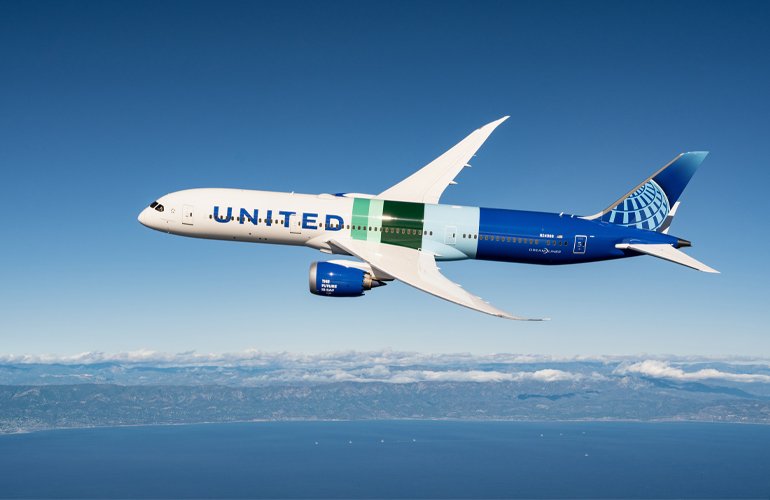
Neste and United Airlines are extending their sustainable aviation fuel (SAF) supply agreements for flights departing Chicago O’Hare International Airport in the United States and Amsterdam Airport Schiphol in the Netherlands, reinforcing a cross-Atlantic partnership as airlines look to scale the use of lower-emission aviation fuels.
Under the extended agreement, SAF deliveries to United Airlines at Amsterdam Schiphol began in June 2026 and continued through August, while deliveries to Chicago O’Hare started in July and are scheduled to continue through June 2027. The two-airport arrangement gives the partnership a footprint across two major aviation markets and supports the continued integration of SAF into regular airline operations.
The agreement comes as airlines face increasing pressure to reduce greenhouse gas emissions while maintaining the operating scale of conventional aviation. SAF is emerging as one of the principal tools available to the sector because it can be blended with conventional jet fuel and used within existing aircraft and airport infrastructure, although its broader deployment remains closely linked to supply, cost and policy support.
United Airlines has been increasing its SAF consumption as part of that transition. The airline used more than 83,000 metric tonnes of SAF in 2025, equivalent to roughly 27.7 million gallons and more than double its usage in the previous year. It also expanded SAF use to three additional hub airports in 2025, bringing the fuel into operations at six of its seven domestic hubs.
Chicago O’Hare has become an important testing ground for that expansion. United began purchasing and using blended SAF at the airport in August 2024, making it the first airline to do so there. O’Hare is United’s largest hub by daily departures and a major international gateway, giving the airport strategic importance as the airline seeks to increase SAF deployment across routine operations.
In Amsterdam, United has used SAF in ongoing operations since 2022. The airport provides a second major platform for the partnership, extending the supply relationship into the European market and supporting the airline’s broader strategy to reduce greenhouse gas emissions.
Lauren Riley, chief sustainability officer at United Airlines, said the airline’s experience with blended SAF demonstrated its ability to operate at scale in day-to-day flying, adding that the continued collaboration across two continents reflects the companies’ shared view of SAF’s potential for wider deployment.
For Neste, the agreement adds to the commercial case for supplying SAF across multiple aviation markets. Carl Nyberg, senior vice-president, commercial, renewable products business at Neste, said the agreement covering two international airports demonstrates the companies’ belief in SAF’s role in reducing aviation-related greenhouse gas emissions.
The extension also illustrates how SAF adoption is shifting from isolated demonstrations towards repeat supply arrangements at major airline hubs. As airlines build demand and suppliers expand production capacity, airport-level contracts such as these are becoming an important mechanism for integrating alternative fuels into everyday aviation operations.
United has committed to achieving net-zero emissions by 2050, while the wider aviation industry continues to assess SAF alongside operational improvements and other technologies as it seeks to lower the sector’s carbon footprint. The latest agreement between Neste and United underscores the growing importance of securing reliable SAF supply as airlines move from commitments towards sustained fuel deployment.