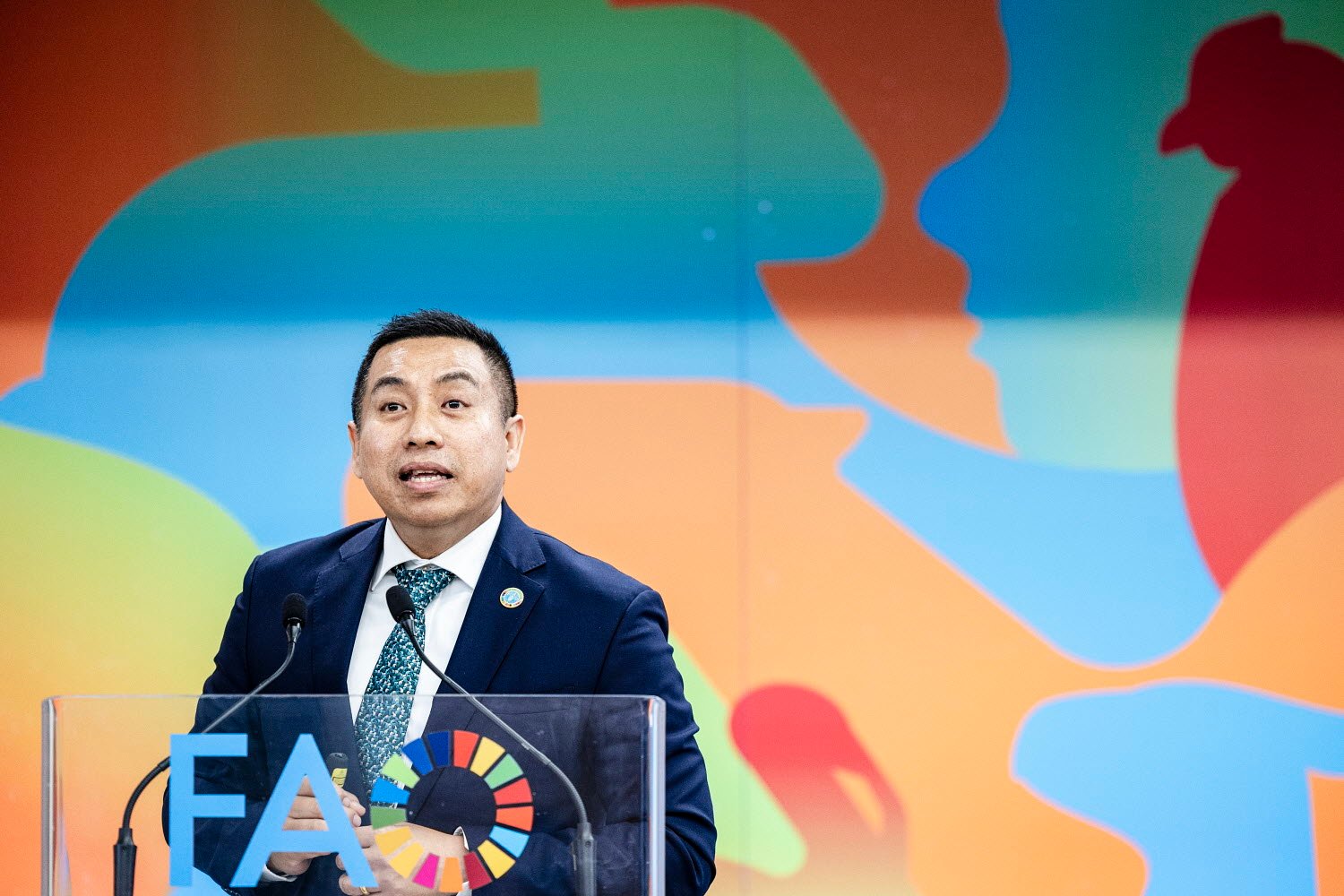
In an exclusive interview with AgroSpectrum, Juver Membrebe (Technical Manager (Swine), ASEAN, South Korea, Australia and New Zealand, Boehringer Ingelheim) argues that the biggest threat from ongoing Strait of Hormuz disruptions is not direct agricultural damage but the cascading impact on feed costs, animal health inputs, freight networks, and pork production economics. He warns that food security across Asia-Pacific is increasingly tied to global supply chain resilience, as import-dependent feed and veterinary supply systems become more vulnerable to geopolitical shocks. Membrebe highlights that rising input costs and persistent disease risks are creating a dual-margin squeeze that is accelerating consolidation across the region’s swine industry. As volatility becomes a permanent feature of global commerce, he contends that robust biosecurity, resilient animal health systems, and coordinated supply chain strategies will be critical to safeguarding pork production and food affordability.
With the Strait of Hormuz emerging as a persistent geopolitical flashpoint, is the Asia-Pacific swine and pork ecosystem now effectively exposed to energy geopolitics through feed costs, logistics inflation, and veterinary supply chain stress rather than direct agricultural disruption?
For the swine sector, the feed grain prices are sensitive to energy costs at every stage, from fertilizer production to freight. Disruptions to ammonia and nitrogen shipments directly affect fertilizer availability and cost, and when shipping routes are disrupted or insurance premiums spike, that pressure moves quickly through to landed feed costs across ASEAN and North Asia. Veterinary inputs, including vaccines and biologicals, follow similar pathways.
Vietnam illustrates this dynamic clearly. With a pig herd of roughly 26 million head and pork production of around 3.2 million tonnes carcass weight equivalent in 2024, Vietnam is one of the region’s most significant pork producers. At the same time, the sector remains structurally dependent on imported feed ingredients, which are priced in $ (USD) and highly sensitive to global energy and freight costs. So, while the current tensions surrounding the Strait of Hormuz do not destroy a soybean crop or shut down a slaughterhouse directly, it can quietly erode the economic viability of pork production across the region within one to two production cycles.
From where I sit, working across markets as different as Vietnam, Korea, and Australia, the vulnerability is not theoretical. It is already being felt in margin conversations at farm level, reinforcing the need for resilient, well-supported production systems.
Across ASEAN and South Korea, pork demand is structurally high, yet feed and swine health inputs remain import-dependent. Has food security in these markets quietly shifted from production risk to global supply chain risk concentration?
That shift is already underway, and it has happened gradually enough that policies have not fully adapted. In the past, food security in this region was mainly viewed through the lens of domestic production, animal health and disease control, and farm productivity. Those factors remain critical, but the nature of risk has broadened.
Today, producers in markets like Vietnam or the Philippines can operate well-managed farms with healthy animals and strong local demand yet still face pressure on profitability due to factors beyond their immediate control—such as the cost and availability of key inputs like feed ingredients. This underscores the growing importance of strengthening resilience at the farm level.
In Vietnam, pork remains the dominant meat protein, accounting for roughly half of total meat consumption, making it highly influential in household food spending and inflation dynamics. That structural reliance means any disruption to production economics can translate to wider social and economic impacts, not just commercial ones. The same dynamic holds across Thailand, the Philippines, and South Korea.
Swine health management—particularly vaccines, therapeutics, and biosecurity inputs—relies on highly globalised pharmaceutical supply chains. Are these becoming a second systemic vulnerability layer beyond feed inflation?
This dimension is often overlooked because veterinary inputs represent a smaller share of total cost than feed. However, their importance to overall production stability is far greater than their cost would suggest.
Vaccines and biologicals are not interchangeable commodities. Their development, regulatory approval, handling requirements, and quality standards reflect years of investment and strict oversight. In today’s environment, ensuring consistent availability and reliability of these products has become more complex, which highlights the importance of strong partnerships between producers and trusted animal health providers to maintain access to high-quality solutions.
In Vietnam, pork production is forecasted to grow modestly in 2026, supported primarily by large-scale integrated producers, while smaller operations continue to face disease and cost pressure. In that context, interruptions to vaccine or biological supply are not a minor inconvenience. They are a direct threat to herd stability and production continuity. Ensuring supply reliability and contingency planning in health management is therefore not optional; it is a core pillar of risk management.
To what extent are rising feed costs, driven by energy-linked grain and freight volatility, fundamentally altering herd economics across ASEAN pork producers, particularly small and mid-scale operations?
The impact on small and mid-scale producers is severe and, in many cases, structurally consequential. Feed typically represents around 60–70 per cent of total swine production cost. When that number rises because of freight inflation or energy-linked grain price volatility, the first cuts are often made in preventive health and biosecurity.
Vietnam again demonstrates this. ASF outbreaks in recent years have disproportionately affected backyard and smallholder farms, where biosecurity investment is low, and economic buffers are limited. The farms least able to absorb cost volatility are also the most exposed to disease risk. That interaction between input cost pressure and biosecurity capacity is one of the most critical challenges facing the ASEAN swine sector today, and one where strengthening prevention and on-farm practices remain essential.
South Korea operates one of the most biosecure and technologically advanced pork systems in the region. Does its model offer genuine insulation from global shocks, or merely delay transmission of feed and input inflation?
South Korea’s biosecurity infrastructure is genuinely world-class, and its disease management outcomes are among the best in Asia. However, biosecurity protects against pathogens, not commodity price volatility.
Korea remains dependent on imported feed ingredients, and global grain and freight dynamics transmit directly into farm economics regardless of health system strength. What Korea’s model does provide is resilience at the production layer. Effective disease control prevents risk compounding, allowing producers to focus on managing cost pressure rather than simultaneous health crises. That is a significant advantage, and it highlights the value of strong preventive health systems supported by science-based approaches.
Australia and New Zealand are often viewed as structurally resilient due to domestic feed availability. However, are they increasingly exposed through imported veterinary inputs, pharmaceuticals, and energy-sensitive logistics chains?
Australia and New Zealand benefit from a strong structural advantage in having reliable domestic feed grain production. It provides a level of stability that many other markets do not have.
However, this does not mean they are insulated from broader pressures. Both countries still rely on externally sourced veterinary medicines, vaccines, and other specialized inputs that are critical to animal health and production. In addition, operating costs remain sensitive to changes in areas such as energy and transportation, which can influence overall production efficiency.
Is the regional pork trade across ASEAN, South Korea, and Oceania still a collection of national markets, or has it effectively become a synchronized pricing system where global feed shocks propagate almost instantaneously?
The reality sits between the two, but regional markets are becoming more interconnected, and this is happening faster than policies are adjusting. While each country still has its own production base and demand dynamics, price movements are increasingly influenced by common external factors, particularly feed costs, import flows used to balance supply, and process economics.
What has changed most is the speed at which these influences are felt. Markets are not fully unified, but they are reacting more quickly to similar pressures. As a result, maintaining stable and efficient production systems—supported by strong animal health and preventive practices—has become even more important in managing volatility and ensuring consistent supply.
With swine health risks rising alongside input cost pressures, are producers being forced into a dual-margin squeeze that accelerates consolidation and vertically integrated agribusiness dominance across the region?
Yes, this is a clear trend across the region. As costs rise and disease risks persist, producers are facing increasing pressure on profitability from multiple directions. Those with greater financial resources are better positioned to adapt as they can invest in efficiency, strengthen farm management, and scale their operations. Others, particularly smaller producers, often have fewer options and face more difficult choices.
Vietnam provides a clear example, where the sector is gradually shifting from household-scale farming toward larger, more structured operations. Similar patterns are emerging in markets like Thailand and the Philippines.
From an animal health perspective, larger operations can support more consistent investment in preventive care and biosecurity, which helps improve overall stability. At the same time, it is important that smaller and transitioning producers are not left behind. Ensuring access to knowledge, practical tools, and best practices will be key to helping them adapt and remain part of the sector’s long-term development.
How significant is maritime insurance inflation and shipping volatility—rather than actual supply shortages—in reshaping pork trade flows and import dependency across Asia-Pacific markets?
This is an important but often overlooked factor shaping how markets evolve. Sudden shortages tend to draw immediate attention and response from both industry and policymakers. In contrast, gradual increases in underlying costs are less visible, which can make their overall impact easier to underestimate until they begin to significantly affect prices.
Higher energy, fertilizer, and transport costs, feed through into food costs and can intensify cost‑of‑living pressures.
At what point does pork in Asia-Pacific transition from a commodity market into a strategic food security asset, requiring coordinated regional buffers for feed grains, veterinary inputs, and cross-border trade stabilization mechanisms?
In many ways, this shift is already happening, even if it is not always explicitly defined. Pork plays a central role in diets, economies, and livelihoods across Asia-Pacific, so periods of disruption—whether from disease or rising costs—quickly highlight its broader importance beyond a typical agricultural product.
Vietnam is a strong example. With a population of over 100 million and pork as a primary protein source, any disruption to supply can affect food prices and the wider economy almost immediately. Managing such situations has required close coordination between government, industry, and external partners, rather than isolated actions.
More broadly, a range of ongoing pressures—from disease risks to rising production costs—are prompting countries to think more proactively about how to maintain stable and reliable production. This includes improving access to key inputs, strengthening animal health practices, and ensuring markets can continue to function smoothly even during periods of stress.
While formal regional coordination is still developing, there is a growing recognition that maintaining stability in pork production is important not only for the sector itself, but also for food affordability, economic resilience, and rural livelihoods. As a result, pork is increasingly viewed as an essential part of the food system that requires sustained attention and forward planning.
-- Suchetana Choudhury (suchetana.choudhuri@agrospectrumindia.com)