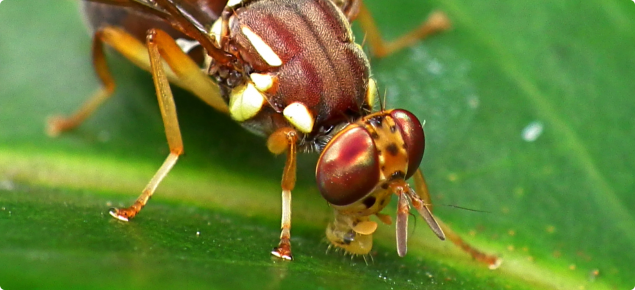
Australia is stepping up its defence against one of horticulture’s most persistent biosecurity threats, with the Australian and Queensland Governments investing almost $5 million to strengthen fruit fly research, management and export market access.
The centrepiece of the initiative is a $4.7 million contribution from the Albanese Government through the Building Resilience to Manage Fruit Fly Package. The funding will support new infrastructure at the Queensland Department of Primary Industries’ Redlands Research Facility, which will house the National Export Market Access Centre for Horticulture.
Fruit fly remains a significant challenge for Australia’s horticulture industry, with outbreaks capable of disrupting production, imposing trade restrictions and threatening access to international markets. The new facility is designed to address these risks by strengthening the scientific and technical capabilities needed to manage fruit fly and meet the requirements of importing countries.
The investment will deliver new fumigation infrastructure, a netted orchard and dedicated pest management testing areas. Together, these facilities will support research into fruit fly management and help generate the evidence required to maintain and expand horticultural export opportunities.
The project also aims to strengthen Australia’s preparedness for exotic fruit fly outbreaks, an increasingly important capability as biosecurity threats become more complex and trade requirements more stringent. By improving research infrastructure and testing capacity, the initiative is expected to reduce the impact of fruit fly-related trade barriers on growers and exporters.
Minister for Agriculture, Fisheries and Forestry Julie Collins said strong biosecurity systems were fundamental to the future of Australian agriculture and horticulture.
“The Albanese Government has delivered over $2 billion in additional biosecurity resourcing since coming to Government, because a strong biosecurity system underpins a strong horticulture and agriculture industry,” Collins said.
She said the $4.7 million investment would strengthen Australia’s fruit fly research capability while helping growers and exporters retain access to valuable overseas markets.
“By investing in the infrastructure and scientific capability needed to meet trading partner requirements, we are helping build a more resilient and competitive horticulture sector,” she said.
Queensland Minister for Primary Industries Tony Perrett said the project would provide critical support to Queensland’s horticultural producers and exporters.
“This project is a critical initiative to protect Queensland’s horticultural industry and support our producers and exporters,” Perrett said, adding that home-grown research and fit-for-purpose facilities would play an important role in securing and growing export markets.
The investment reflects a broader shift in agricultural policy, where biosecurity infrastructure is increasingly being viewed not simply as a protective measure but as a foundation for trade competitiveness. For Australia’s horticulture industry, the ability to demonstrate effective pest management and comply with importing-country protocols is closely tied to its capacity to compete in global markets.
With the National Export Market Access Centre for Horticulture set to become a hub for fruit fly market access research, the new infrastructure at Redlands is expected to give growers, exporters and researchers a stronger platform to respond to pest threats, manage outbreaks and navigate increasingly demanding international market requirements.
As fruit fly continues to pose risks to production and trade, the nearly $5 million investment signals that Australia is placing scientific capability, biosecurity resilience and market access at the centre of its strategy to safeguard the long-term growth of its horticulture sector.