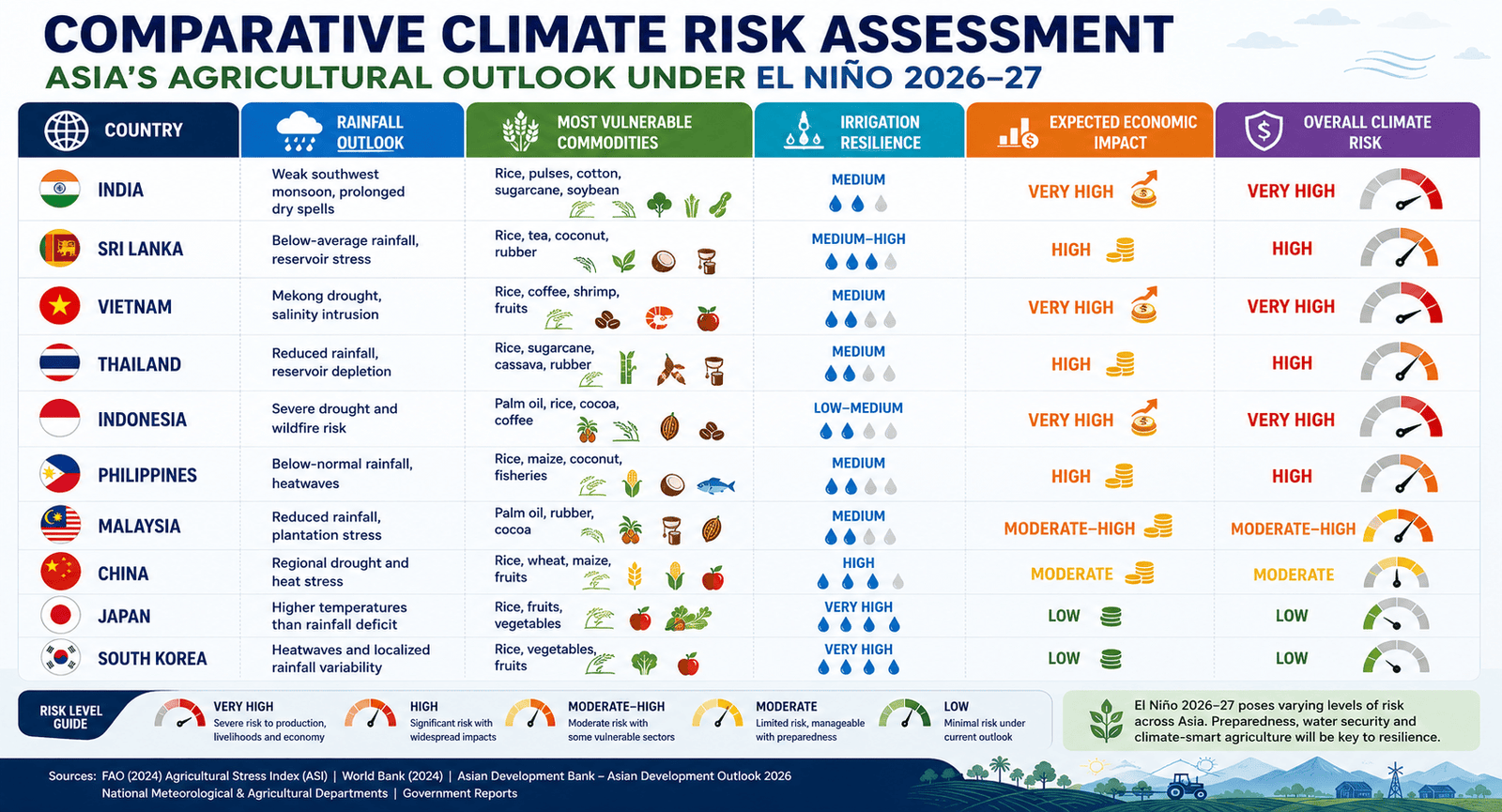

A potential Super El Niño is emerging as a significant macroeconomic risk for major emerging markets, with economists warning that the climate phenomenon could trigger widespread agricultural disruptions, elevate food prices and complicate monetary policy decisions across several economies.
According to analysis from TS Lombard, the combination of adverse weather conditions, elevated energy prices and persistently high fertilizer costs could create a powerful inflationary shock, particularly through the food supply chain. The warning comes as meteorological agencies signal the development of a strong El Niño event that may persist for two years or longer.
Historically associated with higher temperatures, prolonged droughts and erratic rainfall patterns, El Niño has often resulted in reduced agricultural productivity across key farming regions. Analysts caution that a strong or very strong El Niño could amplify existing pressures on global food markets, already strained by geopolitical conflicts and rising agricultural input costs. “Food inflation risks are particularly concerning because they arrive at a time when fertilizer prices remain elevated and supply chains continue to face disruptions,” the report noted.
India Faces Highest Exposure to Growth and Inflation Risks
Among major economies, India is viewed as the most vulnerable to a severe El Niño event. Concerns are mounting over the country's monsoon season, which accounts for nearly three-quarters of annual rainfall and remains critical to agricultural production and rural incomes.
Recent data indicates rainfall during the first half of June has remained significantly below normal levels, while the progress of the southwest monsoon has slowed across several regions. The India Meteorological Department has forecast monsoon rainfall at around 90 per cent of the long-term average, potentially making it the weakest monsoon season in more than a decade if current trends continue.
A weaker monsoon could adversely affect summer crop sowing, reduce farm incomes and dampen rural demand. It may also exacerbate inflationary pressures already driven by higher food and fuel prices. Food inflation has begun accelerating, while policymakers remain concerned about the impact on economic growth.
The Reserve Bank of India has already revised its inflation outlook upward and lowered growth projections, citing risks linked to both energy markets and weather-related disruptions. Government authorities have responded by increasing strategic grain reserves and identifying nearly 200 districts as particularly vulnerable to El Niño-related impacts.
With historical data showing that 12 out of 17 El Niño years since 1951 resulted in deficient rainfall, economists believe the coming months will be crucial in determining the extent of the economic fallout.
Brazil Braces for Higher Energy and Food Costs
In Brazil, El Niño's effects are expected to vary significantly by region. While southern states could experience heavier rainfall and flooding, northern and northeastern areas are likely to face drier conditions and increased heatwaves.
The weather phenomenon could place additional pressure on Brazil's energy sector, which remains heavily dependent on hydroelectric power generation. Lower reservoir levels may force greater reliance on more expensive thermoelectric generation, potentially driving electricity tariffs higher during the dry season.
Although Brazil's reservoir conditions currently remain healthier than in previous El Niño cycles, analysts warn that prolonged dry conditions could still increase power costs for households and businesses.
The agricultural impact is expected to emerge later. Soybean and corn production may face higher costs due to elevated fertilizer prices and weather-related uncertainties during the upcoming planting season. These pressures could eventually filter through to livestock, biofuel and food markets, adding to inflationary concerns in 2027.
Mexico Confronts Agricultural Inflation and Water Stress
Mexico is also expected to face significant challenges, particularly through rising agricultural prices. Previous El Niño events have led to substantial increases in fruit, vegetable and livestock prices as adverse weather conditions reduced production and increased input costs.
Recent inflation data already indicates elevated food price pressures, especially in weather-sensitive crop categories. Analysts warn that another strong El Niño cycle could reignite supply-side inflation at a time when monetary authorities are attempting to balance slowing growth with price stability.
The impact will vary geographically. Northern Mexico could benefit from increased winter rainfall, supporting some export-oriented crops. However, excessive rainfall, floods and frost risks may threaten key agricultural commodities such as tomatoes, wheat and maize.
Meanwhile, central and southern regions are expected to experience reduced rainfall, placing crops such as coffee, sugarcane, beans, maize and avocados at greater risk.
Water security remains another critical concern. Although reservoir levels supplying Mexico City have recovered significantly following a wetter-than-normal 2025, experts caution that a prolonged El Niño event could once again strain urban water systems and agricultural irrigation networks.
Inflation Risks Extend Beyond Agriculture
Economists stress that the significance of a Super El Niño extends beyond farm output. Food price shocks can quickly spill over into broader inflation, influencing consumer spending, interest rate decisions and overall economic growth.
While advanced economies are expected to remain relatively insulated, emerging markets with greater dependence on agriculture and food-sensitive inflation baskets face a more challenging outlook.
As weather agencies continue monitoring Pacific Ocean conditions, policymakers, central banks and agricultural stakeholders are increasingly preparing for what could become one of the most economically consequential climate events of the decade.
Source: ZeroHedge