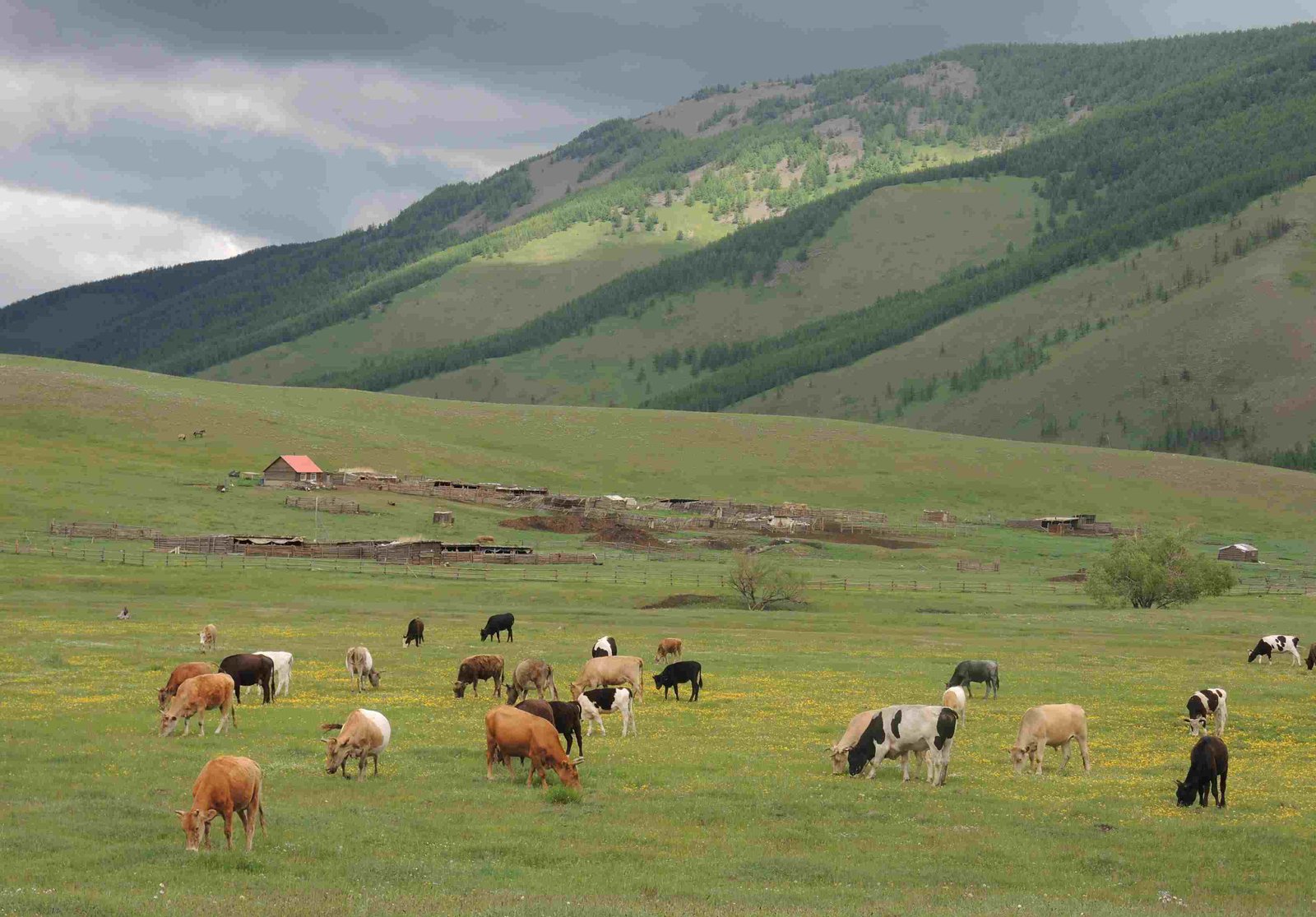
Mongolia's vast pastoral economy is set to receive a major injection of climate-focused capital as the Asian Development Bank (ADB) and the Green Climate Fund (GCF) launch a new financing vehicle designed to modernise livestock value chains, strengthen rural enterprises and bring more private capital into sustainable agribusiness.
The Green Inclusive Regional Agribusiness Fund, or GIRAF, brings together $92.6 million in funding from the Green Climate Fund and an anticipated $25 million in co-financing from commercial banks, creating a potential $117.6 million capital pool for Mongolia's agricultural economy.
The initiative is designed to address one of the sector's most persistent challenges: limited access to affordable finance for the herder cooperatives, micro-enterprises and small and medium-sized businesses that form the backbone of rural economic activity.
Initial financing is expected to direct $37.5 million towards rural businesses, including $3 million earmarked for direct innovation grants. The broader fund structure combines concessional financing with credit guarantees, aiming to reduce the risks that have traditionally discouraged lenders from expanding their presence in Mongolia's agricultural and rural markets.
For Mongolia, where livestock production remains deeply connected to the country's economy, communities and landscape, the financing initiative arrives against a backdrop of mounting climate pressures. Rangeland degradation and increasingly severe weather events are creating new challenges for traditional livestock systems, while rural businesses often face significant barriers when seeking the capital needed to invest in more sustainable and resilient operations.
GIRAF is intended to change that equation by lowering the cost of finance and reducing lending risks for businesses and cooperatives willing to adopt sustainable rangeland management and climate-resilient agricultural practices.
The model goes beyond simply providing cheaper loans. Preferential access to financing will be linked to commercial structures designed to bring herder communities more directly into organised value chains, potentially creating stronger connections between primary producers, cooperatives, processors and markets.
The approach is intended to ensure that climate finance delivers benefits across the supply chain rather than remaining concentrated among larger businesses or financial institutions.
A major component of the initiative will be the use of digital monitoring and traceability systems. Remote sensing and geospatial technologies will be deployed to assess the environmental and socioeconomic performance of projects receiving support from the fund.
That digital infrastructure is expected to provide lenders and impact investors with measurable data on outcomes including land restoration, carbon sequestration and operational efficiency.
For climate finance, the ability to verify results could prove as important as the availability of capital itself. By combining concessional financing with measurable environmental performance, GIRAF is designed to create a structure capable of attracting a broader pool of institutional and commercial investors into Mongolia's rural economy.
Over the next decade, the fund aims to support approximately 500 small and medium-sized enterprises and cooperatives, along with 1,000 rural micro-enterprises.
The initiative represents a significant attempt to connect three areas that have often developed separately: agricultural finance, climate resilience and digital verification.
For rural businesses, the fund could provide access to capital that is both more affordable and better aligned with the realities of climate-exposed agricultural operations. For banks, credit guarantees and digital monitoring could reduce some of the risks associated with lending to smaller enterprises in remote areas. And for investors focused on measurable climate outcomes, the programme creates a framework for tracking the environmental impact of deployed capital.
The larger ambition is to build a more resilient livestock and agribusiness economy without disconnecting Mongolia's traditional herding communities from the value they create.
By combining public climate finance with commercial banking capital, GIRAF is positioning private-sector participation as a central part of its model. The expected $25 million in bank co-financing also signals an effort to use concessional capital not only as direct funding but as a mechanism for unlocking additional investment.
As Mongolia confronts the combined pressures of climate volatility, land degradation and rural financing gaps, the new fund is intended to provide a more integrated response.
Its success will ultimately depend on whether it can translate climate finance into commercially viable rural businesses while delivering measurable improvements in land management and resilience. But with a target of reaching 1,500 enterprises and cooperatives over the next decade, the GIRAF initiative represents one of the more ambitious efforts to connect sustainable finance with the transformation of Mongolia's pastoral and agribusiness economy.