

Vietnam is world’s second-largest coffee exporter
Vietnam’s coffee industry has entered a new phase of growth and strategic repositioning as export revenues surpassed US$8 billion in 2025, driven by strong prices and rising demand for processed products. Approximately 1.5 million tonnes of coffee were shipped, while roasted and processed exports generated more than US$1 billion in just eight months, signaling gradual movement up the value chain beyond raw green bean exports.
This momentum reinforces Vietnam’s status not only as the world’s second-largest coffee exporter, but its future direction will increasingly be defined not by volume alone, but by the ability to demonstrate verified origin, emissions transparency, and sustainability performance in high-value markets.
The EU Market: From Price and Quality to Proof and Accountability:
Vietnam’s free trade agreements, including EU–Vietnam Free Trade Agreement (EVFTA), the UKVFTA, and the CPTPP have reduced tarrifs and expanded market access for coffee. Among these partners, the European Union remains Vietnam’s most strategic premium destination due to its market size and its influence on sustainability expectations across global supply chains. While price competitiveness and quality historically defined EU buyer decisions, import standards are now shifting toward traceability and accountability. This transition has accelerated with the introduction of the EU Deforestation Regulation (EUDR), which requires coffee placed on the EU market to be traceable to specific farm plots, verified as deforestation-free, and supported by appropriate due diligence documentation. Compliance deadlines are set for 30 December 2026 for large operators and 30 June 2027 for micro and small enterprises.
For Vietnamese exporters, this phased timeline represents a strategic inflection point. Companies that integrate digital traceability and verification systems early are better positioned to maintain uninterrupted EU access, strengthen buyer trust, and secure premiums. Those that delay preparation face rising risks, including compliance bottlenecks, higher verification costs, and potential exclusion as European buyers rationalize sourcing toward lower-risk, data-ready origins.
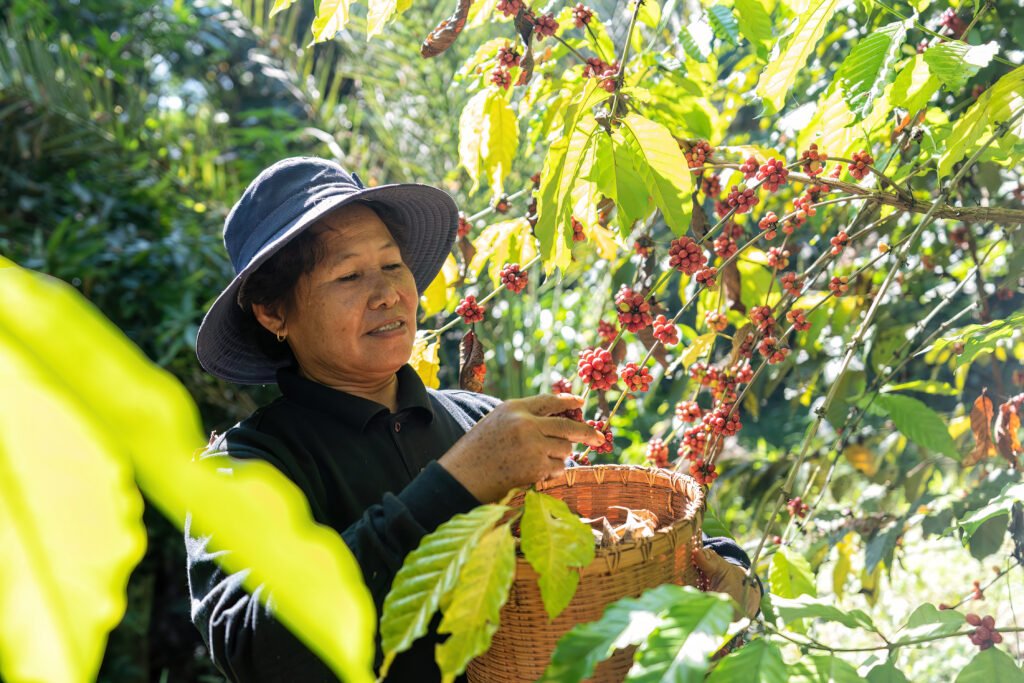
Structural challenges at origin complicate this transition. Vietnam’s coffee sector remains overwhelmingly smallholder-driven, with hundreds of thousands of producers cultivating relatively small, fragmented plots, particularly in the Central Highlands. While this structure has historically enabled scale and resilience, it also presents challenges for consistent data capture, land-use verification, and plot-level traceability—capabilities now required to meet EU due diligence standards.
