
Promoting Canada–Asia Collaboration on Food Security, Energy Security, and Infrastructure
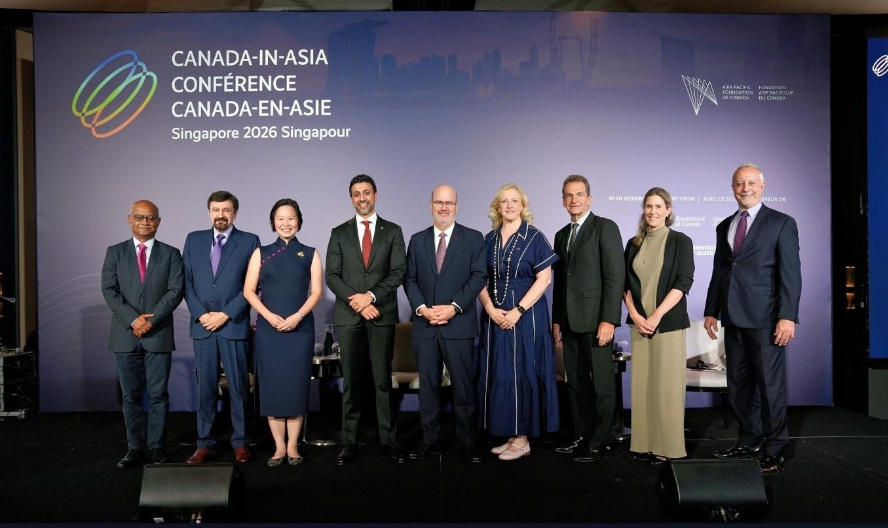
The Asia Pacific Foundation of Canada (APF Canada) successfully concluded the Canada-in-Asia Conference 2026 (CIAC 2026) in Singapore, bringing together more than 700 senior policymakers, business leaders, investors, and experts from Canada and across the Asia Pacific.
Held against a backdrop of geopolitical uncertainty and economic transition, CIAC 2026 centred on three key pillars: food security, energy security, and infrastructure, exploring how Canada and Asia can develop resilient, future-ready partnerships through policy alignment, investment, and cross-border collaboration.
The conference was attended by senior government representatives, including Maninder Sidhu, Minister of International Trade (Canada) and Gan Siow Huang, Minister of State for Foreign Affairs and Trade & Industry (Singapore), reflecting the strategic importance of Canada-Asia engagement at both the regional and bilateral levels.
From Dialogue to Delivery in a Changing Indo-Pacific
Opening the conference, Jeff Nankivell, President and CEO of APF Canada, emphasised the importance of long-term, trust-based partnerships between Canada and Asia.
“Across the Indo-Pacific, governments and businesses are addressing shared challenges, from food and energy security to supply-chain resilience and infrastructure financing,” said Nankivell. “CIAC 2026 provided a platform to move beyond superficial dialogue and concentrate on practical collaboration that provides mutual benefit for Canada and our Asian partners.”
Throughout keynote addresses, ministerial discussions, and sector-specific panels, speakers explored how Canada’s expertise in sustainable resource management, clean energy, agrifood innovation, and infrastructure planning can complement Asia’s scale, market dynamism, and technological leadership.
Key Sessions Addressing Regional Priorities
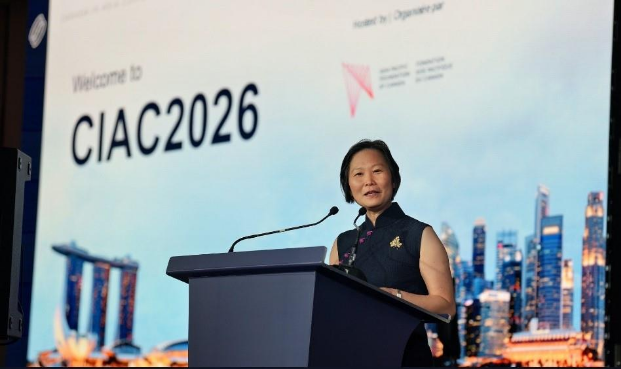
Several headline sessions at CIAC 2026 explored cross-cutting regional challenges shaping Canada–Asia relations.
A high-level session on geopolitics and economic fragmentation examined how middle powers can navigate rising strategic competition, trade realignments, and supply chain disruptions. Speakers discussed the implications for investment flows, industrial policy, and regional co-operation, emphasising the importance of diversified partnerships and dependable regulatory environments.
Another session focused on investment and infrastructure financing, bringing together policymakers, investors, and project developers to discuss how to mobilise private capital for large-scale infrastructure across Asia. Panellists examined blended finance models, risk-sharing mechanisms, and the role of development finance institutions in unlocking bankable, sustainable projects.
Discussions on energy security and the energy transition examined ways to increase the deployment of clean energy while maintaining affordability and reliability. Speakers highlighted opportunities for collaboration in renewables, energy storage, grid modernisation, and critical minerals, positioning Canada as a complementary partner in Asia’s shift to low-carbon energy systems.
A dedicated discussion on food systems and supply-chain resilience examined how climate pressures, demographic changes, and geopolitical shocks are reshaping food security across the region. Participants emphasised innovation in agri-technologies, sustainable production, and regulatory co-operation as key drivers of long-term resilience.
Spotlight on Key Country Relationships
CIAC2026 also included country-specific sessions, with particular emphasis on India, China, and Indonesia, reflecting their increasing importance in Canada’s Indo-Pacific engagement.
Canada–India and Canada-China: Expanding Engagement in a Changing Economic Environment
Discussions on Canada’s relations with China and India explored how the three nations can strengthen co-operation amid shifting geopolitical and economic circumstances. Speakers emphasised India and China’s increasing demand for food security, energy diversification, and large-scale infrastructure investment, and examined how Canadian companies, institutions, and investors can contribute to these key sectors.
Canada–Indonesia: Turning Alignment into Action
Sessions on Canada–Indonesia relations explored opportunities to deepen collaboration across agrifood systems, clean energy, critical minerals, and infrastructure development. Speakers highlighted Indonesia’s emergence as a regional manufacturing and resource centre, and the role Canadian expertise can play in supporting sustainable production, regulatory development, and supply-chain resilience.
Panellists stressed the importance of turning policy alignment into commercial partnerships, especially in downstream processing, agri-tech, and investment support, positioning Canada as a long-term partner in Indonesia’s economic transition.
Vina Nadjibulla, Vice-President Research & Strategy at APF Canada, who led the Canada–India session, emphasised the importance of going beyond transactional engagement.
“Canada–India relations are entering a phase where strategic alignment must be matched by sustained, sector-led collaboration,” said Nadjibulla. “What we heard at CIAC2026 was a clear interest in building partnerships that combine investment, technology transfer, skills development, and mutual security, areas that will be critical to delivering long-term value for both economies.”
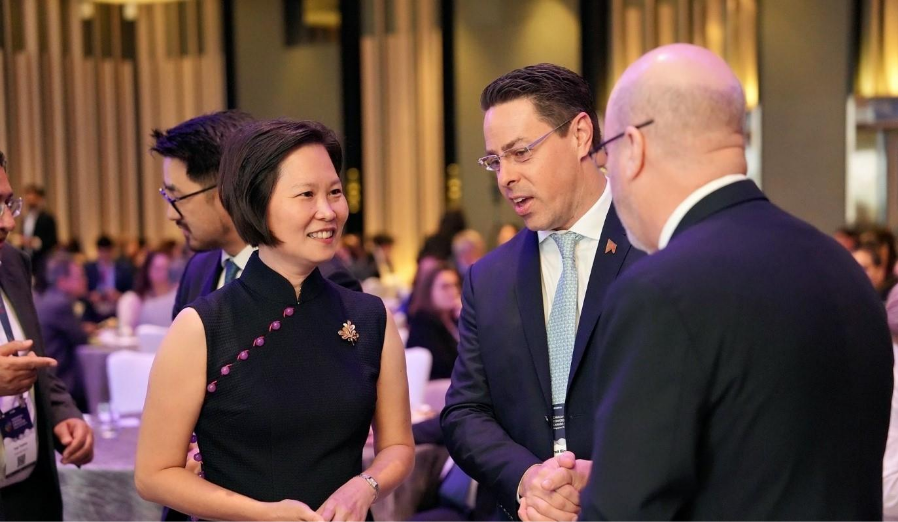
Across the country-focused discussions, participants emphasised that successful partnerships must extend beyond trade flows to include knowledge exchange, workforce capability building, and people-to-people relations, aligning closely with CIAC2026’s core pillars of food security, energy security, and infrastructure.
Sustaining Momentum Beyond CIAC 2026
In closing remarks, Barrett Bingley, APF Canada’s Asia Regional Director, noted that CIAC2026 marked a transition from conversation to sustained collaboration.
“CIAC is not a standalone event,” said Bingley. “It is part of a longer-term effort to connect governments, businesses, and institutions that are shaping the future of Canada-Asia relations. The relationships and ideas advanced here in Singapore will continue through follow-up engagements and concrete partnerships across the region.”
The outcomes emerging alongside the conference underscore this momentum in action. One such example is the newly announced exclusive North American distribution agreement between TradeWorks Environmental Inc. and Singapore-based GoCircular. TradeWorks’ President and CEO, Meni Mancini, is both a past and current delegate of APF Canada’s Women’s Executive Series (WES), having participated in missions designed to foster strategic connections across Asia. Through sustained engagement and market access support facilitated by APF Canada, these introductions contributed to the partnership now formalised between TradeWorks and GoCircular. The agreement demonstrates how CIAC and APF Canada’s broader Canada-in-Asia initiatives help catalyse commercial outcomes, strengthen cross-border collaboration, and advance Canadian innovation in key sectors such as cleantech.
In a parallel development reinforcing Canada’s commitment to sustainable economic partnerships in Asia, Canada’s bilateral development finance institution, FinDev Canada, announced the signing of a USD 30 million loan to PT Indonesia Infrastructure Finance (IIF), marking FinDev Canada’s first investment in Indonesia. This financing will expand access to capital for renewable energy and other sustainable infrastructure projects that bolster climate mitigation, strengthen infrastructure capacity and resilience, and unlock economic opportunities. Leveraging IIF’s deep country expertise and advisory role in Indonesia’s infrastructure sector, the commitment builds on the memorandum of understanding signed in 2025 and advances the bilateral agenda by supporting key projects that enhance trade, drive low-carbon growth, and foster long-term sustainable development outcomes.
