
Strengthening agricultural trade through market expansion and innovation
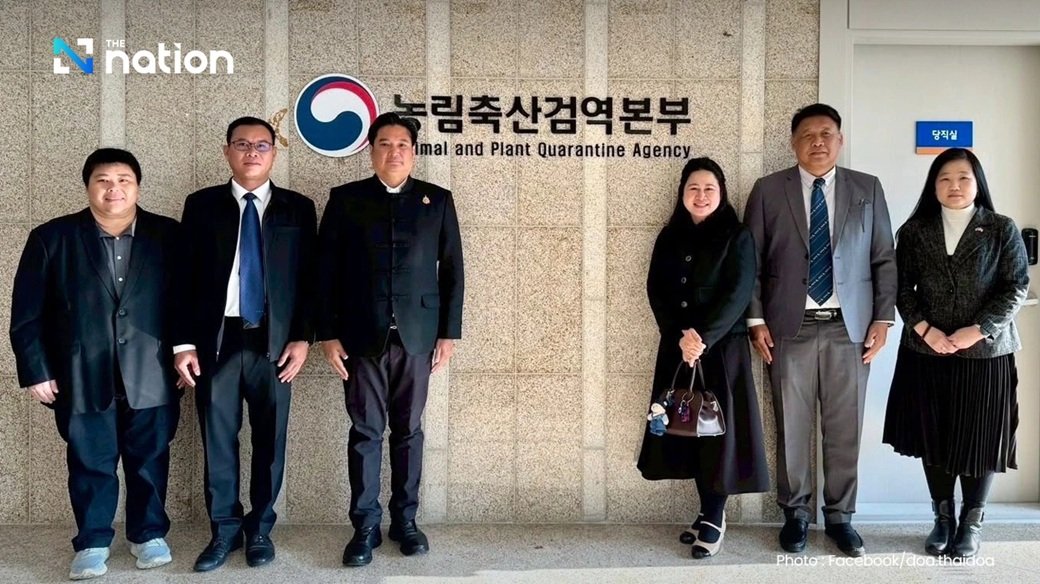
Thailand’s Department of Agriculture and the Thai Ambassador to Seoul are intensifying efforts to enhance the export of high-value Thai agricultural products to South Korea. In a recent meeting with South Korea’s Animal and Plant Quarantine Agency (APQA), both sides discussed strategies to overcome trade barriers and expand market access for Thai fruits such as mangoes, pomelos, longans, and green papayas.
Addressing Trade Barriers and SPS Measures
The meeting, led by Rapibhat Chandarasrivongs, Director-General of the Department of Agriculture, and Tanee Sangrat, Thai Ambassador to Seoul, focused on tackling sanitary and phytosanitary (SPS) measures that impact trade. Both countries are working to open new agricultural markets while increasing the volume of Thai exports to South Korea. In 2026, Thailand submitted a request to open South Korea’s pomelo market, while South Korea sought access for fresh paprika to Thailand. This ongoing cooperation highlights the shared goal of fostering agricultural trade between the two nations.
Promising Growth in Pomelo Exports
Thailand’s pomelo exports have shown significant potential. In 2025, the country exported over 31,832 tons of fresh pomelos worth 1.42 billion baht. With South Korea’s anticipated approval to import Thai pomelos, exports are projected to rise to 32,000 tons, valued at approximately 1.5 billion baht. Additionally, Thailand has requested market access for longans and green papayas, two high-potential products. By 2026, Thailand aims to export 514,000 tons of longans worth 18.3 billion baht and 372 tons of fresh papayas worth 30 million baht to South Korea, aligning with the Ministry of Agriculture and Cooperatives’ “market-driven production” policy.
Innovations in Mango Export Practices
Thailand currently exports four mango varieties—Nang Klang Wan, Nam Dok Mai, Rad, and Mahachanok—to South Korea. These mangoes are treated with Vapour Heat Treatment (VHT) to control fruit flies of the Bactrocera genus. However, the Director-General proposed an alternative method, Hot Water Immersion Treatment (HWIT), which has been approved by the Commission on Phytosanitary Measures (CPM) since 2025. This method has been successfully used for exporting mangoes to the European Union for over five years without reports of pest contamination. Moreover, HWIT offers significant cost advantages. While a 3-ton steam oven for VHT costs around 11 million baht, a 600-kilogram hot water immersion tank costs only 350,000 baht, making it a more economical option for Thai exporters.
Enhancing Cooperation and Market Competitiveness
The meeting with APQA represents a key step in strengthening collaboration between the National Plant Protection Organisations (NPPOs) of Thailand and South Korea. This partnership is expected to unlock new trade opportunities, add value to Thailand’s agricultural products, and reinforce confidence in food safety and plant health standards. The long-term goal is to improve the competitiveness of Thai agricultural products in the South Korean market. By addressing trade barriers and adopting cost-effective treatment methods, Thailand is positioning itself to meet growing demand while ensuring the high quality of its exports.
Outlook for Thai Agricultural Exports
The collaborative efforts between Thailand and South Korea are set to drive growth in the agricultural sector. With innovative treatment methods, expanded market access, and a focus on high-value products, Thailand is poised to strengthen its position as a leading exporter of premium fruits to South Korea. This initiative not only benefits Thai farmers and exporters but also enhances bilateral trade relations, paving the way for sustainable agricultural growth.
