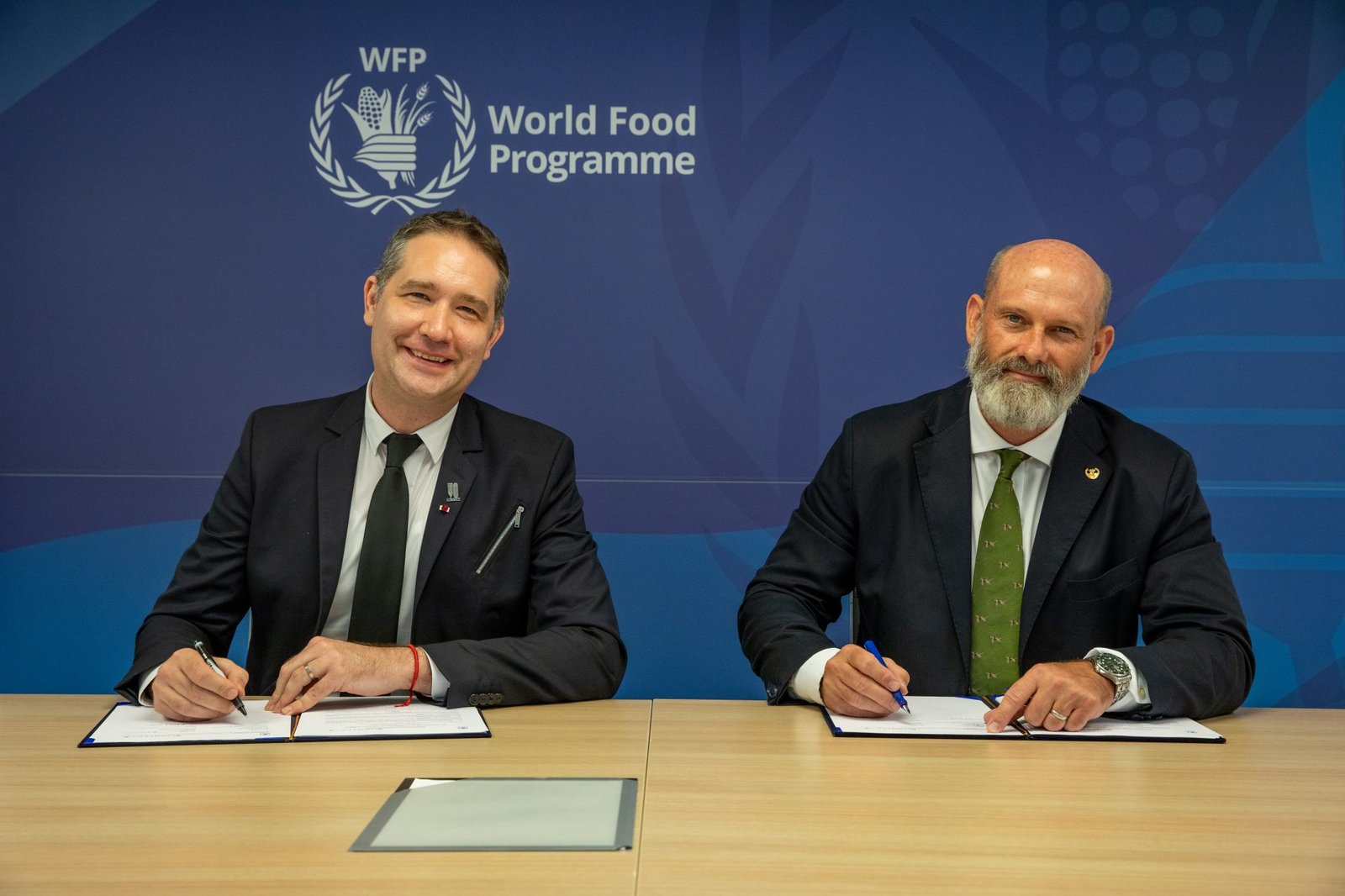
In an exclusive AgroSpectrum interview, Jairo Castano of the Food and Agriculture Organization of the United Nations explains how the World Programme for the Census of Agriculture 2030 will modernize agricultural censuses, strengthen data-driven policymaking, and support progress toward the United Nations Sustainable Development Goals.
Jairo Castano, Senior Statistician and Leader of the Agricultural Censuses Team at the Food and Agriculture Organization of the United Nations (FAO), discusses the global significance of the newly endorsed World Programme for the Census of Agriculture 2030 (WCA 2030) guidelines. Endorsed by the United Nations Statistical Commission, the programme establishes a new international statistical standard aimed at strengthening agricultural data governance and supporting evidence-based policymaking worldwide.
Castano highlights how emerging technologies such as geospatial tools, online data systems, and artificial intelligence will transform the way agricultural census data is collected, validated, and used. He also explains how FAO is supporting countries—particularly developing economies—in building capacity to implement the programme while ensuring data quality and global comparability. Looking ahead, Castano emphasizes that WCA 2030 will play a crucial role in tracking agricultural transformation and monitoring progress toward the United Nations Sustainable Development Goals.
The WCA 2030 guidelines have now been endorsed as an international statistical standard. What strategic shift does this represent for global agricultural data governance and policymaking over the next decade?
The UNSC’s endorsement of the WCA 2030 guidelines as an international statistical standard marks a strategic shift from agriculture being treated as a sectoral data domain to being governed as a core component of the global statistical system, with agreed norms on concepts, methods, and comparability. It signals a move toward integrated, policy‑driven data governance in which agricultural censuses are embedded within national statistical systems, and explicitly linked to benchmarking, accountability, and evidence‑based policymaking.
Over the next decade (2026–2035), this positions structural agricultural data as a global public good, strengthening FAO’s stewardship role and enabling more coherent national and international decisions on food security, rural development, and agricultural transformation.
The new programme emphasizes innovative technologies such as geospatial tools, online data collection, and artificial intelligence. How will these technologies transform the way agricultural census data is collected, validated, and utilized?
By promoting the use of geospatial tools, online data collection, and artificial intelligence, WCA 2030 shifts agricultural censuses from slow, paper‑based operations to more timely, spatially explicit, and data‑integrated systems. Georeferencing and Earth observation improve coverage and consistency checks, online and mobile tools accelerate data capture and reduce respondent burden, and AI‑supported processes strengthen training, data validation, editing, and linkage with administrative and survey data.
Together, these technologies enable faster production of higher‑quality, interoperable census data that can be more easily reused for policy analysis, monitoring, and targeting, rather than remaining static decennial snapshots.
Many developing countries face capacity and infrastructure constraints when conducting large-scale agricultural censuses. How is FAO supporting Member countries to implement WCA 2030 effectively while ensuring data quality and comparability?
FAO is supporting Member countries to implement WCA 2030 by combining normative guidance with hands‑on capacity development, tailored to different national contexts. This includes disseminating harmonized methodological guidelines, providing country‑level technical assistance for census planning and implementation, and organizing regional and national training workshops to strengthen skills in modern census methods, quality assurance, and the use of innovative technologies.
By anchoring support in internationally agreed standards while allowing flexible adaptation to country capacities, FAO helps reduce implementation costs, improve data quality, and ensure that census results remain internationally comparable and policy‑relevant.
The guidelines highlight the growing role of women farmers, aquaculture activities, and diversified farming systems. How will WCA 2030 help governments better capture these emerging dynamics in agriculture?
WCA 2030 helps governments capture these emerging agricultural dynamics by updating concepts, definitions, and census content to better reflect the realities of modern farming systems. The guidelines strengthen the measurement of women’s roles by reinforcing the identification of agricultural holders and managers, enable the systematic inclusion or combination of aquaculture and forestry activities with agricultural censuses, and recognize increasingly diversified and mixed production systems within a single holding.
By embedding these elements within internationally agreed standards and modular census designs, WCA 2030 allows countries to produce more nuanced, comparable structural data that reveal who farms, what activities are combined, and how agriculture is evolving beyond traditional crop‑based models.
Agricultural census data increasingly underpins national strategies on food security, climate adaptation, and rural development. How can WCA 2030 strengthen evidence-based policymaking in these areas?
WCA 2030 strengthens evidence‑based policymaking by providing high‑quality, internationally comparable structural data that serve as a stable foundation for food security, climate adaptation, and rural development strategies. By standardizing information on farm structures, land use, production systems, and labour, and by integrating agricultural censuses within national statistical systems, WCA 2030 enables governments to better target vulnerable areas and populations, design climate‑resilient interventions, and monitor structural change over time.
The use of census data as a frame for follow‑up surveys further allows countries to link long‑term structural trends with faster‑changing policy variables, improving the coherence and credibility of policy decisions.
With the introduction of anonymized microdata and interactive data dissemination tools, how does FAO envision expanding access to agricultural data for researchers, agribusinesses, and investors?
Under WCA 2030, FAO envisages expanding access to agricultural data by promoting safe access to anonymized census microdata alongside modern, interactive dissemination tools that go beyond traditional tabulations.
By encouraging countries to release anonymized microdata and by disseminating standardized structural census data through platforms such as FAOSTAT and microdata catalogues, FAO enables researchers, agribusinesses, and investors to conduct deeper, customized analyses while safeguarding confidentiality. Interactive web‑based tables, maps, and visualization tools further lower access barriers, allowing a wider range of users to explore agricultural structures, identify investment opportunities, and support innovation‑driven decision‑making based on official, high‑quality data.
The WCA 2030 outlines 27 essential data items for all countries. How were these core indicators selected, and how do they reflect the evolving priorities of modern agriculture and food systems?
The 27 essential data items in WCA 2030 were selected through extensive review of country experiences, expert consultations, and global user needs to define a minimum, universally relevant core dataset that all countries can collect through complete enumeration. These indicators focus on the fundamental structural characteristics of agricultural holdings—such as land, production activities, labour, and management—ensuring international comparability while remaining operationally feasible.
At the same time, their composition reflects evolving priorities of modern agriculture by strengthening attention to gender roles, diversified production systems, and the integration of agriculture with forestry and aquaculture, positioning the census as a foundation for understanding structural transformation in contemporary food systems.
Looking ahead to 2030 and beyond, what role do you see agricultural census data playing in tracking progress toward global commitments such as the Sustainable Development Goals and climate targets?
Looking ahead to 2030 and beyond, agricultural census data under WCA 2030 will serve as a structural backbone for tracking progress toward the SDGs and climate commitments by providing consistent, comparable baselines on farm structures, land use, labour, and production systems. The census of agriculture supports the statistical system that monitors agricultural-related SDGs and provides the sampling frame for the agricultural survey programme and a benchmark for the national agricultural statistical system.
Altogether allow countries to identify who is at risk of being left behind, monitor long‑term structural change relevant to food security and rural livelihoods, and anchor climate‑related indicators—such as exposure, adaptive capacity, and land management—within national statistical systems. By linking decennial census benchmarks with inter‑censal surveys and other data sources, WCA 2030 enables more credible monitoring of transformation pathways rather than one‑off reporting against global targets.
— Suchetana Choudhury (suchetana.choudhuri@agrospectrumindia.com)