Royal Group Co., Ltd. has moved to bring strategic capital into its shareholder base, selling a 5.80 per cent stake to Shenzhen Jiadao Green Low-Carbon Technology Investment Partnership, a vehicle associated with Chinese investor Gong Hongjia and Chen Chunmei.
Huang Jiadi, Royal Group’s controlling shareholder and actual controller, signed an agreement on July 30 to transfer 48.2794 million unrestricted tradable shares to the Shenzhen-based partnership at RMB 3.50 per share. The transaction is valued at approximately RMB 169 million. On completion, Jiadao Green Low-Carbon will become a shareholder with more than 5 per cent of Royal Group’s equity.
The transaction does not change control of the company. Huang’s shareholding is expected to fall from 25.87 per cent to 20.07 per cent, while he remains Royal Group’s controlling shareholder. Shenzhen Jiadao has committed not to reduce the shares acquired in the transaction for 18 months and is expected to nominate one director to Royal Group’s board.
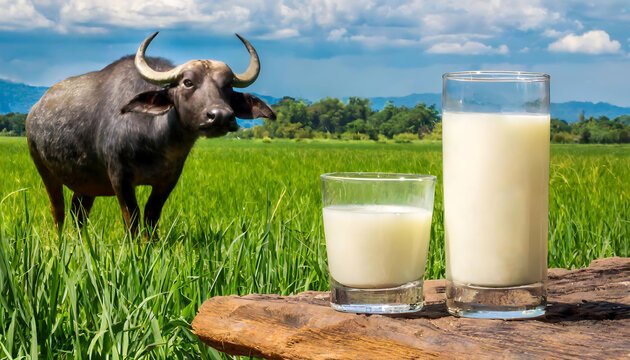
For Royal Group, the deal is more than a routine stake transfer. It is an attempt to bring in an investor with technology, industrial and consumer-market connections at a time when the company is trying to sharpen its focus on buffalo milk and reposition itself in a crowded dairy market.
Royal Group occupies an unusual position in China’s listed dairy sector. It is widely identified as the country’s only A-share-listed company with buffalo milk as its core business. That distinction gives it a differentiated product, but it does not remove the commercial challenges facing dairy companies: intense competition, consumer sensitivity to price, rising demands around quality and a market where conventional capacity expansion has become a less reliable route to growth.
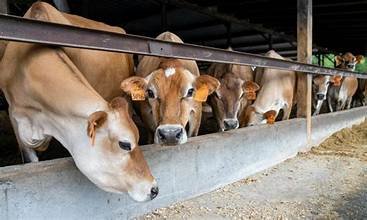
The company is seeking to respond by developing a more integrated buffalo-milk value chain. Its strategy spans breeding, genetic resources, dairy farming, processing and smart manufacturing. Upstream, Royal Group is working on buffalo germplasm, including a breeding programme built around genetic chips, high-quality embryo introduction and whole-genome breeding. The stated aim is to improve breeding resources and address constraints in the water-buffalo supply chain.
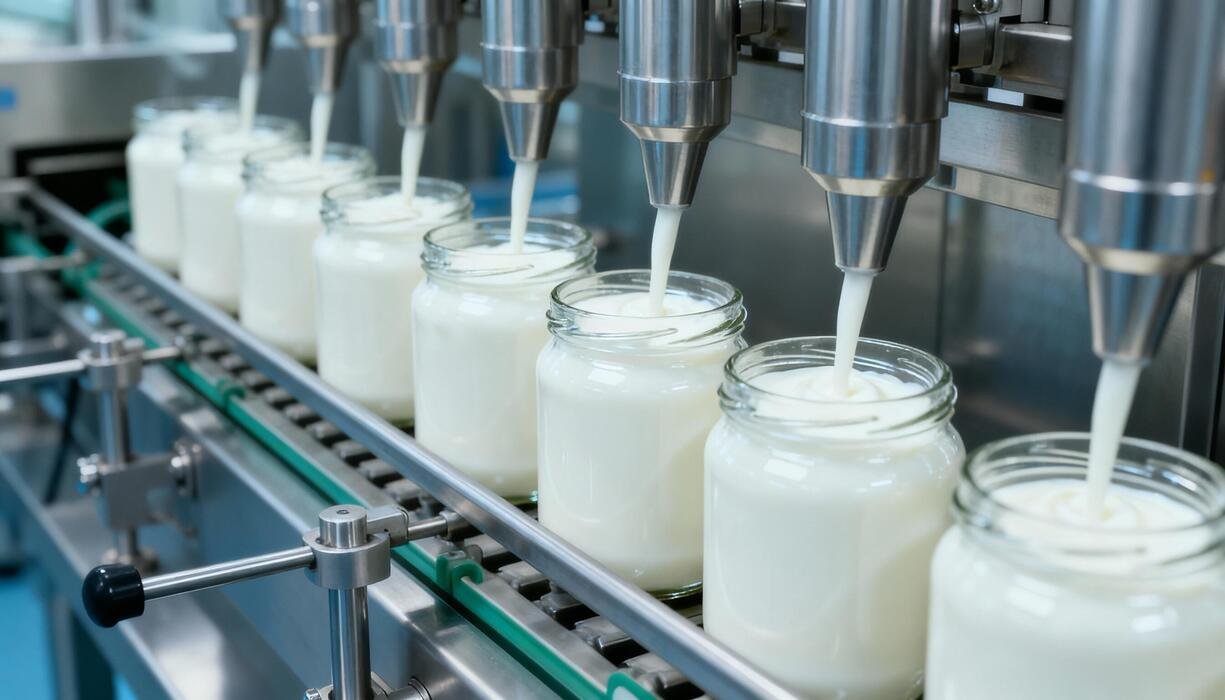
In the middle of the value chain, the company is focusing on processing technology, including high-end buffalo-milk purification and stable milk-tea production. The commercial objective is to create higher-value and functional dairy products rather than compete solely on volume in the mass-market milk category.
Downstream, Royal Group has been investing in 5G-enabled manufacturing systems intended to improve production efficiency, quality control and operational visibility. The broader plan is to link breeding, farming, processing and manufacturing in one system.
That model, however, requires patient capital. Buffalo breeding, genetic-resource development, biomanufacturing and smart-ranch upgrades are long-cycle projects. They involve scientific research, fixed assets, technical teams, animal husbandry, quality control and a period of commercial development before they can materially affect earnings.
Royal Group’s decision to bring in Jiadao therefore appears to be based on the expectation that an industrial investor can provide more than funding. The company is looking for access to technology relationships, consumer-market capabilities and broader industrial resources that may help turn its buffalo-milk position into a stronger business.
Jiadao Green Low-Carbon is linked to Gong Hongjia and Chen Chunmei. Gong is known in China as an early investor in Hikvision and has built a portfolio across technology, healthcare, biotechnology and industrial businesses. The investment platform’s relevance to Royal Group lies in its potential ability to connect the dairy company with capabilities outside traditional dairy operations.
The most immediate potential linkage is in biotechnology and breeding. Royal Group’s buffalo-milk strategy depends partly on better genetics, breeding efficiency and herd quality. Jiadao’s investments and networks in areas such as cell technology, gene-related research and biotechnology could potentially complement the company’s germplasm and breeding ambitions.
Another possible area is circular farming and low-carbon livestock management. The Jiadao system’s association with microbial-cycle technologies could be relevant to manure treatment, waste management, nutrient recovery and integrated planting-and-breeding systems. For a dairy company, these are not peripheral concerns. Manure handling, feed, water, energy and land use can affect both environmental performance and operating costs.
Digital marketing is also a potential avenue. Royal Group’s buffalo-milk products occupy a premium and differentiated category, making branding, consumer education and targeted distribution especially important. The company may seek support in customer management, digital channels and brand operations as it competes with larger dairy groups that have broader retail reach and more established consumer brands.
The transaction price of RMB 3.50 per share represented a premium of approximately 13.27 per cent to Royal Group’s closing price on the trading day before the announcement, according to market reports. That premium has drawn attention because it suggests the incoming investor is taking a long-term view of the company’s underlying assets and potential rather than relying only on short-term share-price movements.
However, strategic investment does not automatically solve operating problems. Royal Group has faced financial pressure in recent years, and media reports have pointed to cumulative losses over a six-year period. The company’s ability to turn its buffalo-milk franchise into sustained value will depend on execution: improving herd quality, controlling production costs, building premium products, expanding distribution and translating technology investment into commercial returns.finance.sina.com
The company’s challenge is to prove that buffalo milk can support a durable premium business rather than remain a niche proposition. That will require products with clear differentiation, consistent quality, consumer trust and a distribution model that does not depend excessively on costly promotions or fragmented channels.
The board representation planned for Jiadao Green Low-Carbon is therefore important. A director nomination gives the investor a role in major strategic planning and operating decisions, rather than limiting its involvement to a financial position. The 18-month lock-up commitment also signals that the investment is intended to support a medium-term strategy rather than a short-term trade.
Royal Group’s story reflects a broader shift in China’s consumer and agricultural businesses. Differentiated agricultural products increasingly need more than capacity and distribution. They need control over biological resources, processing know-how, product development, data systems, brand building and patient capital.
For Royal Group, buffalo milk remains the centre of that strategy. The Jiadao transaction gives the company an opportunity to combine a specialised dairy platform with an investor ecosystem spanning technology, biomanufacturing and digital consumer engagement.
Whether that combination produces a second growth curve remains uncertain. The deal is still subject to the relevant exchange review and completion procedures. But the transaction gives Royal Group fresh strategic backing as it attempts to move beyond conventional dairy competition and build a more distinctive, technology-led buffalo milk business.