
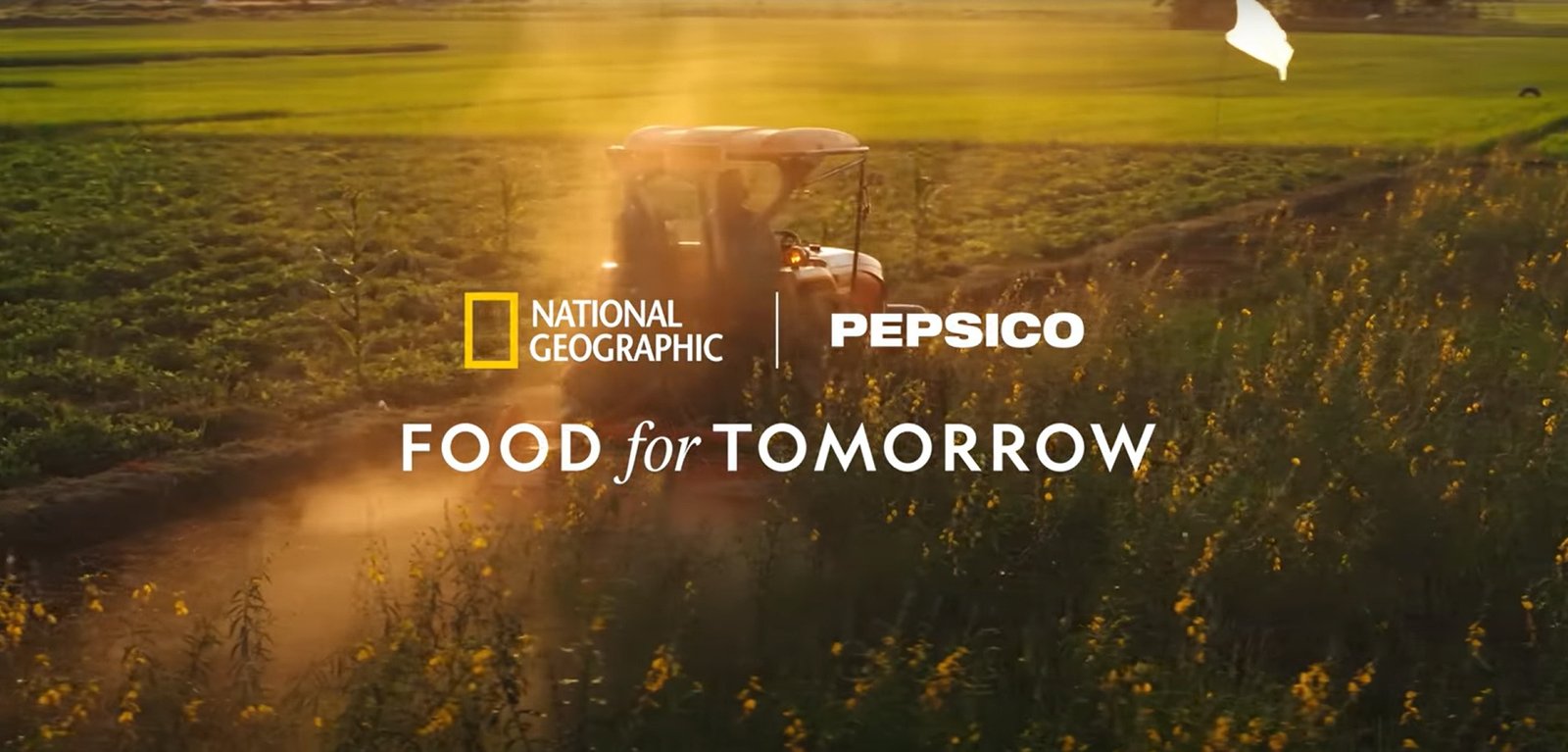
The National Geographic Society and PepsiCo launch the new Food for Tomorrow Program
National Geographic Society and PepsiCo announced their collaboration to harness the power of science, storytelling, and education to inspire positive change across the global food system, with a focus on regenerative agriculture. The Food for Tomorrow program will support National Geographic Explorer stories and scientists delving into the future of food through powerful imagery, poignant narratives, applied science-based projects, and data visualization maps.
The global population is projected to reach 10 billion by 2050, and according to UNESCO reports, if current trends continue, nearly 90% of the planet’s land could be degraded by that date. To feed this growing population and mitigate environmental threats such as soil degradation and habitat loss, a shift in the way we grow food is necessary. Regenerative agriculture—farming practices that restore, rather than deplete, soil health and natural resources—can provide us with the food we eat by working in harmony with nature, rather than against it. Food for Tomorrow will raise awareness about how regenerative agriculture can positively impact farmers, strengthen our food system, and protect our planet, while empowering everyone to make more sustainable food choices.
“Our future will depend on how we grow our food today, and we’re reimagining what’s possible when that system nourishes both people and the planet,” said Jill Tiefenthaler , CEO of the National Geographic Society . “In partnership with PepsiCo, we’re investing in innovative solutions and the farmers, scientists, and storytellers leading this essential work. We’re proud to fuel a global movement, rooted in science and hope, to help build a thriving future for generations to come.”
The engagement of the global food industry, in collaboration with farmers, will be essential to identifying how scientific research, innovation, and cutting-edge technology can complement traditional agricultural knowledge to expand regenerative agriculture and generate a positive impact for the planet and people. The food and beverage company PepsiCo has already set a global goal of expanding the adoption of regenerative, restorative, or protective practices to 4 million hectares by 2030.
“Climate change is putting unprecedented pressure on the global food system, and farmers are experiencing it every day. As a company rooted in agriculture, we know how fragile and vital this system is,” said Ramón Laguarta, Chairman and CEO of PepsiCo. “But there are solutions that can help make businesses and farmers more resilient. Food for Tomorrow combines PepsiCo’s deep expertise in food systems with the power of National Geographic to advance science and inspire action. Together, we seek to support farmers, protect the planet, and help build a stronger, more resilient future for all.”
To further realize this challenge and opportunity, PepsiCo collaborated with National Geographic CreativeWorks to develop three short films that capture firsthand how farmers are embracing regenerative agriculture—stories of innovation and collaboration.
The program will initially support five National Geographic Explorers, who will present stories about real people, farmers, and communities to highlight sustainable and regenerative practices in food production. It will also fund the ” Building Resilience in Agriculture ” fund, which will award up to five science grants seeking innovative, nature-friendly proposals that apply science in real-world contexts and seek solutions to scale regenerative agricultural practices worldwide. The application deadline is September 30, 2025.
Finally, the program will develop a dynamic data visualization tool that shows how regenerative agriculture drives food and farm resilience. This resource for farmers, scientists, and the public will be published on the National Geographic Society website in 2026.
