

2025 marked a pivotal year for agriculture across Asia. Headlines captured extreme weather events, AI-driven agritech deployments, and climate-smart policy initiatives, yet beneath the surface, the region’s agricultural landscape quietly evolved. The sector is moving from reactive interventions to embedding resilience across systems, blending technology, policy innovation, and climate-smart practices to withstand unprecedented uncertainty.
Across Asia, nearly half of agricultural production remains exposed to climate hazards. Cyclones, floods, and prolonged droughts disrupted key farming regions, from the rice belts of Southeast Asia to rainfed areas in South Asia. Cyclone Ditwah, for example, struck Sri Lanka in late 2025, devastating hundreds of thousands of hectares, displacing millions, and creating ripple effects in food prices, supply chains, and rural incomes. Such events are increasingly expected variables, forcing governments, firms, and farmers to rethink risk, finance, and resilience.
Beyond immediate shocks, persistent weather volatility erodes predictability, undermines smallholder decision-making, and increases financial exposure. Against this backdrop, Asia’s agriculture is quietly pivoting toward anticipatory, climate-smart strategies that combine technology, finance, and policy to reduce vulnerability and enhance food security.
Policy Evolution: From Concept to Action
In 2025, several APAC countries moved beyond conceptual climate adaptation policies to operational programs. South Asia launched national climate adaptation atlases linking meteorological projections with agronomic and socioeconomic data, enabling governments to prioritize interventions based on localized risk profiles.
Regional cooperation progressed notably. The ASEAN Climate Resilience Network implemented joint projects in climate-smart agriculture, including shared weather data platforms and cross-border pilot programs in precision irrigation and soil management. Southeast Asia also witnessed the scaling of climate-smart agriculture frameworks, integrating resilience measures into national planning and budget cycles.
Governments increasingly tie climate adaptation to economic competitiveness. Countries implementing predictive, data-driven approaches are better positioned to access global markets, attract international finance, and partner in technology deployment. This marks a structural shift in agricultural governance, where climate adaptation is embedded as a core economic priority rather than a supplementary policy.
Technology at the Core: AI, Data, and Agritech Ecosystems
Technology transitioned from experimental pilot programs to operational infrastructure in 2025. Artificial intelligence, satellite imagery, and remote sensing became integral to decision-making at farm, regional, and national levels.
Singapore-based and regional startups scaled AI-powered platforms to optimize irrigation, forecast yields, monitor pests, and provide real-time weather intelligence. Farmers now have predictive tools that were previously accessible only to large-scale operations. In India, AI-driven platforms enabled precise nutrient management, automated irrigation scheduling, and early pest detection, reducing losses and improving input efficiency.
Innovation ecosystems matured across APAC. Accelerators in Singapore, Thailand, and Indonesia connected startups, research institutions, and financial services providers, nurturing ventures in sustainable inputs, precision agriculture, and supply-chain traceability. By embedding technology into governance and finance frameworks, Asia is laying the foundation for scalable climate-smart agriculture that benefits both smallholders and commercial producers.
Climate and Food Safety: Emerging Challenges
Climate variability increasingly affects food safety. Rising temperatures, erratic rainfall, and water scarcity alter microbial dynamics, increase mycotoxin risk, and disrupt post-harvest storage conditions. Regulatory adaptation became central to maintaining food security.

As Sarah Cahill, Codex Secretary, and Markus Lipp, Senior Food Safety Officer, FAO explains:
“Changing climate is also impacting food safety and this is also impacting the standard setting work of Codex. For example, the Codex Committee on Contaminants in Food (CCCF) elaborated and CAC47 adopted the Code of practice for the prevention or reduction of ciguatera poisoning, in response to the evolving nature of this issue, which is related to climate factors. The Codex Committee on Food Hygiene developed and CAC46 adopted Guidelines for the safe use and reuse of water in food production and processing in response to Members concerns about the need to ensure that in the context of water resource challenges, the safety of food was not negatively impacted. There is a continued emphasis, particularly within CCCF, on the issue of mycotoxins, the threat of which is evolving and possibly expanding as climate factors change.”

Countries across Asia integrated climate intelligence into inspection systems and food safety protocols to mitigate risk, ensuring that resilience does not compromise quality or trade compliance.
Climate and Food Security: Hydroponics and Controlled Environments
Controlled environment agriculture, including hydroponics and vertical farming, scaled rapidly across India and Southeast Asia in 2025, mitigating risks from erratic rainfall, droughts, and extreme weather.
Pravin Patel, Founder of Brio Hydroponics, highlights the potential:
“India’s agricultural sector faces unprecedented challenges from climate volatility, with erratic rainfall, prolonged droughts, and extreme weather disrupting traditional farming cycles. Over half of Indian farmers depend entirely on rain-fed agriculture, making them highly vulnerable. Controlled Environment Agriculture systems like Unnati’s hydroponics offer a solution, creating fully controlled growing environments that eliminate weather dependency and enable consistent, year-round production.”
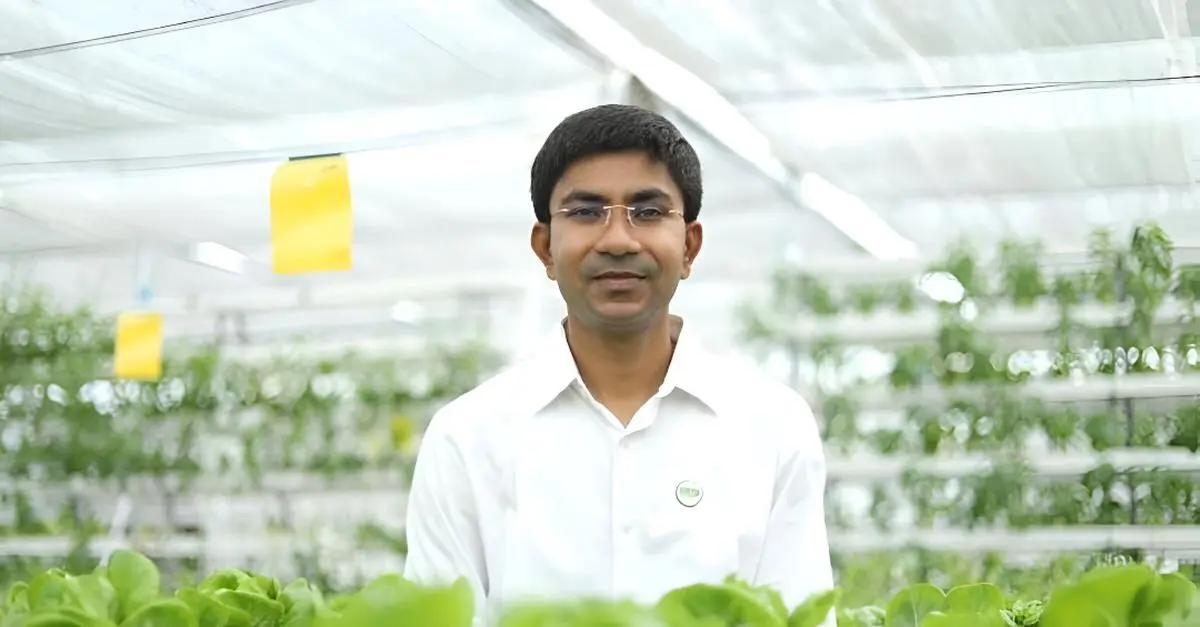
These systems stabilize production, optimize resource use, and reduce climate risk. While current adoption is concentrated on high-value crops, pilot programs are extending controlled environment cultivation to staples, demonstrating the potential to enhance broader food security.
Seafood and Fisheries: Data-Driven Management and Trade Competitiveness
The fisheries sector witnessed headline-making reforms in 2025. India completed the MFC 2025 fisheries census, providing the first comprehensive assessment of fleet health, fishing capacity, and ecosystem impact.
George Kurian, Minister of State for Minority Affairs, Animal Husbandry & Dairying, Government of India, emphasizes:
“International markets like the EU, US, and Japan demand proof of sustainability and traceability. The MFC 2025 provides the foundation for meeting these expectations. This Census is the foundational layer for a sustainable ecosystem-based fisheries management plan. It gives us a complete, scientifically-consolidated assessment of our fleet’s health and capacity.”

The initiative strengthens ecosystem-based management and aligns seafood production with global sustainability standards, enhancing export competitiveness.
Rice Resilience: Lessons for Rainfed Systems
Rainfed rice areas remain among the most climate-exposed agricultural systems. Climate shocks disproportionately affect yields, particularly in lowlands.
Dr. Ismail Abdelbagi, Principal Scientist and Regional Representative for Africa at IRRI, notes:
“Climate shocks are hitting rice hardest in rainfed lowlands, where 80 per cent of Africa’s farmers operate. How close are we to a breakthrough in drought- and heat-resilient varieties that can stabilize yields without costly irrigation infrastructure? Rainfed rice areas in Africa have not been given sufficient attention, and farmers still use traditional tools and technologies. This is contrary to progress in Asia, where rainfed areas have been transformed into productive lands with high and stable yields. The transformation became feasible after introducing varieties tolerant to drought, floods, and salt stress, coupled with modern production technologies, water management, fertilizer use, mechanized farming, and other suitable practices, increasing productivity and incomes for smallholders.”

This highlights the importance of combining genetic improvements, production technology, and agronomic practices to transform vulnerable systems into resilient landscapes.
Carbon, Regeneration, and Climate Finance
Regenerative and carbon-focused interventions expanded significantly in 2025. Biochar projects, combining carbon sequestration with soil fertility improvements, emerged as high-value initiatives.
Dr. Nripanka Das, Subject Matter Expert in Carbon Projects (UAE), explains:
“Unlike forestry or renewable projects, biochar delivers a dual benefit: carbon sequestration and soil regeneration. This creates ‘stacked benefits’—carbon credits, improved yields, reduced fertilizer use, enhanced water retention, and often waste management solutions. Financially, a well-designed biochar project can generate over $1,000 per hectare annually when combining carbon and agricultural returns, while diversifying revenue and reducing risk—making it highly attractive for institutional investors.”

Blue carbon initiatives also gained traction. Brian Tsuyoshi Takeda, CEO & Co-Founder of Restorae, observes:
“Voluntary carbon markets in Japan are already ready for kelp-based credits. J-Blue Credits, generated from kelp restoration, have been transacting for years at prices exceeding $400 per ton—more than ten times the price of traditional voluntary carbon credits globally.”

These approaches demonstrate how climate-smart practices can generate measurable environmental and financial returns while enhancing resilience.
Financing Resilience: Opportunities and Bottlenecks
Access to climate finance remains critical for scaling adaptation. Platforms supporting banks, microfinance institutions, and insurers expanded in 2025 to offer bundled climate-smart products combining credit, insurance, and solar-powered irrigation.

Dr. Godefroy Grosjean, Co-lead of CGIAR’s Hub for Sustainable Finance (ImpactSF) and Ena Derenoncourt, Senior Officer at the Alliance of Bioversity International and CIAT and ACT-H Project Lead highlight:
“ImpactSF helps financial institutions design climate-smart, bankable products that reduce risk and deliver real impact for farmers. By combining capacity building, tools, and pipeline strengthening, it supports banks, MFIs, and insurers to create bundled credit, insurance, and solar-powered irrigation solutions. Using data from the ImpactSF Analyzer and a value-chain approach, it scales finance in priority sectors like horticulture and livestock while ensuring measurable outcomes in resilience, productivity, and gender inclusion.”

Data-driven climate finance is increasingly linking risk mitigation, sustainability, and measurable impact, expanding opportunities for smallholders.
Trade and Market Resilience
Regional trade is a critical lever for resilience. Fragmented intra-Asian trade and regulatory differences limit local food system equity.
Dr. Ana Maria Loboguerrero, Director for Adaptive and Equitable Food Systems at the Gates Foundation, observes:
“Today, South Asia primarily exports staple crops and processed products globally, missing opportunities to build resilient local ecosystems through regional collaboration. Variations in regulations and logistics limit progress, keeping intraregional trade fragmented. Harmonizing trade can reduce food prices, buffer against climate shocks, stimulate crop diversification, and support unified responses to climate-driven pest spread.”

In 2025, several countries advanced harmonization, streamlining certifications, improving logistics, and adopting risk-mitigating frameworks for climate-sensitive commodities, stabilizing prices and supporting crop diversification.
Technology Goes Mainstream
In 2025, digital agriculture in Asia crossed a point of no return. Artificial intelligence and climate-tech tools stopped being framed as pilots or “future-ready” concepts and instead became part of the operating backbone of agricultural systems across multiple countries. What distinguished the year was not innovation itself, but scale, speed, and institutional adoption.
In India, AI-powered climate advisory systems reached operational maturity. Large-scale deployments began delivering hyper-local, real-time advisories to farmers across rainfed and irrigated regions, combining weather forecasts, soil moisture data, crop-stage intelligence, and pest-risk alerts. These advisories increasingly influenced sowing decisions, irrigation scheduling, and input use at the village level, reducing crop losses during erratic monsoon phases and prolonged dry spells. Importantly, these systems were not standalone apps; they were integrated with public extension networks, crop insurance triggers, and digital soil health programs—signaling a shift from fragmented pilots to systemic use.
China accelerated the use of drones, sensors, and satellite-linked AI platforms across its rice belts and horticulture clusters. In several provinces, drone-assisted monitoring of crop health, nutrient stress, and water use became routine rather than exceptional. AI models processed high-frequency imagery to guide precision spraying, optimize irrigation intervals, and flag early pest outbreaks. The emphasis was not just productivity, but climate efficiency—reducing water use, lowering chemical runoff, and stabilizing yields amid heat stress events that have become more frequent across eastern China.
Across Southeast Asia, climate intelligence became a national priority rather than a sectoral experiment. Vietnam and Thailand deployed machine-learning models to simulate flood scenarios in delta regions, helping authorities adjust planting calendars, pre-position inputs, and manage water releases. These systems informed both farmers and policymakers, aligning field-level decisions with basin-level water management. In Indonesia, AI-based drought prediction tools were linked to food logistics planning, enabling early interventions in vulnerable provinces before shortages escalated into price shocks.
The Philippines took a different but equally significant route, integrating digital tools into climate-risk governance. AI-driven early warning systems for typhoons and floods were connected directly to agricultural insurance payouts and emergency credit lines. When climate thresholds were breached, farmers gained faster access to relief and recovery finance, reducing the lag between disaster and response that has historically deepened rural distress.
Meanwhile, Japan and South Korea focused on high-precision digital agriculture aligned with climate adaptation and labor constraints. Robotics, AI-driven greenhouse management, and sensor-based water control systems were scaled to stabilize production under heat stress and demographic pressure. These technologies also fed into traceability and sustainability reporting systems, strengthening market access and compliance in export-oriented supply chains.
Underlying these country-level deployments was the rapid expansion of climate-focused agri-tech incubators and accelerators across APAC. In 2025, these platforms prioritized startups that could deliver precision farming, advanced water-use efficiency, and climate-resilient supply chains at scale. The shift was clear: solutions were evaluated not on novelty, but on their ability to operate under stress—poor connectivity, extreme weather, fragmented landholdings, and tight margins.
The cumulative effect of these developments is structural. Technology in Asian agriculture is no longer an add-on or productivity enhancer; it has become a risk-management infrastructure. AI systems now sit alongside insurance, credit, and public policy as essential tools for coping with climate volatility. By the end of 2025, climate intelligence was no longer aspirational—it was operational, embedded, and increasingly indispensable to how Asia grows its food.
A Sector Quietly Transforming
2025 was not merely a year of crises or headline-grabbing innovations; it marked the quiet transformation of Asia’s agricultural landscape. Technology, policy, finance, and on-farm practices converged to create systems capable of anticipating, absorbing, and adapting to climate shocks.
Across the region, several developments underscored this shift. India completed the MFC 2025 fisheries Census, providing critical data for ecosystem-based management and ensuring traceability in seafood exports. In Japan, blue carbon and kelp restoration initiatives expanded significantly, creating measurable environmental benefits while generating high-value carbon credits. China deployed drone-assisted climate-smart agriculture across its rice belts, integrating real-time monitoring of soil, water, and pest conditions to optimize yields and resilience. Meanwhile, Indonesia and Vietnam piloted regenerative aquaculture and rice-straw-to-energy programs, linking circular economy principles with climate-smart food production. In the Philippines, community-managed solar-powered irrigation systems strengthened local resilience and reduced reliance on grid electricity, while Thailand and Malaysia launched AI-enabled early warning systems that connect flood and drought forecasts directly to insurance and credit mechanisms, helping farmers manage climate risk proactively.
These initiatives, coupled with broader adoption of hydroponics, climate-resilient crops, biochar, and regional trade integration, illustrate how adaptation, market competitiveness, and systemic resilience are increasingly intertwined. The focus is not merely on technology deployment or policy announcements; it is on integrating solutions across the farm, market, and financial ecosystem to create durable, scalable outcomes. While challenges remain in ensuring equitable access to technology, finance, and infrastructure, the foundations for a smarter, adaptive, and climate-resilient agricultural sector are firmly established.
The structural and technological shifts achieved in 2025 will have far-reaching consequences for food security, rural livelihoods, and economic stability across Asia for decades. In an era defined by climate uncertainty, the region’s agriculture demonstrates that meaningful transformation is possible not through headline-grabbing innovations alone, but through sustained, coordinated, and system-wide innovation.
—- Suchetana Choudhury (suchetana.choudhuri@agrospectrumindia.com)
