
Introducing Outcomes of Cooperation Toward Transforming Agri-Food Systems
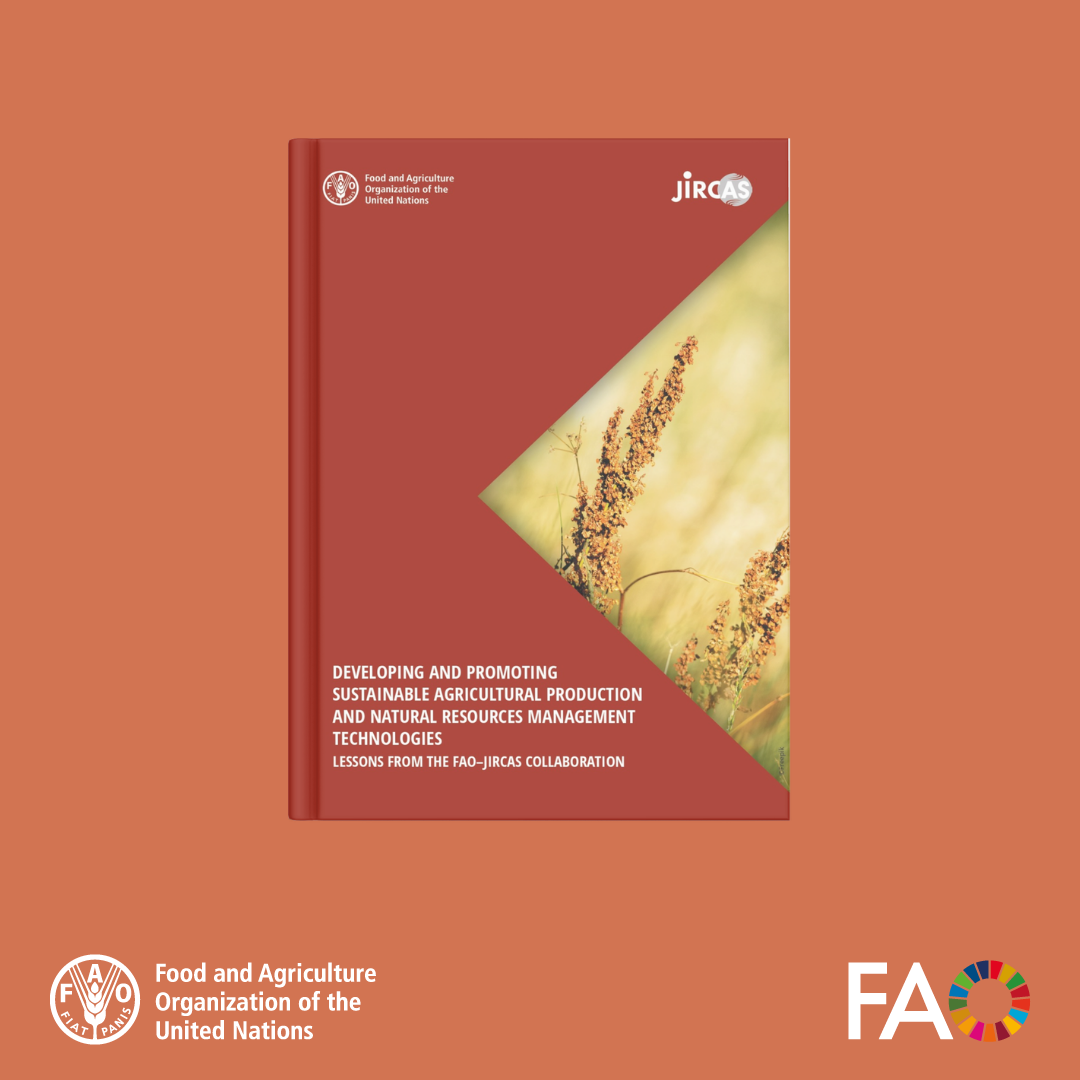
The Food and Agriculture Organization of the United Nations (FAO) has published a policy brief titled “Developing and promoting sustainable agricultural production and natural resources management technologies: Lessons from the FAO–JIRCAS collaboration” regarding its collaboration with the Japan International Research Center for Agricultural Sciences (JIRCAS). This policy brief introduces recent research achievements by JIRCAS across its programs in environment, food, and information, and systematically summarizes the partnership with FAO.
The brief describes JIRCAS as a leading Japanese agricultural research institution focusing on tropical, subtropical, and developing regions. Since the signing of a Memorandum of Understanding (MoU) in 2014, the two organizations have promoted collaboration leveraging their respective comparative advantages, guided by a shared vision to address global challenges in agricultural and food systems and to contribute to the United Nations Sustainable Development Goals (SDGs).
The policy brief is part of the mutual efforts in disseminating science-based knowledge and information, leveraging the Japan International Research Center for Agricultural Sciences (JIRCAS)’s scientific expertise and FAO’s global outreach, as envisaged under the memorandum of understanding. It highlights recent JIRCAS achievements across its three major research programmes and showcases ongoing FAO–JIRCAS collaborations. Drawing lessons from these cases, the brief outlines opportunities to strengthen the partnership and offers insights for similar collaborative models.
In particular, JIRCAS’s research activities are closely aligned with FAO’s organizational principles of the “Four Betters” (better production, better nutrition, better environment, and better life). The policy brief highly evaluates the synergies generated through past cooperation and expresses expectations for further achievements in the future.
