
The joint collaboration aims to mechanize agriculture, and the domestic agricultural machinery industry, in order to expand exports to Southeast Asia
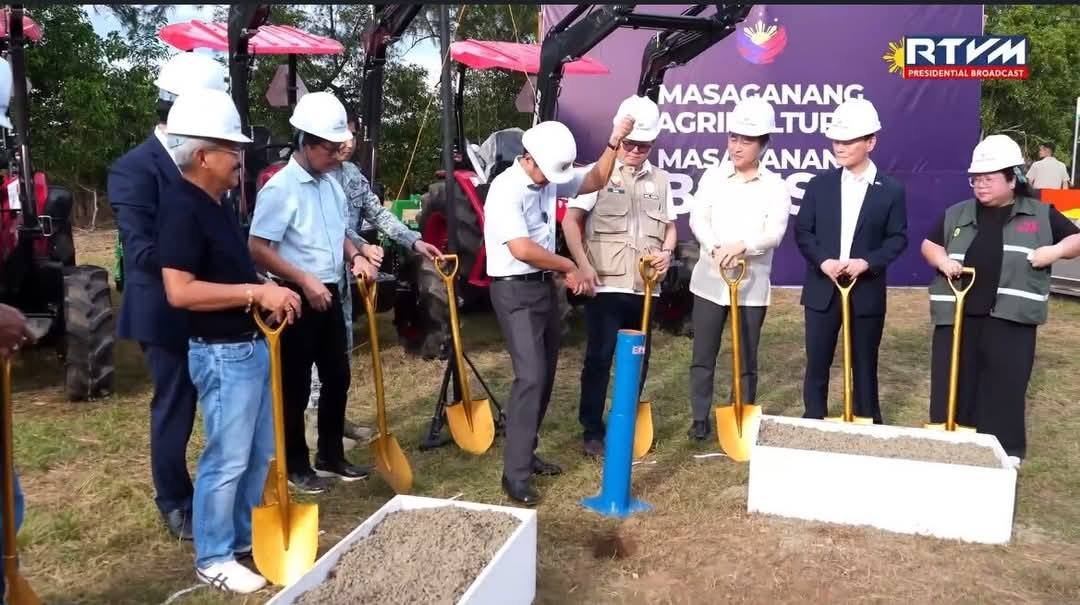
Korea held a groundbreaking ceremony for the ‘Korea Agricultural Machinery Industrial Complex‘ in Cabanatuan City, Philippines, on December 10, 2025, marking a significant milestone in bilateral agricultural cooperation. The event, attended by Kim Jeong-wook, Director of the Agricultural Innovation Policy Office at the Ministry of Agriculture, Food and Rural Affairs (MAFRA), celebrated the commencement of the complex’s establishment and provided a platform to discuss collaborative plans in the agricultural machinery sector.
The groundbreaking ceremony was attended by Philippine President Ferdinand R. Marcos Jr. , the Secretary of Agriculture , and the Chairmen of the Senate and House of Representatives, as well as South Korean Ministry of Agriculture, Food and Rural Affairs Director Kim Jeong-wook, Ambassador to the Philippines Lee Sang-hwa, Korea Agricultural Machinery Industry Cooperative ( hereinafter referred to as the Korea Agricultural Machinery Association ) Chairman Kim Shin-gil, and representatives from nine agricultural machinery companies.
The project to establish the ‘ Korea Agricultural Machinery Industry Complex ‘ was promoted through cooperation between the Philippine government and the Korea Agricultural Machinery Association based on the consensus between the Philippine government, which wants to mechanize agriculture, and the domestic agricultural machinery industry, which wants to expand exports to Southeast Asia .
The Philippine Agricultural Machinery Research Institute requested cooperation from the Korea Agricultural Machinery Association in developing local agricultural machinery The Korea Agricultural Machinery Association proposed the establishment of a public corporation to the Philippine President and signed an MOU for the establishment of the public corporation. Signed an MOU containing Philippine support items such as tariff and local tax exemption and infrastructure construction.
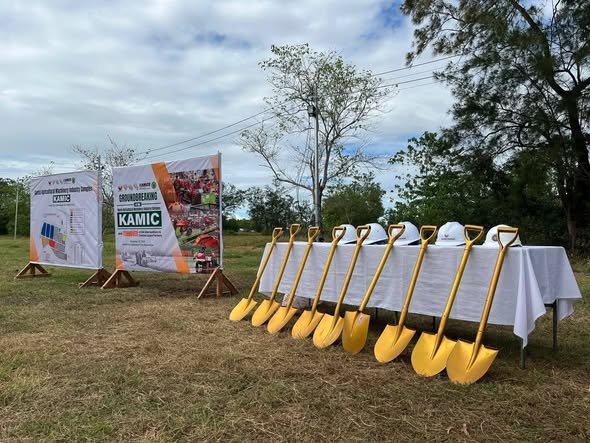
With domestic corporate investment, an agricultural machinery manufacturing plant will be established on a 60,000 -pyeong site in Caba. atuan City, Philippines, from 2026 to 2034. The Philippine government will provide benefits such as land lease (75 years ), infrastructure such as roads, electricity, communications, and water, and tariff and local tax exemptions.
Construction will roll out in many phases, with he First Phase scheduled for 2026 – 28 ( 20,000 pyeong), Second Phase 2029 – 31 (20,000 pyeong), Third Phase 2032-34 (20,000 pyeong).
The project is expected to contribute to expanding exports of Korean agricultural machinery to Southeast Asia , while also playing a major role in improving agricultural mechanization, productivity, and quality in the Philippines. Although agricultural machinery exports to Southeast Asia are low at 4.3% of the total (in 2024), the export volume is increasing (in 2023 from USD37 to USD52 million in 2024), indicating a market with great potential.
In particular, the Philippines has the highest export share in Southeast Asia at 60% (in 2024) and exports are rapidly increasing (since 2023 from USD9million to USD31 million in 2024 ), making it an advantageous country for Korean companies to advance into and settle in. Accordingly, the agricultural machinery industry plans to diversify its export market, which is currently concentrated in North America (73% as of 2024), to Southeast Asia and other regions by using the Philippine industrial complex as an export base.
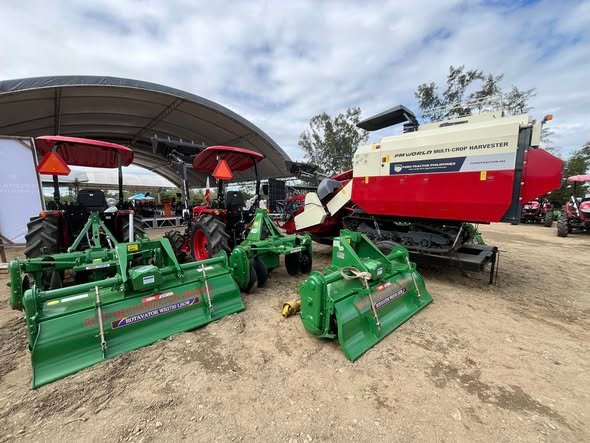
Meanwhile , agricultural machinery exports this year increased by 8.6 % year-on-year to $ 1,117 million as of October , despite particularly difficult external conditions such as the imposition of U.S. tariffs and rising logistics costs .
Kim Jeong-wook, Director of the Agricultural Innovation Policy Office, expressed his expectations in his congratulatory speech at the groundbreaking ceremony, saying, “ This project will greatly contribute to the development of the agricultural and agricultural machinery industries for both countries .” He also said , “ The Korean government will also do its best to cooperate with the Philippine government and support companies advancing into the Philippine market so that the project can proceed smoothly . ” He also met with Philippine government officials and requested policy support to help Korean companies smoothly establish the industrial complex and settle in stably thereafter .
