
Improved trade Relations are increases competition for Australian exports
Australia is set to face heightened competition in the canola market following a significant improvement in trade relations between China and Canada. The Canola Council of Canada (CCC) and Canadian Canola Growers Association (CCGA) have welcomed a bilateral agreement announced in Beijing, which will see China reduce its tariffs on Canadian canola seed from 84% to 15% starting March 1, 2026. Additionally, the 100% tariff on canola meal is expected to be removed until at least the end of 2026.
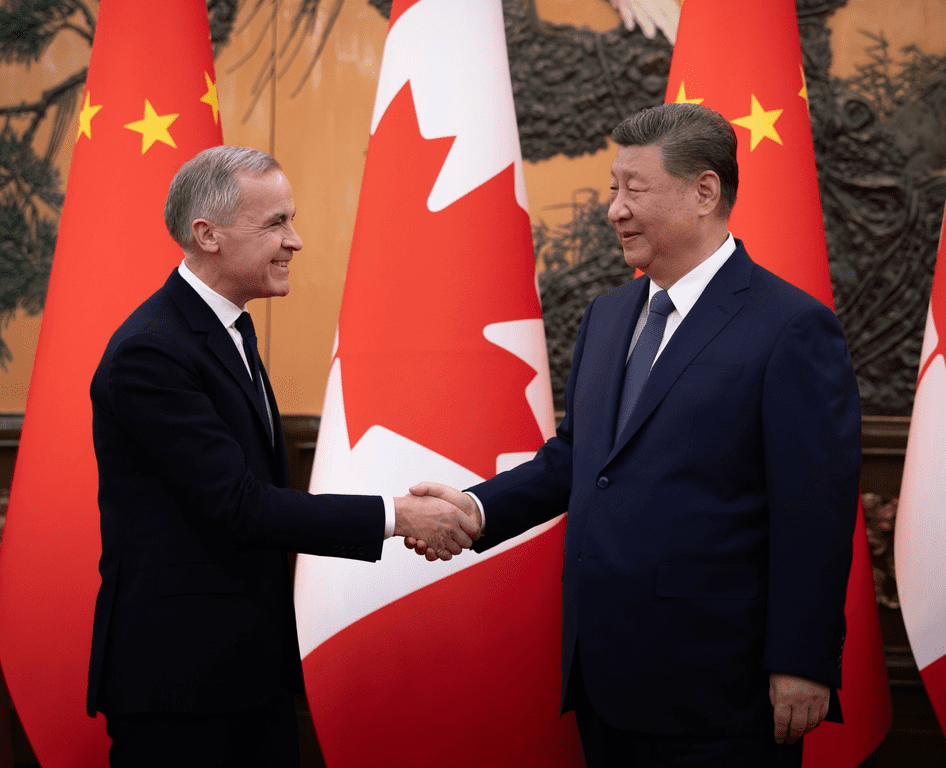
In exchange, Canada will lower tariffs on up to 49,000 Chinese electric vehicles from 100% to 6.1%, a move signaling broader trade cooperation. The agreement comes after a visit by Canadian Prime Minister Mark Carney to China and represents a major step in restoring market access for Canadian canola farmers.
CCC president and CEO Chris Davison described the deal as “an important milestone” in Canada’s trading relationship with China. He emphasized that the tariffs, initially a political issue, required a political solution. While the agreement restores some predictability for Canadian canola farmers, Davison noted that the industry would continue working toward permanent and complete tariff relief, including for canola oil.
The trade disruption had significantly impacted Canadian canola exports to China. With most of the 2025 canola crop stored on farms and planting for the 2026 crop only months away, Canadian farmers have been seeking market stability. CCGA president and CEO Rick White highlighted the importance of this progress, stating that farmers are looking forward to the resumption of canola movement.
China was traditionally Canada’s largest market for canola seed and its second-largest for canola meal before the imposition of tariffs. The trade measures had halved the value of Canadian canola exports to China in 2025 compared to 2024. The CCC and CCGA jointly acknowledged the efforts of Prime Minister Carney and the Canadian government, including Agriculture Minister Heath MacDonald, in re-establishing bilateral trade with their second-largest export market.
The agreement also aligns with the establishment of a Canada-China Economic and Trade Cooperation Roadmap and the revitalization of the Canada-China Joint Agriculture Committee. These frameworks are expected to address remaining canola tariff issues and support industry innovation.
For Australia, the restored access for Canadian canola into China introduces new competitive pressures. Lachstock Consulting noted in its Supply and Demand Report that Canada’s large canola crop, combined with record yields and ample supply, has shifted export dynamics. While Australian canola faces a standard import tariff of around 9% in China—equivalent to roughly $30/t—Canadian seed remains about 6% less competitive even after the tariff reduction. However, Canadian canola meal tariffs will revert to 5%, increasing competition for Australian meal exports.
Australia recently resumed canola exports to China in November 2024, the first such shipment since 2020, seemingly in response to the earlier trade tensions between China and Canada. However, Lachstock observed that Canadian export flows remain subdued, with crop-year-to-date shipments of 2.8Mt trailing last year’s 4.7Mt, underscoring the oversupply challenge unless trade improves materially.
Europe, a key market for Australia’s non-GM canola, has also seen subdued demand due to a large domestic crop. While Australian canola has seen improved December flows into Europe, Ukraine remains the largest supplier, with Australia in second place. Lachstock noted that rapeseed oil prices have softened despite firmer futures, as higher meal values support crush margins and pressure oil prices.
The restored Canada-China trade flows are expected to reshape canola market dynamics, with Australia closely monitoring the evolving competition and opportunities in key export destinations.
