
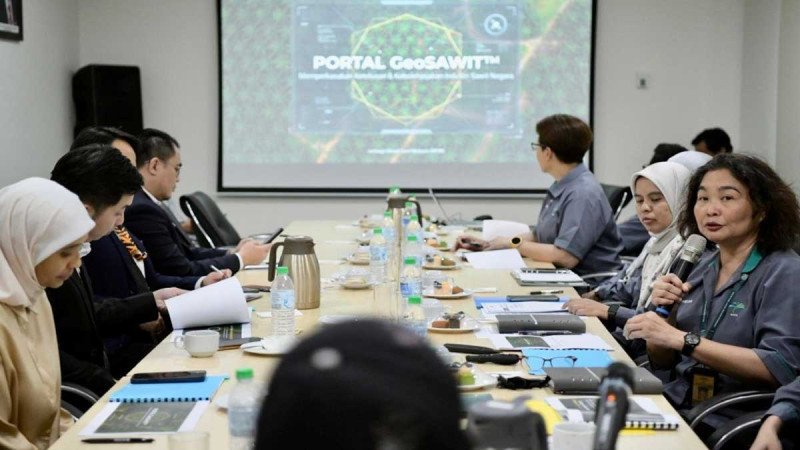
To examine the monitoring system and digital mapping platform for palm oil supply chain and cultivation areas.
The Malaysian Palm Oil Board (MPOB) Malaysia continues to strengthen Malaysia’s position as a global leader in sustainable palm oil production.
The implementation of two high-impact digital systems, the Sawit Intelligent Management System (SIMS) and GeoSAWIT™, developed by the agency under the Ministry of Plantation and Commodities (KPK).
“This integrated digital approach demonstrates Malaysia’s commitment to ensuring transparency, traceability, and compliance with international sustainability standards,” said Datuk Seri Dr. Noraini Ahmad, Minister of Plantation and Commodities at a briefing session on both systems yesterday.
Datuk Seri Dr. Noraini conducted a working visit to SIMS Control Room at Wisma Dura, MPOB in Bangi for a briefing session on SIMS and the GeoSAWIT™ platform to examine the implementation of the monitoring system for palm oil supply chain movements and transactions, as well as the digital mapping and geolocation platform for oil palm cultivation areas nationwide.
SIMS and the GeoSAWIT™ platform are not merely monitoring systems, but strategic national instruments to strengthen the integrity of the oil palm value chain and boost global market confidence in Malaysian palm oil.
MPOB Director General, Datuk Dr. Ahmad Parveez Ghulam Kadir, stated in his speech at the session that both systems are vital components serving as the core for the implementation of the National Traceability System (SKN), aimed at empowering the regulation, enforcement, and comprehensive traceability of the national oil palm industry.
“SIMS operations involve traceability modules and fleet management modules, specifically monitoring the palm oil supply production chain and movement using tanker trucks. Meanwhile, the GeoSAWIT™ platform utilises geospatial technology focusing on verification and traceability of oil palm cultivation to ensure the national oil palm industry remains competitive, transparent, and sustainable,” he said.
Comprehensive mapping of oil palm plantations via the GeoSAWIT™ platform covers estates, organised smallholders, and independent smallholders, which enables the Government to conduct spatial analysis based on satellite imagery and Geographic Information Systems (GIS). Information such as land use rates, soil types used for oil palm cultivation, and the preservation of permanent forest reserves are analysed to obtain accurate data.
The implementation of this integrated digital system is expected to boost the confidence of international trading partners, strengthen Malaysia’s reputation as a responsible palm oil producer, and ensure the industry remains competitive in a global trading landscape that increasingly emphasises sustainability and traceability elements.
