
Aflatoxin testing is often a race against time. Agricultural commodities can move from farms to collection centres and processors long before laboratory results are available, leaving farmers, traders and food companies to make quality and purchasing decisions with limited information.
Italian AgTech startup Aflabox is trying to close that gap. The company has raised €1.35 million in a seed funding round to scale a portable system designed to detect mycotoxins, assess grain quality and generate field-level data in less than 90 seconds.
The round was completed through FoodSeed, the agrifood startup programme within CDP Venture Capital’s National Accelerator Network and managed by Eatable Adventures. Farming Future, the National Agrifood Tech Technology Transfer Hub promoted by CDP Venture Capital SGR in partnership with ToSeed & Partners, also participated.
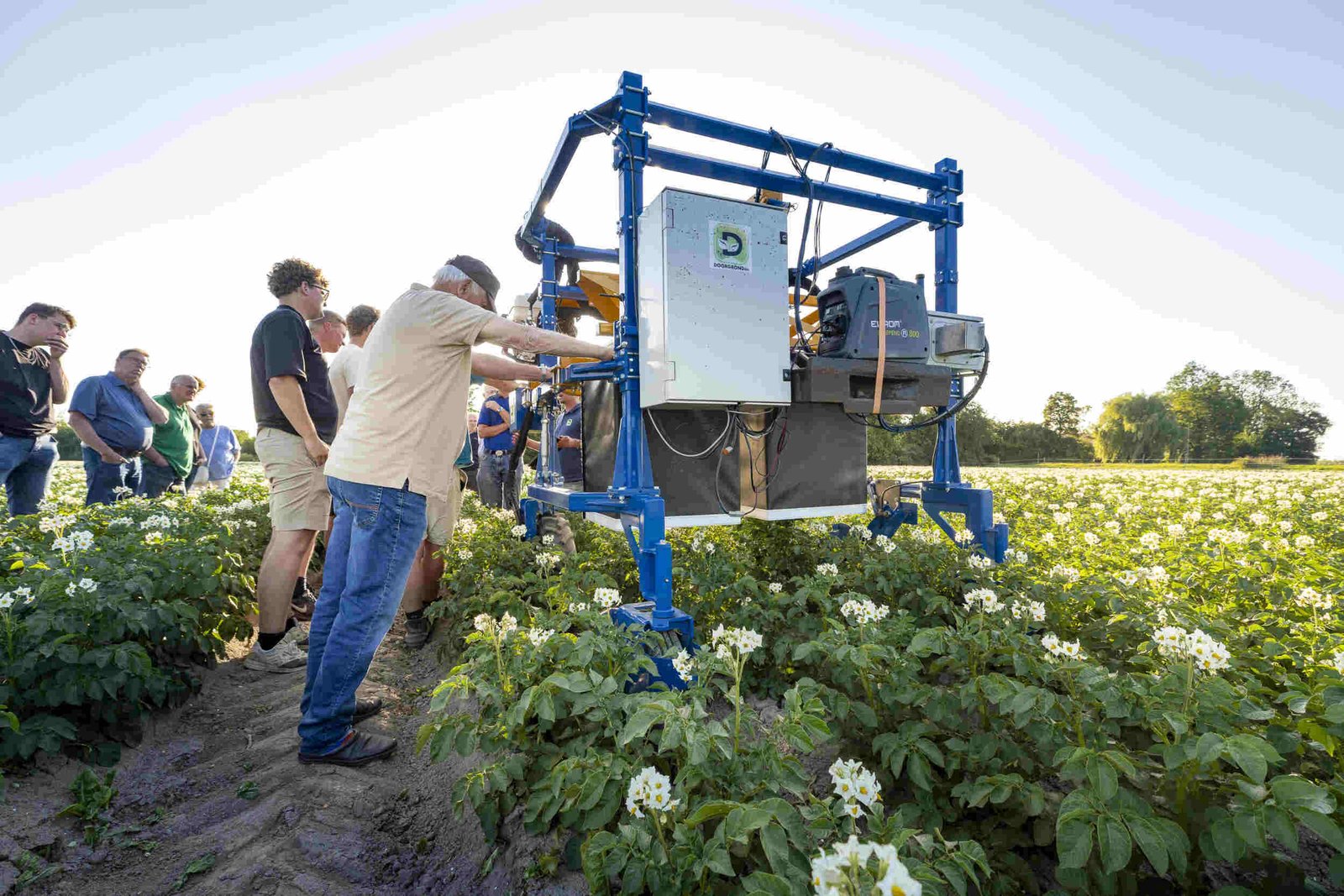
Founded in July 2024 by Fabrizio Cardillo and Luca Alinovi, Aflabox is developing what it describes as a field intelligence platform rather than a conventional testing device. The system combines UV and white-light imaging with artificial intelligence, geolocated data collection and cloud-based dashboards to provide rapid assessments of agricultural samples.
The underlying problem is particularly significant in regions where access to specialised laboratories is limited. Conventional mycotoxin testing can require laboratory equipment, qualified personnel and turnaround times ranging from several hours to several days. That makes frequent testing difficult at farms, collection points and other locations where crops first enter the commercial supply chain.
Aflatoxins are among the most serious mycotoxin-related food-safety concerns. Contamination can affect human health, reduce the quality and value of agricultural commodities and prevent products from meeting requirements for domestic or international markets. For producers and buyers, the financial consequences can extend from rejected consignments to lost market opportunities.
Aflabox is seeking to move at least part of that testing process out of the laboratory and into everyday agricultural operations.
Its system captures sample information through UV and white-light imaging and processes those signals through AI models before producing a digital result. The company says each scan takes less than 90 seconds, while the associated geolocation data can be added to a growing database of information on quality, contamination and agricultural risk.
That creates several potential use cases across the supply chain. Farmers can use the system to assess crop quality in the field. Aggregators and collection centres can use test results when purchasing or storing commodities, while traders can gain additional information before making commercial decisions.
For food processors and exporters, the technology could support quality control, traceability and market-access requirements. At the institutional level, the same data could help governments, donors and international organisations identify areas with elevated contamination risks and target food-safety programmes more effectively.
The business case therefore extends beyond faster testing. Aflabox is also building a data infrastructure around those tests, with the aim of turning individual field measurements into a broader picture of agricultural quality and contamination patterns.
The company has already begun testing that proposition in the market. It has supplied 20 devices to the World Food Programme in Kenya and presented its technology at the Cereal Millers Association Annual Technical Conference in April 2026 as it began its commercial development.
Aflabox has also completed an initial validation phase for its AI-based technology and filed a patent application covering its solution.
Africa is a key part of the company’s expansion plans. Aflabox is headquartered in Italy and operates in Nairobi through Aflazero Ltd, giving it a base from which to develop its business in African agricultural markets while maintaining its European operations.
The new funding will be used to complete validation and certification of the device, expand commercial activity in Kenya, Nigeria and Italy and begin development of a micro-factory dedicated to manufacturing Aflabox units.
The company also plans to invest in its AI platform, improve detection accuracy, expand its distribution network across Africa and Europe and strengthen its team.
For Aflabox, the move into Africa is not simply an expansion into another geographic market. It is closely tied to the problem the company is attempting to solve. In agricultural regions where laboratory infrastructure is uneven and supply chains are highly dispersed, the ability to generate quality information closer to the point of production could have a greater commercial value.
The potential impact is also broader than the individual farmer. A rapid test at a collection centre, for example, could influence whether a commodity is purchased, stored, processed or rejected. At the exporter level, faster quality information could help determine whether a shipment meets market requirements. At the government level, aggregated data could provide a more detailed picture of contamination risks across producing regions.
This gives Aflabox a potentially larger opportunity than the market for portable testing equipment alone. The more measurements the system generates, the more valuable its underlying data infrastructure could become for monitoring quality and risk across agricultural supply chains.
However, scaling the model will require more than proving that rapid testing can be performed outside a laboratory. Aflabox will need to demonstrate consistent performance across different crops, environments and operating conditions while completing certification and establishing a reliable manufacturing and distribution network.
The company is now entering that next stage. The €1.35 million round gives Aflabox capital to move from early technology validation toward commercial deployment, while its initial work with the World Food Programme and its presence in Kenya provide an early foothold in the market.
The broader opportunity comes as food businesses and agricultural supply chains face growing pressure to improve food safety, traceability and quality assurance. Technologies that can produce reliable information at the point where commodities are produced and traded could become increasingly important as supply chains become more data-driven.
Aflabox’s approach combines that trend with a specific food-safety problem. By bringing imaging and AI-based analysis closer to farms and collection centres, the company is attempting to make contamination data available when commercial decisions are still being made, rather than after commodities have already moved through the supply chain.
The next test for the Italian startup will be whether it can turn that technical proposition into a scalable business across Africa and Europe. Its new funding will now support the certification, manufacturing, distribution and AI improvements needed to make that transition.