
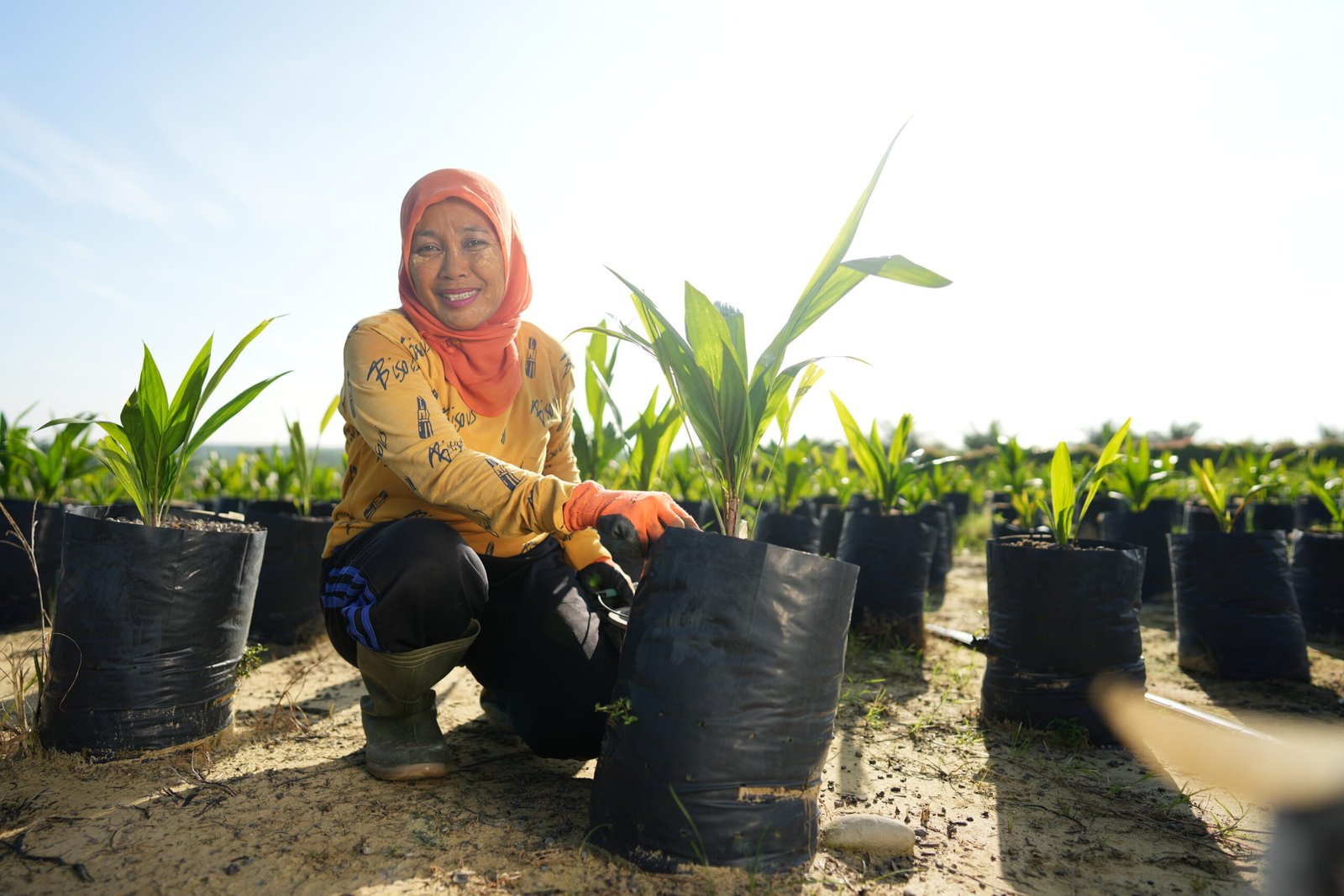
GAR’s innovation arm, the SMART Research Institute (SMARTRI), MTK seeds are designed to protect productivity during drought periods
Dami Mas, the seed division of leading agribusiness Golden Agri-Resources (GAR), has launched DxP Dami Mas MTK (Moderate Toleran Kekeringan), a major milestone in efforts to build a climate-resilient palm oil industry. MTK is the first oil palm seed to have its superior performance under drought conditions validated and approved for sale by Indonesia’s Ministry of Agriculture.
Developed over more than a decade by GAR’s innovation arm, the SMART Research Institute (SMARTRI), MTK seeds are designed to protect productivity during drought periods, a growing global challenge for palm oil producers.
Addressing a US$4.5 Billion Challenge
Drought conditions caused by climate change are becoming more frequent, more prolonged, and more extreme, causing lower yields and declining oil quality. For every 100mm of water deficit, where an oil palm’s demand for water exceeds available supply, yield can decline by 8-10%, resulting in income loss for farmers and productivity challenges for downstream processors.
SMARTRI models estimate that these drought-related productivity losses cost Indonesia’s palm oil industry over US$4.5 billion on average each year. In high-risk regions such as Lampung, dry conditions can reduce yield by up to 21%.
DxP Dami Mas MTK has been bred to address this challenge. In extensive field trials, MTK seeds demonstrated at least 12% higher yields than standard varieties in drought conditions. These performance differences increase as conditions become more extreme. MTK seeds performed over 25% better than standard varieties during prolonged dry periods caused by El Niño in 2015 and the Indian Ocean Dipole in 2018.
“Climate change is no longer a distant risk for palm oil producers; it’s a reality they can see in the field and on their balance sheet,” said Dr. Jean-Pierre Caliman, Director of SMARTRI, who has led over a decade of research into the impact of climate conditions on palm productivity. “Commercial approval for the MTK seeds is recognition that there is a science-backed solution that can help to protect productivity and build a climate-resilient palm oil sector.”
While many seed varieties demonstrate some degree of resilience in dry conditions, DxP Dami Mas MTK are the first seed varieties to have their performance under water deficit conditions validated through extensive field trials and independently verified by the Indonesian Ministry of Agriculture’s scientific review panel.
Advancing Agricultural Innovation
The MTK breeding programme refined the best characteristics from over 1,800 mother palms, analysing the performance of over 40,000 seedlings to identify candidates with the best performance under artificial drought conditions. SMARTRI scientists implemented High Throughput Phenotypic Screening technology to measure the drought factor index (DFI) for each plant – a set of variables that determine a plant’s performance under water stress.
From the 14 seed families selected as candidates for drought tolerance, two seeds – MTK 1 and MTK 2 – were validated as the successful seed varieties following field trials in South Kalimantan, Central Kalimantan and North Sumatra.
A Step Forward for Sustainable Agriculture
“We work closely with growers and smallholder farmers to understand their needs,” said Suryanto Bun, CEO of Dami Mas. “These climate-resilient seeds build on our existing higher-yielding and disease-resistant varieties to offer more innovations that can help growers protect their productivity and incomes against climate change.”
Dami Mas is now accepting interest from buyers in Indonesia, with the first seeds due to deliver in early 2026. MTK seeds will be progressively made available to more customers as Dami Mas accelerates its breeding programme. Recognising the growing global impact of drought on agriculture, the company also sees applications for palm growers in West Africa, Latin America and India.
The launch of DxP Dami Mas MTK supports GAR’s commitment to innovation in sustainable agriculture. By equipping farmers with climate-resilient seeds, the company aims to strengthen food security, protect livelihoods, and contribute to enhancing agricultural productivity.
“This seed represents the future of oil palm cultivation,” concluded Dr. Caliman. “By combining scientific research with our agronomy experience, we hope to bring innovation into the hands of farmers to create a more resilient, productive, and sustainable palm oil industry.”
