
Germany commits €5.5 Million in grant financing to accelerate biodiversity protection and nature-based solutions
The Asian Development Bank (ADB) and the Government of Germany have expanded their strategic partnership to accelerate nature finance and biodiversity investments across Asia and the Pacific, marking a significant step towards strengthening climate resilience and sustainable development in the region.
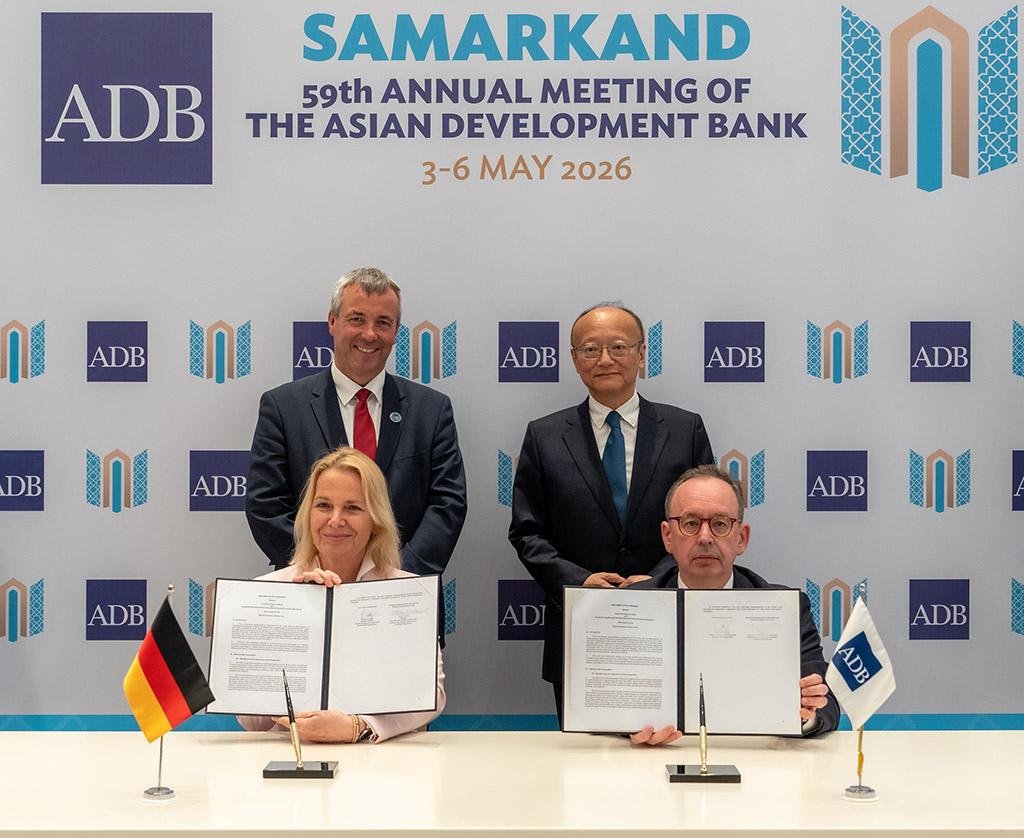
Announced during the ADB Annual Meeting in Samarkand, Uzbekistan, Germany has formally joined ADB’s Nature Solutions Finance Hub as a financing partner, committing €5.5 million ($6.5 million) in grant co-financing to support the protection, restoration, and sustainable management of ecosystems and biodiversity.
The financing contribution is being provided through Germany’s Federal Ministry for Economic Cooperation and Development (BMZ) and will be implemented in partnership with Deutsche Gesellschaft für Internationale Zusammenarbeit (GIZ).
The announcement coincided with the signing of an implementation agreement between ADB and GIZ, formalising the collaboration and reinforcing the growing international momentum behind nature-positive financing initiatives.
ADB President Masato Kanda said nature remains central to inclusive growth, long-term development, and climate resilience across Asia and the Pacific.
He noted that Germany’s participation strengthens an expanding coalition of global partners working to scale up investments in nature through coordinated action, innovative financing structures, and long-term development collaboration.
Johann Saathoff, Parliamentary State Secretary of BMZ and ADB Governor for Germany, described the partnership as an important platform for combining Germany’s technical and financial expertise with ADB’s regional reach and development capabilities.
He stated that the collaboration would help deliver nature-based solutions aimed at addressing biodiversity loss and climate-related challenges across the region.
Launched in 2023, the Nature Solutions Finance Hub was established with the objective of catalysing at least $5 billion in nature-positive investments by 2030.
The initiative seeks to address two of the most significant barriers to scaling nature finance globally — the shortage of bankable investment-ready projects and the limited availability of financial instruments capable of attracting private-sector capital at scale.
In addition to Germany, the Hub’s growing network of partners includes Agence Française de Développement, the European Union, the OPEC Fund for International Development, the Global Environment Facility, and the ASEAN Catalytic Green Finance Facility, supported by the United Kingdom and the Green Climate Fund, alongside multiple technical partners.
The Hub is currently supporting nearly 20 projects within ADB’s development pipeline, with a strong focus on nature-based and climate-resilient infrastructure solutions.
These initiatives include flood resilience programmes in the Philippines, coastal ecosystem management projects in Thailand, river basin restoration efforts in Bangladesh, and watershed rehabilitation programmes in Uzbekistan.
ADB highlighted that approximately 75 per cent of Asia and the Pacific’s gross domestic product is linked to sectors that are moderately or heavily dependent on nature, including agriculture, forestry, fisheries, and tourism.
However, despite the region’s deep economic reliance on natural ecosystems, the global nature finance gap is estimated to exceed $900 billion annually.
The Nature Solutions Finance Hub is being positioned as an innovative partnership model aimed at narrowing this financing gap while mobilising greater public and private investment towards biodiversity conservation and sustainable ecosystem management.
Founded in 1966, ADB remains one of the region’s leading multilateral development institutions, supporting sustainable, inclusive, and resilient growth through strategic financing, infrastructure development, and collaborative partnerships across Asia and the Pacific.
