
Analysts say tariff-free access could accelerate investment in agro-industrial infrastructure and value-added exports
Tanzania is preparing for a potential surge in exports, industrial activity and employment following China’s implementation of a zero-tariff policy covering imports from 53 African countries. Tanzanian officials said the initiative could significantly strengthen the country’s agricultural exports and accelerate investment in processing industries, logistics infrastructure and value-added manufacturing.
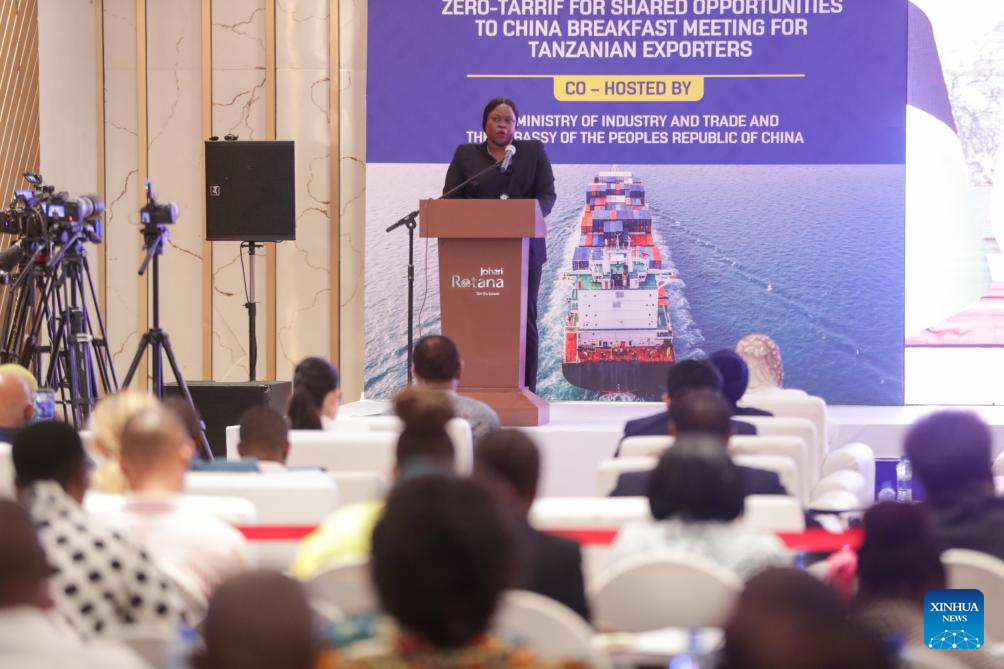
The policy was discussed during a trade meeting titled “Zero-Tariff for Shared Opportunities” held in Dar es Salaam and attended by government officials, exporters and business representatives. Judith Kapinga, Tanzania’s Minister of Industry and Trade, described the policy as a major opportunity for local businesses as the country seeks to deepen regional and international trade integration through industrial reforms and economic diplomacy.
“This opportunity is vital for local entrepreneurs, and we are deeply grateful to China for opening these doors to trade,” Kapinga said. She said China remains one of Tanzania’s most important trade and investment partners, with cooperation spanning infrastructure, agriculture, mining, tourism and manufacturing sectors.
According to Kapinga, the Tanzanian government plans to strengthen institutional coordination, simplify export procedures and expand technology-driven trade systems to support exporters entering the Chinese market. The minister also urged private companies to improve product quality, invest in branding and expand value-added processing capabilities to increase global competitiveness.
Chinese Ambassador to Tanzania Chen Mingjian said the zero-tariff initiative is expected to improve the competitiveness of Tanzanian agricultural products in China by removing import duties on commodities such as sesame seeds, cashew nuts and other farm products. She added that the policy could also accelerate Tanzania’s industrialisation agenda by encouraging investment in agricultural processing facilities, cold-chain logistics and manufacturing industries.
“The initiative is expected to create jobs and improve livelihoods for farmers, small businesses and workers involved in farming, processing, logistics and trade,” Chen said. Trade between China and Tanzania has expanded rapidly in recent years. According to the Chinese Embassy, bilateral trade reached approximately $11.28 billion in 2025, representing a 27 per cent increase compared with the previous year.
Trade during the first quarter of 2026 rose 28.1 per cent year-on-year to $2.905 billion, highlighting growing commercial ties between the two countries. Industry analysts said the tariff-free access could provide Tanzanian exporters with improved market opportunities at a time when African economies are increasingly seeking export diversification and stronger participation in global supply chains.
Agricultural commodities are expected to be among the biggest beneficiaries of the policy, particularly products where Tanzania already maintains strong production capacity and export potential. The initiative also aligns with broader efforts by African governments to promote local processing and reduce dependence on raw commodity exports by developing domestic manufacturing and agro-industrial value chains.
Economists noted that expanded Chinese market access may encourage greater investment in agricultural infrastructure, warehousing, logistics and export-oriented production systems across Tanzania. The policy is also expected to strengthen economic cooperation between China and African nations under broader South-South trade and development partnerships.
