
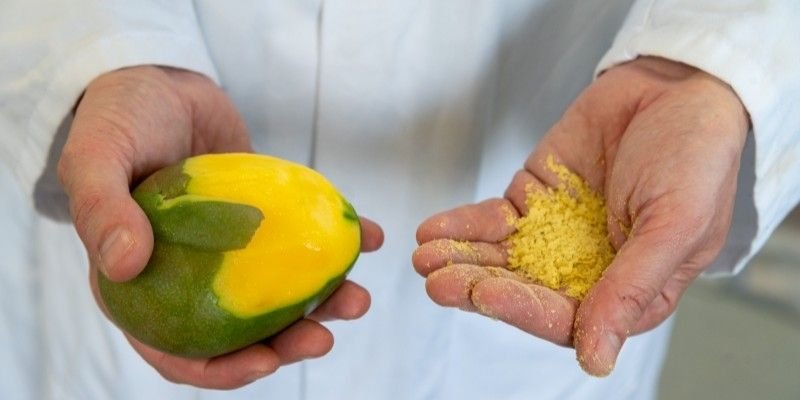
Researchers at the University of Leeds, in collaboration with a team at Commonwealth Scientific and Industrial Research Organisation (CSIRO), Australia’s national science agency, are developing an AI-driven tool to reduce food waste and enhance global food security
Each day, tonnes of nutrient-rich agri-food waste are generated, including damaged crops that have either rotted or gone unharvested. This waste can be fermented, using yeast for instance, into upcycled, high-quality, sustainable protein, which can be incorporated into conventional food products or used to create meat and dairy alternatives. This upcycling process supports the circular bioeconomy.
However, this type of fermentation is complex due to the highly variable nature of the waste. Designing optimal fermentation and downstream processes involves numerous decisions, making it time-consuming and costly. As a result, upcycled protein is often more expensive than conventional alternatives, posing a challenge for widespread adoption within the food sector.
Professor Nicholas Watson, University of Leeds, said, “To make a meaningful impact on global food security, upcycled protein must move beyond being a niche option and be priced competitively with products already available on supermarket shelves.”
A global team of experts, led by the University of Leeds, is addressing this challenge using artificial intelligence (AI) to develop a tool capable of calculating the optimal fermentation conditions required to produce microbial protein at the lowest possible cost.
The new tool will deliver actionable insights on the choice of yeast, fermenter, and ideal process conditions, enabling industry to develop tailored proteins more efficiently and with greater ease. This approach is expected to support the production of microbial protein at a cost comparable to non-upcycled alternatives.
Nicholas Watson, Professor of Artificial Intelligence in Food at the School of Food Science and Nutrition at the University of Leeds, said, “To truly impact global food security, upcycled protein can’t just be a niche alternative, it has to compete on price with what is already on the supermarket shelf. We are excited to work with CSIRO and partners across the globe to bridge that gap, launching an AI platform to turn agri-food waste into sustainable protein.”
Kai Knoerzer, CSIRO Principal Research Scientist, said, “Billions of tonnes of nutrient-rich material are currently being lost every year. If we want a more resilient food system, we need tools that make valorisation simple and scalable. Partnering with the University of Leeds, we are combining AI, fermentation science and real case studies to deliver a practical solution that helps industry turn waste into sustainable protein at scale, and we are genuinely looking forward to getting started.”
The project is funded by the Bezos Earth Fund, which is supporting 15 global awardees to scale real-world AI-powered solutions aimed at tackling biodiversity loss, climate change, and food insecurity.
Dr. Amen Ra Mashariki, Director of AI and Data Strategies at the Bezos Earth Fund, said, “These projects show how AI, when developed responsibly and guided by science and local knowledge, can strengthen environmental action and ensure its overall impact on the planet is positive.”
