
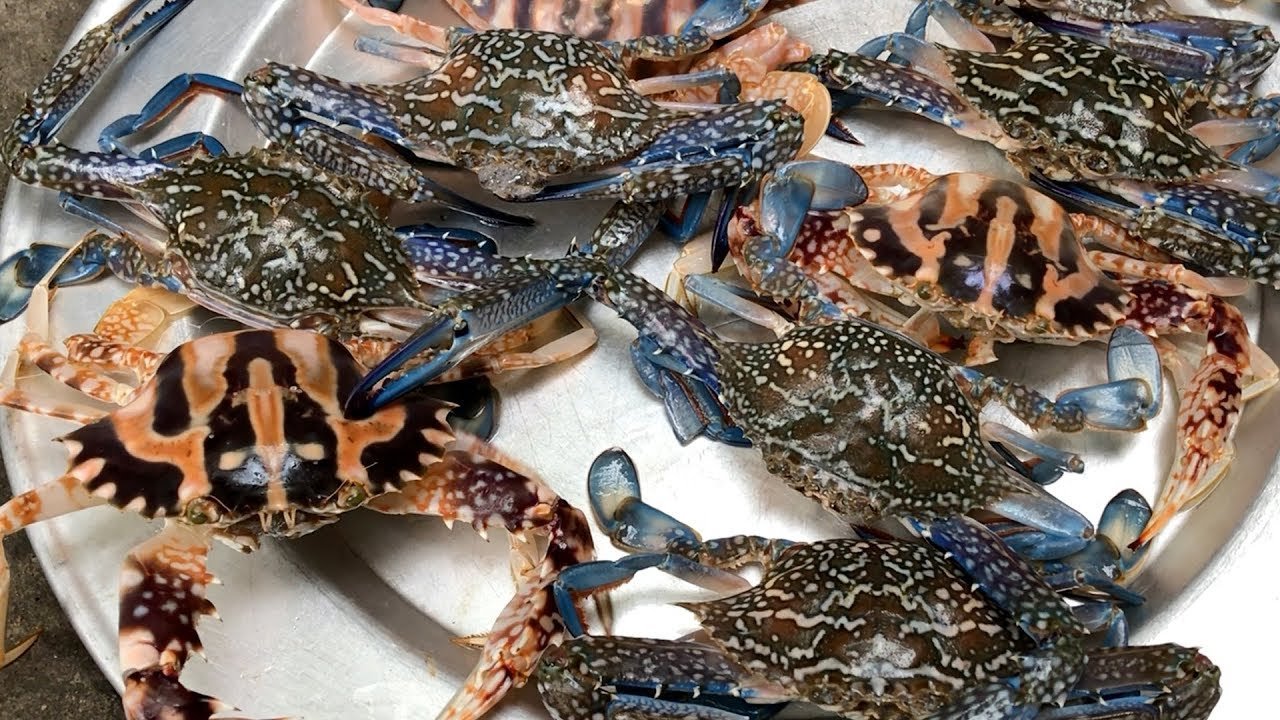
Equivalency status for four reclassified fisheries stabilises export flows after 2025 setback, strengthening Vietnam’s position in premium seafood markets
In a development of considerable consequence for global seafood trade architecture, the United States has formally recognised Viet Nam’s crab fisheries as equivalent under the Marine Mammal Protection Act (MMPA), effectively preserving uninterrupted access to one of the industry’s most commercially significant export destinations.
The decision, announced on May 11, 2026 by the National Oceanic and Atmospheric Administration (NOAA), extends equivalency status to Viet Nam alongside Indonesia and Sri Lanka, thereby ensuring that seafood and crab products harvested from compliant Vietnamese fisheries will remain eligible for entry into the US market without the previously required Certificate of Admissibility (COA).
At its core, the ruling represents both a regulatory reprieve and a competitive stabiliser for Viet Nam’s rapidly expanding crab export industry, which has in recent years become increasingly enmeshed in the stringent compliance frameworks governing access to premium Western markets. By removing the COA requirement, the decision materially reduces procedural friction, lowers transaction costs, and enhances predictability for exporters operating within tightly regulated supply chains.
The approval follows Viet Nam’s administrative reclassification of its crab fisheries in January 2026 into four distinct categories based on target species and fishing gear configurations. These fisheries—identified under Fishery IDs 13164, 13206, 13204 and 13205—were subsequently assessed by US authorities, who concluded that their management frameworks meet standards broadly comparable to those applied domestically within the United States.
This outcome stands in marked contrast to the August 2025 assessment by the US National Marine Fisheries Service, which had determined that crab fisheries from several exporting nations, including Viet Nam, did not satisfy MMPA compliance thresholds. The latest determination thus signals a recalibration in regulatory interpretation, contingent on revised documentation and enhanced fisheries governance measures.
Under the current framework, the equivalency status will remain valid through December 31, 2029, though it is explicitly conditional. NOAA has retained the authority to revisit the designation should Viet Nam fail to sustain compliance with evolving conservation benchmarks, underscoring the inherently dynamic nature of modern fisheries governance.
Central to the US assessment is an increased emphasis on marine mammal protection, particularly the reduction of incidental capture and mortality rates. NOAA has urged Vietnamese authorities to strengthen observer coverage, expand electronic monitoring systems, and intensify conservation efforts for vulnerable species such as the Irrawaddy dolphin—measures that reflect a broader global shift toward sustainability-conditioned market access.
From a commercial standpoint, the ruling offers immediate relief to exporters navigating tightening global standards, while simultaneously embedding higher environmental accountability into the operational fabric of the industry. Vietnamese stakeholders are now expected to align production practices with increasingly sophisticated traceability and ecological compliance requirements, particularly as US consumer markets continue to privilege sustainability-linked sourcing.
Industry bodies, including the Viet Nam Association of Seafood Exporters and Producers (VASEP), have underscored the significance of the decision in preserving market continuity and stabilising export outlooks. The US remains a critical destination for Vietnamese crab, and regulatory access to this market is widely viewed as a cornerstone of sectoral growth.
Ultimately, the MMPA equivalency determination encapsulates a defining tension in contemporary global seafood trade: the simultaneous liberalisation of market access and intensification of environmental scrutiny. For Viet Nam, the challenge ahead lies not merely in maintaining access, but in continuously evolving its fisheries governance to meet an ever-rising bar of ecological accountability.
