
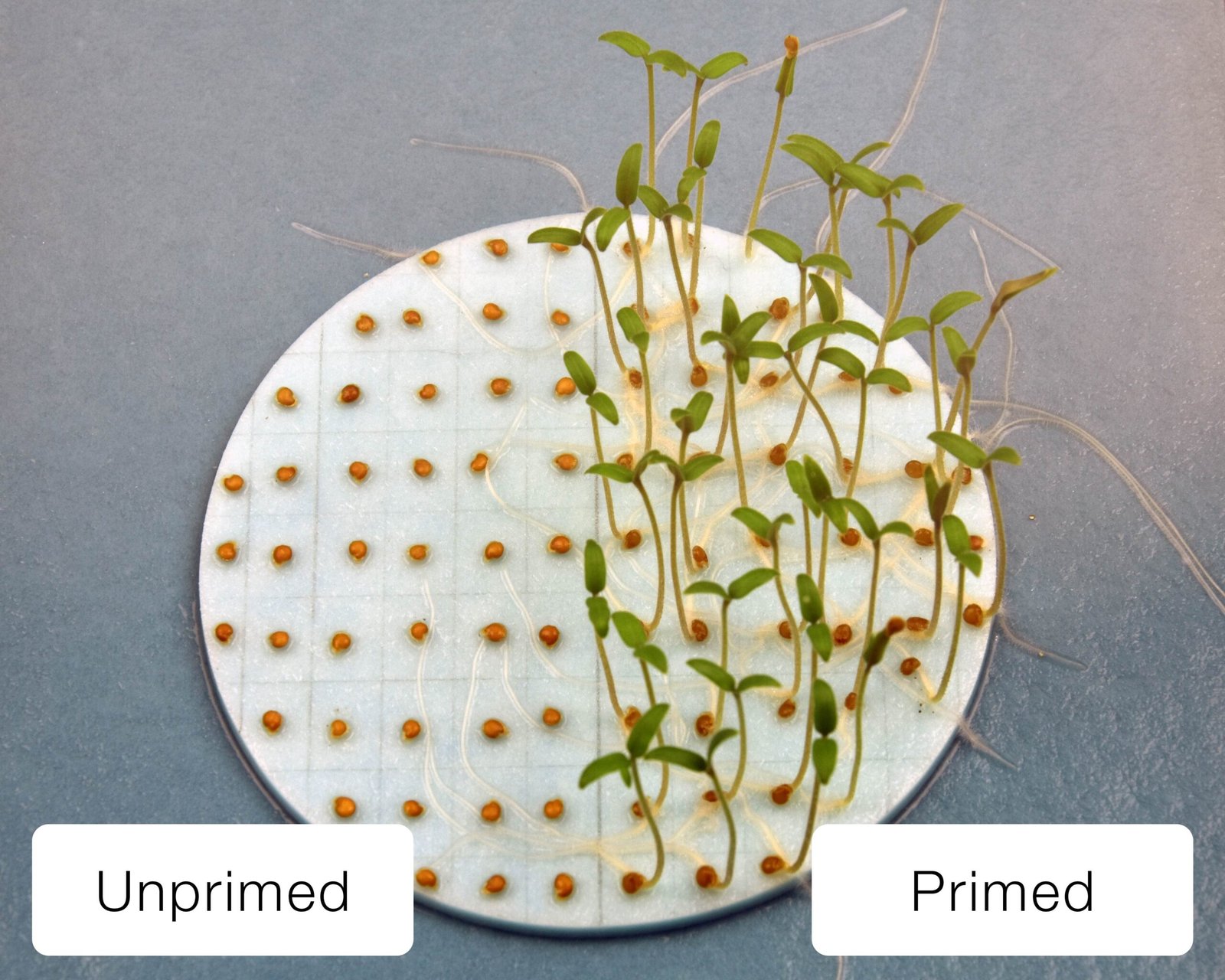
Researchers find methyl jasmonate treatment enhances resistance to major insect pests in both model plants and crop species, while revealing distinct molecular pathways behind the shared protective effect
A growing body of research is pointing to seed priming as a powerful strategy for strengthening crop resilience against pests while reducing dependence on chemical pesticides. In a new comparative study, scientists have demonstrated that treating seeds with naturally occurring plant defense compounds can significantly enhance resistance to multiple insect pests in both the model plant Arabidopsis thaliana and the economically important crop Brassica rapa.
The findings reinforce the potential of seed priming as a low-cost, scalable approach to sustainable pest management, offering farmers an additional tool to protect crops without compromising growth or productivity.
Researchers evaluated the effects of seed treatments using methyl jasmonate (MeJA) and salicylic acid (SA), two plant signaling molecules known to play critical roles in activating defense responses. The study found that both compounds increased resistance against two agriculturally significant pests: the generalist spider mite Tetranychus urticae and the specialist cabbage white caterpillar Pieris brassicae.
Importantly, the enhanced protection was achieved without measurable penalties to plant growth, addressing a longstanding challenge in crop protection where stronger defense responses often come at the expense of yield and biomass accumulation.
Among the two treatments, methyl jasmonate delivered the most pronounced protective effects, prompting researchers to investigate the biological mechanisms underlying the response. Advanced transcriptomic and metabolomic analyses revealed that while both plant species activated broadly similar defense networks, the specific genes and metabolites involved differed substantially.
The results suggest that seed priming triggers a conserved defensive outcome across members of the Brassicaceae family, but the molecular routes used to achieve that protection are highly species-specific.
Researchers also found that the effectiveness of methyl jasmonate priming varied depending on the type of pest attacking the plant. In Brassica rapa, mite infestations triggered increased accumulation of salicylic acid-related defenses, while caterpillar feeding activated glucosinolate biosynthesis pathways—an important class of natural compounds known for their role in deterring herbivorous insects.
These findings highlight the complex interplay between crop species, pest identity, and defense signaling pathways, suggesting that future seed priming strategies may need to be tailored to specific crop-pest combinations to maximize effectiveness.
The study provides fresh evidence that seed priming can deliver consistent agronomic benefits across different plant species while relying on flexible, context-dependent biological mechanisms. Such adaptability could prove valuable as agriculture faces increasing pressure to reduce chemical pesticide use while maintaining productivity in the face of evolving pest threats.
As regulators, researchers, and food producers seek more sustainable crop protection solutions, seed priming is attracting growing attention as a practical intervention that can be integrated into existing farming systems with minimal disruption. By enhancing plants’ natural immune responses before they encounter stress, the technology offers a preventive approach that could complement integrated pest management programs and strengthen resilience across a range of crops.
The researchers conclude that while the protective effects of methyl jasmonate priming appear broadly transferable across Brassicaceae species, optimizing outcomes will require a deeper understanding of crop-specific biology and pest interactions. The findings open the door to more targeted seed-treatment strategies capable of delivering durable pest resistance while supporting the transition toward more sustainable agricultural production systems.
