
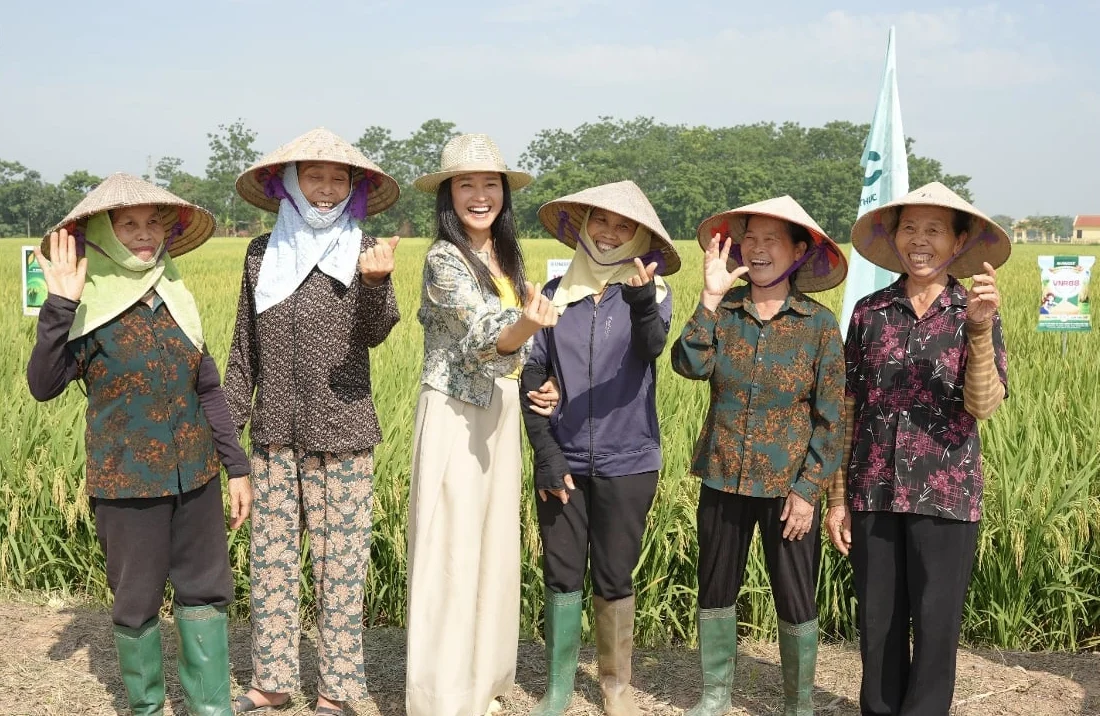
Integrated value-chain strategy combines emissions reduction, traceability, and premium pricing opportunities
PAN Group is accelerating its push into climate-smart agriculture, expanding its low-emission rice cultivation footprint to 100,000 hectares by 2027 as it seeks to redefine the value proposition of Vietnamese rice in global markets increasingly driven by sustainability, traceability, and carbon accountability.
The ambitious target builds on the company’s early success under the Transforming Rice Value Chains for Climate Resilient and Sustainable Development in the Mekong Delta (TRVC) project, where its subsidiary Vinarice has emerged as the largest participating enterprise, accounting for nearly 60 percent of the project’s total cultivated area.
Over three production seasons, Vinarice has expanded low-emission rice cultivation to more than 48,500 hectares, helping reduce approximately 184,000 tonnes of CO₂ equivalent emissions, while participating farmers recorded an average profit increase of 54 percent—well above the project’s minimum target of 30 percent.
“Reducing emissions is not merely an environmental responsibility. More importantly, it creates opportunities to enhance the value of Vietnamese rice,” said Nguyen Thi Tra My, Chief Executive Officer of PAN Group.
Building a New Competitive Advantage for Vietnamese Rice
For decades, Vietnam has been one of the world’s largest rice exporters, competing primarily on volume and price. PAN Group believes the next phase of growth will be driven by sustainability credentials, premium quality, and differentiated market positioning.
Rather than treating low-emission agriculture as a standalone environmental initiative, the company has built an integrated value-chain model spanning seed genetics, crop nutrition, biological inputs, production management, processing, branding, and exports.
Within the ecosystem, Vinaseed develops climate-resilient rice varieties, while Vietnam Fumigation Joint Stock Company (VFC) and BioSpring provide advanced crop nutrition and biological solutions. Vinarice coordinates production zones, farmer partnerships, traceability systems, and market access.
The strategy is already delivering results.
While Vietnamese rice exports have traditionally averaged $500–$600 per tonne, PAN Group has successfully exported premium rice varieties valued at up to $1,300 per tonne, with specialty purple rice commanding prices as high as $2,300 per tonne.
The Rise of Vietnam’s “Green Passport”
A major milestone came when Vinarice secured the right to use the “Vietnam Green Low-Emission Rice” certification label issued by the Vietnam Rice Industry Association.
The certification serves as a sustainability credential for international buyers and is increasingly important as markets across Europe, North America, Australia, and other developed economies introduce stricter environmental and traceability requirements.
Industry leaders view the label as a potential game-changer for Vietnam’s rice sector, enabling exporters to compete not only on quality and productivity but also on carbon performance and environmental stewardship.
Farmers See Immediate Benefits
The low-emission model is also generating tangible gains at the farm level.
Farmers participating in the program have adopted practices such as reduced seeding rates, alternate wetting and drying irrigation systems, optimized fertilizer use, and integrated crop management techniques.
According to participating growers in Dong Thap Province, production costs have declined significantly while yields remain stable or, in some cases, exceed conventional farming methods.
Farmers have reported reductions of 10–15 percent in production costs, approximately 30 percent lower seed usage, and around 20 percent less fertilizer application, alongside stronger market access through guaranteed procurement arrangements.
The ability to generate additional income from rice straw and other by-products has further improved profitability.
Preparing for Carbon Markets and Green Finance
PAN Group sees low-emission rice as more than an agricultural initiative—it is positioning the company for emerging opportunities in carbon markets and sustainable finance.
According to Nguyen Van Be Hai, Acting CEO of Vinarice, participation in the TRVC program has strengthened partnerships with cooperatives, standardized cultivation protocols, improved traceability, and laid the groundwork for future carbon-credit generation.
The company is now preparing to introduce certified green, low-emission rice products to international markets while exploring new revenue streams tied to emissions reductions.
A Blueprint for Vietnam’s Rice Future
Agriculture experts believe the TRVC model offers a practical pathway for scaling Vietnam’s broader ambition to develop one million hectares of high-quality, low-emission rice cultivation across the Mekong Delta.
Supported by the Australian Department of Foreign Affairs and Trade (DFAT) and implemented by the Netherlands Development Organisation (SNV) in partnership with Vietnam’s Ministry of Agriculture and Environment, the project has become a testbed for linking climate action with commercial competitiveness.
As consumer preferences shift toward sustainably produced food and governments tighten climate regulations, PAN Group’s aggressive expansion signals a broader transformation underway in one of the world’s most important rice-producing nations.
If successful, Vietnam’s rice industry may soon be recognized not only for feeding global markets, but for leading the transition toward a greener, lower-carbon future for agriculture.
