
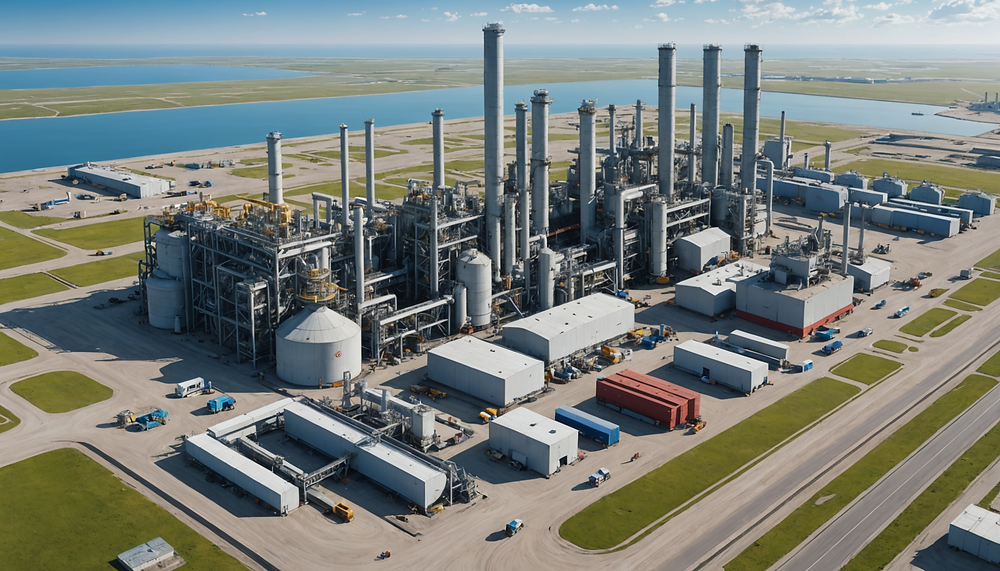
Government-backed Aktau complex aims to eliminate urea import dependence, strengthen food security and position Kazakhstan as a regional fertilizer export hub by 2030
Kazakhstan has taken a decisive step toward transforming its fertilizer industry, approving the construction of a large-scale ammonia and urea production complex in Aktau with an investment of approximately $1.6 billion. The project, formalized through an investment agreement between the Ministry of Industry and Construction and KazAzot Prime, underscores the country’s ambition to strengthen agricultural input security while expanding its role in regional fertilizer markets.
Backed by a government decree signed by Prime Minister Olzhas Bektenov, the facility is scheduled to commence operations in 2030 and is expected to become one of the largest nitrogen fertilizer production assets in Central Asia.
Once operational, the complex will produce up to 660,000 tonnes of ammonia annually, alongside approximately 580,000 tonnes of urea and 500,000 tonnes of ammonium nitrate. The investment is expected to generate around 1,500 jobs during the construction phase and create 700 permanent positions upon commissioning.
The project addresses a strategic gap in Kazakhstan’s agricultural supply chain. Despite being a major grain-producing nation, Kazakhstan currently lacks domestic urea manufacturing capacity and remains dependent on imports from neighboring countries to meet farmer demand. The new facility is expected to significantly reduce that reliance while ensuring a more stable supply of critical crop nutrients for the country’s agricultural sector.
Beyond import substitution, the development is aligned with Kazakhstan’s broader industrial strategy to build value-added manufacturing capacity and strengthen export competitiveness. Authorities expect the project to enhance the nation’s fertilizer export potential as demand for crop nutrition products continues to rise across Eurasia and other global agricultural markets.
At present, KazAzot remains the country’s sole producer of nitrogen fertilizers. However, the Aktau investment forms part of a larger wave of fertilizer-sector expansion. Additional urea production projects are being advanced by KazESTA and KMG PetroChem in partnership with CNPC-Aktobemunaigas, signalling growing momentum in Kazakhstan’s chemical manufacturing sector.
With the planned investments progressing on schedule, Kazakhstan aims to increase its total ammonia production capacity to approximately 2.3 million tonnes annually by the end of the decade, laying the foundation for a more self-sufficient, export-oriented and globally competitive fertilizer industry.
