
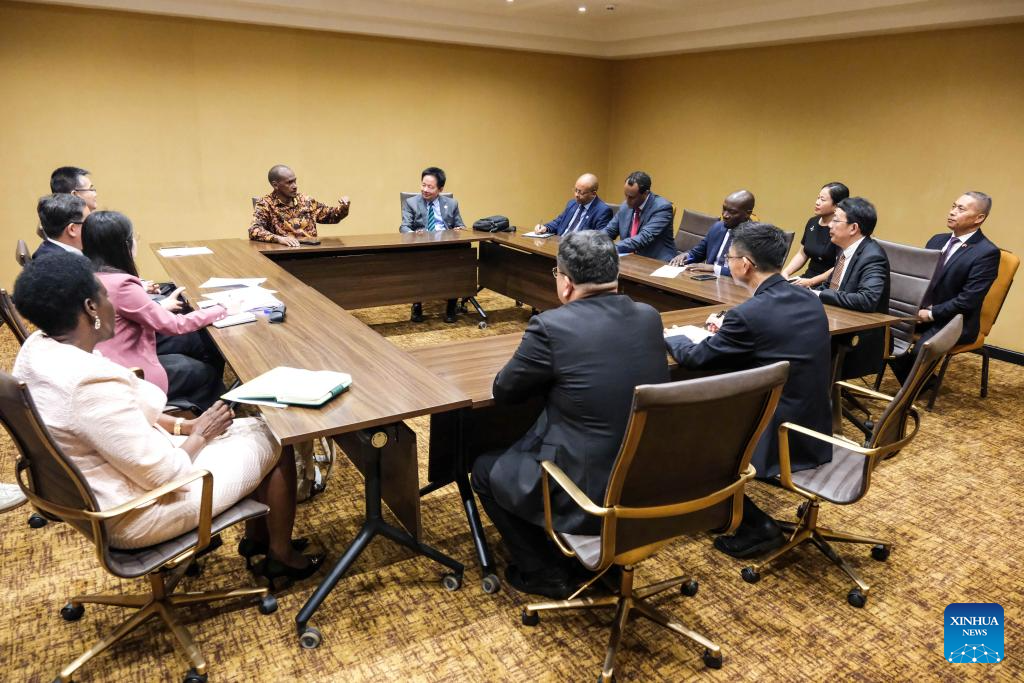
Tripartite initiative sets benchmark for sustainable agrifood system development
The successful completion of Phase III of the Food and Agriculture Organization (FAO)-China-Uganda South-South Cooperation project marks a significant milestone in advancing agricultural transformation through collaborative partnerships among Global South countries. The initiative has played a pivotal role in enhancing Uganda’s agricultural productivity, strengthening food security, and supporting the transition of smallholder farmers from subsistence to commercial farming systems.
Launched in 2012, the tripartite cooperation framework between FAO, China, and Uganda has facilitated the deployment of more than 60 Chinese agricultural experts to Uganda. These experts have worked closely with local farmers and institutions to transfer technical knowledge, modern farming practices, and innovative technologies. The program has directly contributed to improving crop yields, boosting household incomes, and strengthening Uganda’s agrifood systems.
The project aligns closely with Uganda’s national priorities, particularly in advancing agro-industrialization, improving rural livelihoods, and enhancing food and nutrition security. It has supported key agricultural value chains including rice, millet, sorghum, chili, livestock, and fisheries, thereby addressing both production efficiency and market-oriented growth.
Over the course of its implementation, the initiative has benefited more than 100,000 Ugandans through training, technical support, and capacity-building programs. A critical component of the project has been the establishment of three agricultural technology transfer hubs focusing on crop development, livestock systems, and fisheries. These hubs have served as centers for innovation, demonstration, and dissemination of best practices across the country.
Among the notable achievements is the introduction and scaling of improved crop varieties such as WDR-73, a high-yielding and drought-resistant rice variety. This innovation has significantly enhanced productivity and resilience, benefiting thousands of farming households and contributing to increased agricultural output. The adoption of improved agronomic techniques, including advanced planting methods and pest management strategies, has further accelerated yield improvements, with rice production in some regions increasing several-fold.
The initiative has also contributed to building a skilled base of local agricultural professionals, ensuring long-term sustainability and local ownership of knowledge and innovations introduced under the program. By strengthening institutional capacity and fostering knowledge exchange, the project has laid a strong foundation for continued agricultural modernization in Uganda.
At a broader level, the FAO-China-Uganda partnership highlights the growing importance of South-South cooperation as a viable model for agricultural development, particularly in the context of evolving global challenges and constrained traditional donor support. The project stands as a replicable model for collaborative development, demonstrating how shared expertise, technology transfer, and strategic partnerships can drive inclusive growth, reduce poverty, and enhance food systems resilience across developing economies.
