
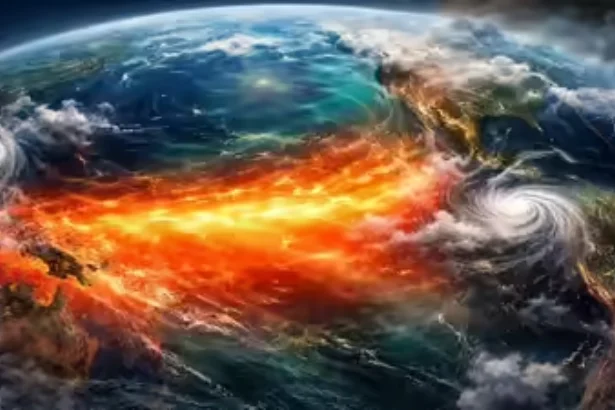
With an 80 per cent probability of developing this summer and the potential to persist into 2027, El Niño could intensify droughts, floods, heatwaves and agricultural disruptions across key food-producing regions.
The United Nations has issued a stark warning over the rapid emergence of El Niño conditions in the Pacific Ocean, urging governments, businesses and agricultural stakeholders to prepare for what could become one of the most consequential climate events of the coming years.
According to the World Meteorological Organization (WMO), there is an 80 per cent probability that El Niño conditions will establish between June and August 2026, with the likelihood rising to approximately 90 per cent that the phenomenon will persist through at least November. Climate experts caution that the event could significantly amplify weather extremes worldwide, adding further pressure to food systems, water resources, energy infrastructure and public health.
UN Secretary-General António Guterres described the development as a climate threat that is “arriving on our doorstep,” warning that El Niño has the potential to magnify the impacts of global warming by triggering more severe droughts, intense rainfall events and prolonged heatwaves across multiple continents.
WMO Secretary-General Celeste Saulo echoed those concerns, calling on countries to strengthen preparedness measures and improve resilience planning as the global climate system enters another potentially volatile phase.
Meteorological agencies are closely monitoring conditions in the tropical Pacific, where unusually warm subsurface ocean temperatures have emerged as a critical driver of the developing event. Scientists report that temperatures in some regions are already more than six degrees Celsius above seasonal averages, creating favourable conditions for El Niño to strengthen in the months ahead.
Forecasts from the United States National Oceanic and Atmospheric Administration suggest there is nearly a 60 per cent chance that the event could evolve into a major El Niño by the northern hemisphere autumn. Some climate models further indicate a one-in-three probability of a rare “super El Niño,” characterised by exceptionally high sea surface temperature anomalies exceeding two degrees Celsius above normal.
While uncertainty remains regarding the ultimate strength of the phenomenon, experts agree that even a moderate-to-strong El Niño could have far-reaching implications for global weather patterns.
Historically, El Niño alters atmospheric circulation and jet stream behaviour, reshaping rainfall distribution and temperature trends across large parts of the world. The WMO forecasts wetter-than-normal conditions in regions including the southern United States, eastern Africa, Central Asia and parts of southern South America. Conversely, drier-than-average weather is expected across Central America, northern South America, Australia, Indonesia and sections of the Caribbean.
The phenomenon is also anticipated to influence tropical cyclone activity, potentially suppressing hurricane formation in the Atlantic while increasing cyclone activity across the eastern and central Pacific.
For the global agricultural sector, the implications are particularly significant.
Regions facing reduced rainfall may experience crop stress, declining yields and worsening water shortages, while excessive rainfall elsewhere could increase the risk of flooding, soil degradation and disruptions to planting and harvesting schedules. Several agricultural zones already vulnerable to climate variability—including the Greater Horn of Africa, South Asia and parts of Central America—are expected to face heightened weather-related risks during critical growing periods.
Analysts warn that any significant disruption to agricultural production could further tighten global food supplies and contribute to renewed inflationary pressures in commodity markets.
Beyond agriculture, climate experts expect El Niño to exert a notable influence on global temperatures. The warming effect associated with the phenomenon typically reaches its peak during the year following its onset, raising the possibility that elevated temperatures could extend well into 2027.
With recent years already ranking among the warmest on record, the arrival of El Niño threatens to push global temperatures to new highs, intensifying concerns over climate resilience and adaptation.
As governments and industries assess the potential implications, the UN is emphasising the importance of early preparedness. Officials argue that timely action can help mitigate economic losses, strengthen food security and reduce the vulnerability of communities exposed to increasingly unpredictable climate conditions.
With El Niño now gathering momentum beneath the Pacific Ocean’s surface, policymakers face a familiar but increasingly urgent challenge: preparing for a climate phenomenon whose impacts are felt far beyond the waters where it begins.
