
Maritime logistics major targets restoration of 2.4 hectares of marine habitat on Geoje Island, advancing blue-carbon conservation and biodiversity goals through a multi-stakeholder partnership
DP World has inaugurated its first global seagrass restoration initiative in South Korea, marking a significant expansion of its environmental sustainability portfolio and underscoring the growing corporate focus on blue-carbon ecosystems as a critical component of climate resilience and marine conservation strategies.
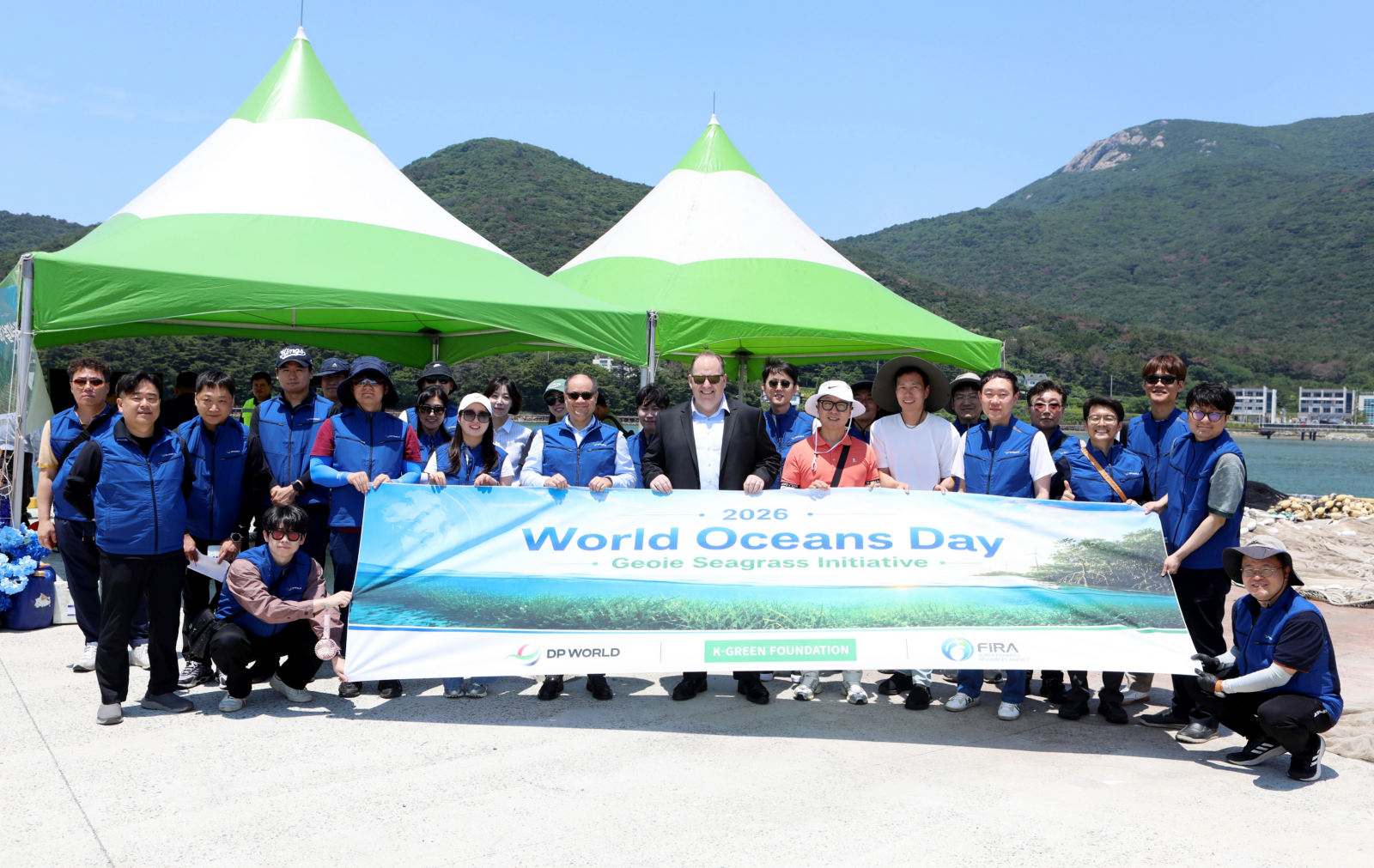
The project, located in the coastal waters of Dadae Village on Geoje Island, aims to restore approximately 2.4 hectares of seagrass habitat over the next four years. The initiative is being implemented through a strategic collaboration between DP World, the Korea Green Foundation and the Korea Fisheries Resources Agency (FIRA), formalised through a Memorandum of Understanding designed to support long-term ecological restoration, scientific research and community engagement.
Launched to coincide with World Ocean Day, the programme began with the transplantation of nearly 6,000 seagrass shoots along the Dadae coastline, involving representatives from the three partner organisations alongside members of the local fishing community. The restoration effort seeks to revive one of the ocean’s most valuable yet vulnerable ecosystems, while simultaneously strengthening marine biodiversity, enhancing fish nursery habitats and supporting coastal livelihoods.
Seagrass meadows are increasingly recognised as strategic environmental assets due to their extraordinary capacity to capture and store carbon, often at rates exceeding many terrestrial ecosystems. Beyond their climate mitigation potential, they play a vital role in preventing coastal erosion, improving water quality and providing shelter for a wide range of marine species that sustain local fisheries.
The Geoje project adopts a science-led approach, combining ecological restoration with long-term monitoring and evaluation. FIRA will oversee data collection and ecosystem assessments, while research findings are expected to contribute to broader understanding of seagrass recovery dynamics and coastal ecosystem management.
The initiative also places strong emphasis on community stewardship. Local stakeholders are being integrated into restoration and monitoring activities, reflecting a growing recognition that successful marine conservation depends on sustained collaboration between government agencies, businesses and coastal communities.
The South Korean programme forms part of DP World’s wider environmental agenda across the Asia-Pacific region. The company has progressively expanded its nature-based sustainability investments, including large-scale mangrove restoration projects in Indonesia, watershed rehabilitation programmes in the Philippines and coral reef restoration initiatives in Australia.
These projects align with DP World’s broader commitment to strengthening ecosystem resilience in regions closely linked to global trade and maritime infrastructure. Notably, the company has pledged to restore and protect 280 hectares of mangrove ecosystems globally by 2030, positioning nature-based solutions as a key pillar of its long-term sustainability strategy.
As climate change intensifies pressure on coastal environments worldwide, the Geoje initiative illustrates how private-sector investment is increasingly converging with scientific expertise and community participation to develop scalable conservation models capable of delivering both environmental and socio-economic value.
By integrating habitat restoration, research and local engagement, the project seeks not only to rehabilitate a critical marine ecosystem but also to establish a replicable framework for coastal conservation that can support biodiversity, carbon sequestration and community resilience for decades to come.
