
Country’s largest marine species restoration project will be distributed along the Texas coast by 2025
Palacios Marine Agriculture Research (PMAR), and an unprecedented marine science-based push to restore Texas’ depleted oyster reefs and once vibrant oyster population, have been supported by major financial commitments from the Ed Rachal Foundation.
A number of other large and well-known oyster restoration projects with similar goals exist, such as the Horn Point Oyster Hatchery and the Billion Oyster Project in New York Harbor. In the western margin of the Gulf of Mexico, PMAR’s conservation efforts extend along the entire Texas coast. As a large, resilient marine ecosystem, it remains vulnerable to man-made disasters such as the Deepwater Horizon oil spill, and climate-driven stressors such as sea level rise and warming. Texas’ bays and estuaries have been tested to the limit by these challenges.
As oyster reefs and oyster populations flourish, turbidity and erosion are reduced, which benefit other habitats, such as seagrass meadows and emergent wetlands. The 15 billion oyster project will address many of the concerns raised in the academy reports, including work on large ecological scales that can affect entire ecosystems and those who depend on them.
“In order to successfully introduce 15 billion oysters, PMAR’s team will undertake more initial research to explore the development of new reefs and restoration of existing damaged reefs. Our initial research project will be in the area of oyster reef restoration and conservation aquaculture“ said Gail Sutton, PMAR director of operations.
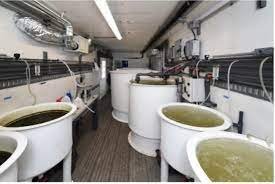
A large-scale hatchery system, with the support of a coastwide restoration partnership, is another PMAR goal aiming to reverse unsustainable trends in the Texas oyster industry. Oyster seed is already being supplied to commercial oyster ranchers on the Texas coast.
Aquaculture is aimed at creating a sustainable commercial aquaculture industry that can produce seed oysters in hatcheries, grow them in a reliable, protected environment, and harvest them when ready – all while maintaining the integrity of the coastal environment.
“A lot of people love to eat oysters, but they often don’t realise what an important role they play in our environment. They’re the water treatment plants of the bays — one oyster can filter up to 50 gallons of water a day. They’re also a happening place to be underwater, providing habitat and nurseries for species like fish and crabs. When a reef dies or is removed, the water quality goes down and the fish leave. It’s an indicator of environmental degradation” said Gail Sutton, director and co-founder of the institute’s Oyster Recycling Program, Sink Your Shucks.
Oyster reefs are Texas’ most endangered habitat, and their current depletion also compromises ecosystem health. As a result of hatchery output, a conservation-oriented aquaculture industry will be developed, which will contribute to overall restoration.
