
Cross-border partnership aims to pioneer land-based Japanese mackerel aquaculture and strengthen sustainable seafood supply chains in Asia
In a move that underscores the accelerating convergence of technology, food security, and international agribusiness collaboration, Tan Long Group has entered a strategic partnership with leading Japanese and South Korean financial and technology firms to develop land-based Japanese mackerel farming systems for Asian markets.
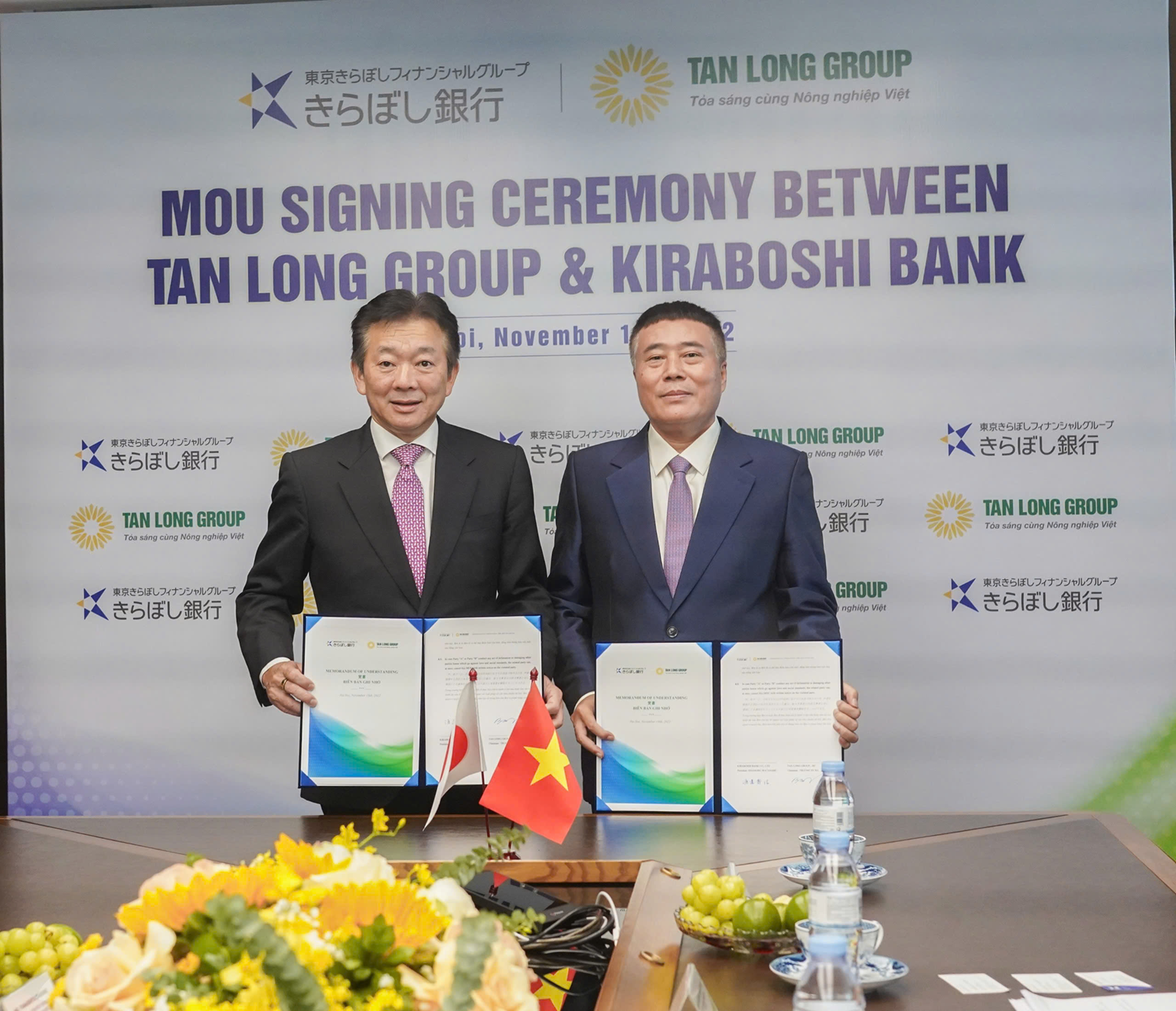
The agreement, signed with Tokyo Kiraboshi Financial Group, BNK Financial Group, and MegaPlan Co., Ltd., marks a significant step toward building a modern aquaculture ecosystem designed to address rising seafood demand and mounting pressure on natural marine resources.
At the heart of the collaboration lies a technology-driven land-based farming model for Japanese mackerel — a staple seafood product deeply embedded in the culinary cultures of Japan and South Korea. The initiative seeks to create a stable, year-round supply of high-quality fish through controlled aquaculture systems that reduce dependence on increasingly stressed ocean fisheries.
MegaPlan will provide the core smart aquaculture technology enabling year-round breeding and controlled production, while Tan Long Group will contribute its expertise in food infrastructure, logistics, agricultural supply chains, and international food trading networks. Tokyo Kiraboshi Financial Group will coordinate strategic and financial integration, with BNK Financial Group supporting broader regional cooperation efforts.
The partnership comes at a time when declining marine catches, climate change, environmental degradation, and overfishing are reshaping the future of seafood production across Asia. Japanese government data indicate that domestic mackerel supply from wild fisheries has fallen sharply over the past decade, intensifying the need for alternative and sustainable production systems.
The planned land-based aquaculture facilities are expected to provide greater control over farming conditions, improve food safety standards, reduce disease and environmental risks, and stabilize production volumes throughout the year. Industry observers view such systems as part of a broader global transition toward technology-enabled aquaculture models capable of balancing rising protein demand with sustainability objectives.
The four partners are also exploring the establishment of a joint venture to accelerate long-term commercial development and operational efficiency. The initiative aligns with Tan Long Group’s broader strategy of expanding beyond traditional agriculture into integrated, high-value food production ecosystems driven by technology, logistics, and international market connectivity.
For Tan Long, the collaboration represents more than a business expansion — it signals the emergence of Vietnamese agribusiness as an increasingly influential participant in shaping the future of sustainable food systems across Asia.
