
These areas play an important role in supporting biodiversity, ecosystem services and communities living alongside forest and wetland ecosystems
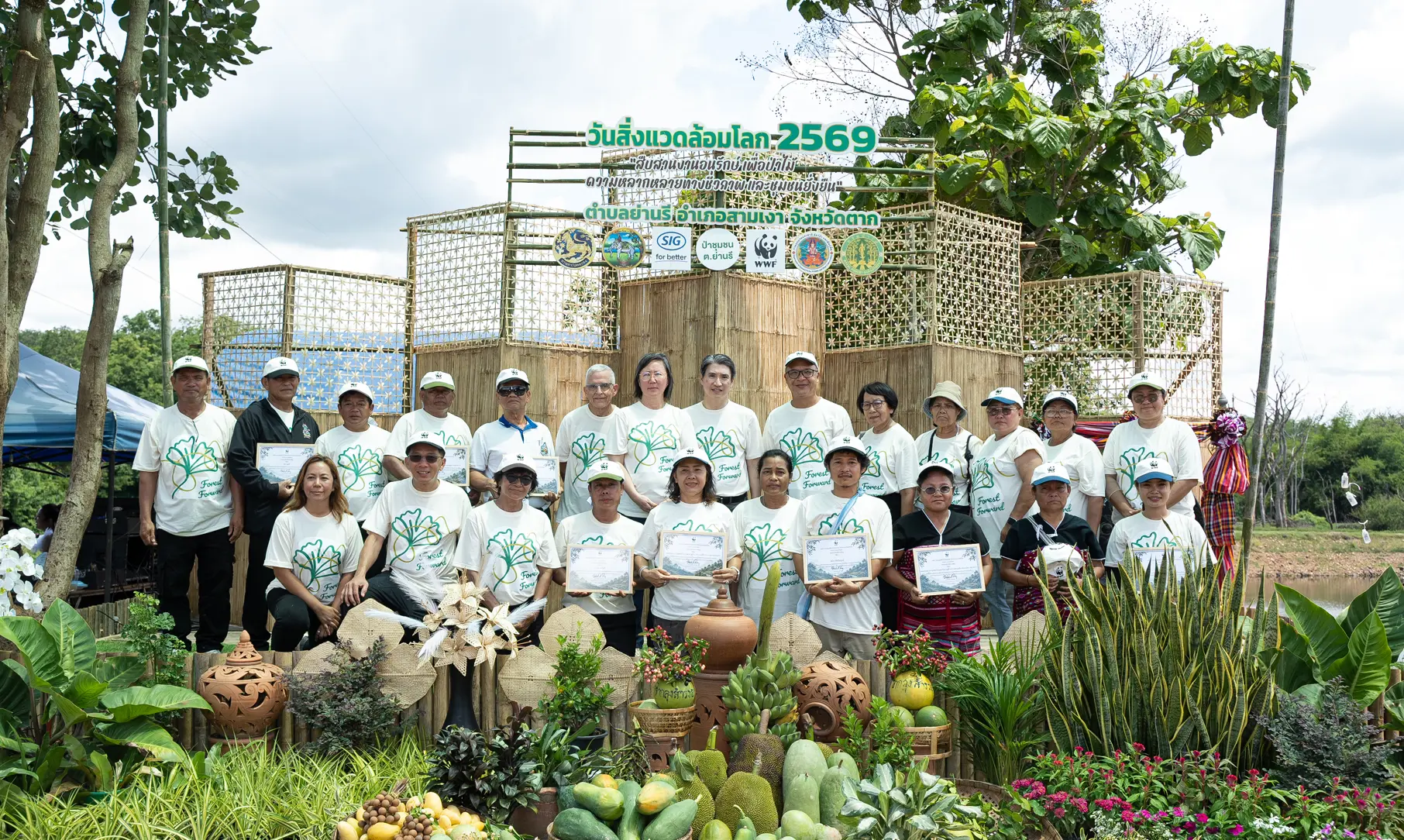
SIG, a leading packaging system solutions provider, and WWF marked the second-year progress of their Forests Forward partnership in Thailand, which supports conservation and improved forest management across 60,000 hectares of strategic forest landscapes spanning across three of Thailand’s most critical forest landscapes: the Mae Ping–Kaeng Krung forest corridor, the Lower Songkhram River Basin wetlands, and the Dong Phayayen–Thap Lan forest complex.
These areas play an important role in supporting biodiversity, ecosystem services and communities living alongside forest and wetland ecosystems. The project supports Thailand’s broader 30×30 direction, the ambition to conserve and restore 30 per cent of terrestrial and marine areas by 2030. Through improved forest conditions and landscape-level conservation outcomes, the initiative contributes to wider efforts to protect biodiversity, strengthen ecosystem resilience and support communities living alongside critical natural landscapes.
Since the project’s inception in October 2024, it has delivered progress across forest restoration, protected area management, technology-enabled monitoring and community-based conservation. While the broader project supports improved conservation and management outcomes across 60,000 hectares of forests, direct restoration activities have covered 69.72 hectares across five priority sites. The project has also trained 120 forest rangers in SMART Patrolling, strengthened 47 community forests covering more than 9,883 hectares, and established 31 community fish conservation zones covering 142 hectares in the Lower Songkhram Basin.
In the target areas, project monitoring recorded a 30 per cent reduction in reported human-elephant conflict incidents during the project period. Five rapid-response teams and 25 officers have been trained to use thermal drones to support elephant tracking and response in conflict-prone areas. Real-time wildfire surveillance has also been introduced across 25,000 hectares along the Mae Ping forest corridor, supported by UAVs and live video systems to help rangers detect and respond to threats more effectively.
Vatcharapong Ungsrisawat, Country Director for Thailand, Laos, Myanmar, and Cambodia at SIG: “Healthy forests are essential to biodiversity, climate resilience and the well-being of communities that depend on natural resources. Through our partnership with WWF-Thailand, we are supporting practical action on the ground from forest restoration and ranger capacity building to community-led conservation and human-elephant conflict mitigation. This reflects SIG’s broader regenerative approach to nature, where responsible sourcing, climate action and resource efficiency are connected with real impact in the landscapes that matter.”
